Gyeonggi Province Trains School Nurses in Allergy Emergency Response
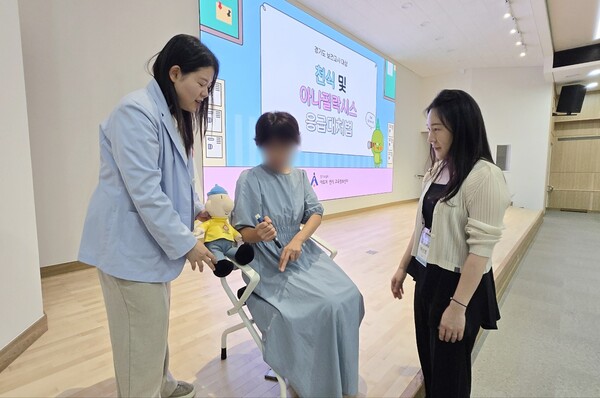
Gyeonggi Province conducted training for 1,655 school nurses at kindergartens, elementary, middle, high, and special schools in the province to strengthen their capacity to respond to allergy emergencies such as anaphylaxis, holding a total of 14 sessions from July 10 to August 1.
This training was arranged in response to the recent increase in food allergies and anaphylaxis among children and adolescents, aiming to establish a safety system that enables swift and accurate responses to emergencies that may suddenly arise in schools. It is the first large-scale anaphylaxis hands-on training in eight years since the 2018 training, which was implemented after the revision of the law concerning the administration of epinephrine by school nurses.
In particular, this training holds great significance in that a proposal made by the Southern Gyeonggi Atopy and Asthma Education and Information Center at the Gyeonggi Provincial Council's 'Policy Debate for Establishing a Safe and Healthy School System' last December was actually carried through into provincial administration and education policy.
The directors of the Southern and Northern Gyeonggi Atopy and Asthma Education and Information Centers, along with allergy medicine and pediatrics specialists in the province, served directly as instructors for the training.
The main programs were composed with a practical focus, including △early allergy symptoms and diagnostic criteria for anaphylaxis △anaphylaxis emergency first aid △the use and management of self-injectable epinephrine. In particular, the school nurses maximized their on-site first aid capabilities through hands-on practice in which they used training models identical to actual medication to inject their own thighs. In addition, through a Q&A session with the specialists, they discussed in depth the difficulties encountered in the field and tailored response measures for various situations.
Jang Yoon-seok, director of the Southern Gyeonggi Atopy and Asthma Education and Information Center, said, "It is most important above all for school nurses to have the confidence to respond swiftly and accurately in emergencies," adding, "I hope this training will further solidify the allergy safety net in schools."
Kim Nam-soo, head of Gyeonggi Province's Health Promotion Division, said, "Since anaphylaxis can determine a child's life or death, on-site response capability is key," and stated, "We will continue to cooperate closely with the Provincial Office of Education and specialized institutions to create an educational environment where our children are safe from allergic diseases."