Gyeonggi Province Labor Inspectors to Launch in December, Managing 530,000 Workplaces
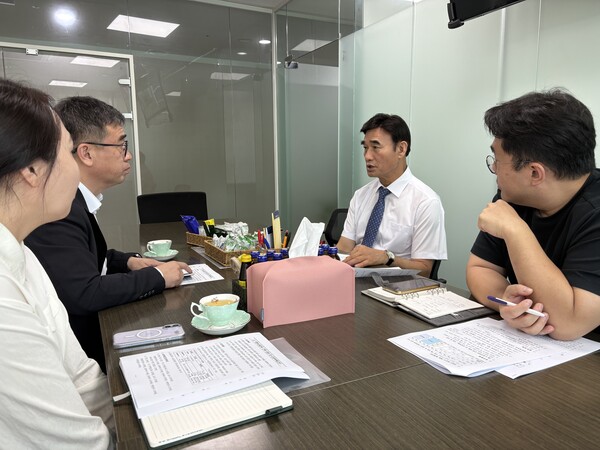
As Gyeonggi Province prepares for the December launch of its provincial labor inspectors to oversee workplaces with fewer than 30 employees, Gyeonggi Province and the Gyeonggi Provincial Assembly have begun consultations.
Jang Tae-hwan, Chair of the Economic and Labor Committee of the Gyeonggi Provincial Assembly (Democratic Party, Uiwang District 2), received a briefing on the 18th from Kim Do-hyung, Director of the Gyeonggi Province Labor Bureau, regarding plans for hiring and operating provincial labor inspectors, and discussed preparations for implementing the system, including organizational and personnel management as well as establishing an on-site inspection framework.
Gyeonggi Province plans to incrementally expand its workforce and organization of provincial labor inspectors in preparation for the December implementation of the 'Labor Inspector Duty Execution Act.'
The province will first hire 170 inspectors in the second half of this year, and following additional recruitment, plans to secure a total workforce of 562 provincial labor inspectors by 2028.
Accordingly, the province will also establish an operational system to ensure expertise of new personnel and effectively respond to regional inspection demands. For staff hired in the second half of 2026, the province will conduct professional training through the Ministry of Employment and Labor and field inspections before deployment to worksites. The province also plans to incrementally expand regional offices considering industrial characteristics and workplace distribution in each region.
In particular, the province is reviewing plans to deploy personnel focused on areas with high labor inspection demands, such as industrial complexes and areas densely populated with small-scale workplaces.
Workplaces with fewer than 30 employees in the province, which are the primary targets of provincial labor inspectors, number approximately 530,000, accounting for about 96% of all workplaces. Accordingly, there is a growing need to efficiently operate limited inspection resources while establishing a field-focused inspection system capable of preventing violations of labor relations laws and industrial accidents through proactive measures rather than relying solely on post-incident penalties.
Jang Tae-hwan, Chair of the Economic and Labor Committee of the Gyeonggi Provincial Assembly, stated: “It is important for Gyeonggi Province to establish an inspection system that reflects industry characteristics, given the diverse labor environments including manufacturing, construction, logistics, and workplaces employing foreign workers.” He emphasized: “By linking with existing initiatives such as labor safety guardians and village labor consultants, we must establish a field-centered inspection system that leads to the protection of workers' rights and prevention of industrial accidents.”