


Suwon Establishes Design Guidelines for Public Plazas
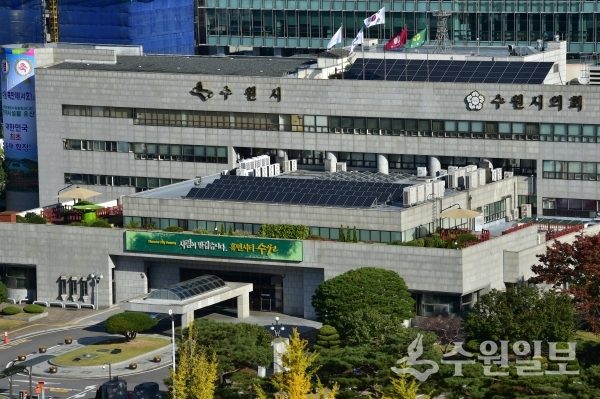
[Suwon Ilbo=Seo Dong-young Reporter] Suwon City announced on the 10th that it has prepared the "Suwon Public Plaza Design Guidelines" for the creation of public plazas.
A "public plaza" is a public space created on privately-owned land that provides an environment for citizen rest, pedestrian passage, and events, and is open to the general public.
Suwon currently has 125 public plazas (56,149 square meters). The most common type is the "simple rest area" (49 locations). Other types include "pedestrian street corridors" (19 locations), "park-style" plazas (15 locations), "plaza-style" plazas (15 locations), and "piloti-style" plazas (11 locations).
According to the city, because public plazas are perceived as mandatory spaces that must be installed by law, they are often placed in leftover building spaces, and maintenance is often neglected.
The city completed a survey of public plazas in July and August. This was because many installers and managers lack adequate awareness of public plazas, and the plazas are not properly functioning as public spaces.
The Suwon Public Plaza Design Guidelines can be utilized in architectural design and architectural review processes.
The guidelines include ▲a detailed item checklist for public plaza design ▲design standards by type ▲standards for installing public plaza signage ▲vegetation species for public plazas ▲maintenance, management, and administrative measures.
The scope of application is public plazas installed in accordance with Article 33 of the Suwon City Building Ordinance.
Using the "detailed item checklist" in the guidelines, it is possible to review recognizability, accessibility, safety, amenity, functionality, and sustainability of public plaza installation plans from the building permit and architectural review stages.
Public plaza types are classified into six categories: ▲pedestrian street rest areas ▲pocket plazas ▲plaza-style ▲piloti-style ▲pedestrian passage-through ▲indoor passage-through, enabling architectural planning that considers surrounding environments.
Standards for citizens using public plazas have also been established. Public plaza signage is to be installed. When outdoor air conditioning units and various facilities must inevitably be installed near public plazas, screening facilities are to be constructed.
A city official stated, "If public plazas are created in accordance with the guidelines, they can be utilized as small rest areas and cultural spaces within the city."