


New Year's Address Gwangju Mayor Bang Se-hwan
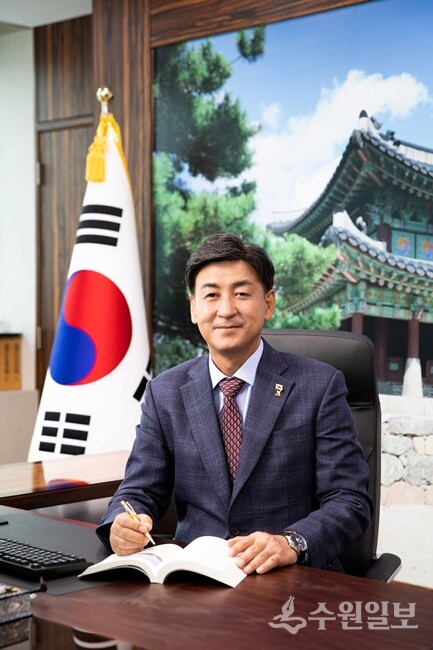
Respected 420,000 citizens of Gwangju City and public officials,
The new year of 2025, the Year of the Snake, has dawned.
First, the tragic accident at Muan Airport on December 29 last year is truly sorrowful and lamentable.
I humbly pray for the repose of those who have passed and wish for the swift recovery of the injured.
I also extend my deepest condolences and consolation to the bereaved families grieving this profound loss.
As mayor, amid urgent domestic circumstances and difficult economic conditions, I will lead city administration with unwavering determination and a heightened sense of responsibility. The eighth-term administration, which began with the initial commitment that changes and development in Gwangju must always be measured by citizen happiness, has now reached its latter half. Over the past three years, we have strived mightily to overcome the limitations of overlapping regulations and move toward becoming "the most livable city in the Seoul metropolitan area." Through "field-centered, responsible administration" and the normalization of communication, we have made constant efforts to find answers in the field and reflect them in city policies.
Multiplex life SOC facilities providing integrated administrative and cultural services have been constructed—following the completion of the Manseol-ri and Guangnam-dong administrative and cultural complex in 2023, the complex facilities in Sinhyeon and Gosan are in their final construction phase, targeting an opening this summer. The Natural Chae Food Farm Center, which opened in Yangbeol-dong last June, surpassed 1 billion won in direct store sales within five months of opening and has become highly popular with citizens seeking fresh and safe local food.
The lifelong learning center built within the Songjeong private park special project site is scheduled to open in March this year, and the Songjeong Study Park has established itself as an attractive space frequently visited by citizens.
In particular, the Gyeongan 2 District urban development project faced difficulties due to external factors such as rising construction costs and deteriorating financial markets. Through rapid crisis response including emergency task force operations and contractor replacement, we have achieved project normalization and plan groundbreaking and presales by May this year.
Meanwhile, last year's Korea's first World Wind Orchestra Conference was a spectacular celebration of wind music, adorning a hot summer with success in both box office and artistic merit, marking a memorable page in Gwangju's history.
Respected citizens and public officials,
Just as all endeavors have their golden moment, the success or failure of city administration depends on timing.
In the new year of 2025, to realize hopeful changes and the realization of Happy City Gwangju, I will transform each task we have pursued into fruition and complete all projects so that 2026 marks the pinnacle of the eighth-term administration.
First, breathing warmth into the local economy is urgent.
I will vigorously pursue revitalization measures including local economy recovery campaigns, economic vitality support, and large construction site community cooperation projects to help small business owners and self-employed workers. We will newly cultivate five competitive alley-type shopping areas and flexibly roll out customized support measures for small business owners, including 1.7 billion won in management funds.
Support to enhance business vitality is also urgent.
We will invest a total of 8.3 billion won in business capacity enhancement projects and small business environment improvement projects, strengthening business competitiveness and regulatory improvement to advance further as a city good for business. Through employment programs by group and various recruitment events, we will discover quality jobs, and by intensively managing middle-aged job seekers, we will expand re-employment opportunities for the baby boomer generation.
We will continue efforts to secure new growth drivers for fostering future industries.
The Gwangju convergent cluster development project, being materialized through a business agreement signed with Sejong University last year, will move up the groundbreaking timeline by obtaining urban planning facility implementation approval this year.
Additionally, we will complete a feasibility study on industrial land expansion in 2026 and actively undertake large-scale industrial complex development to realize economies of scale and secure industrial competitiveness.
Agriculture is the root industry of Gwangju, a city blending urban and rural characteristics. We will actively expand the local food consumption market by activating the Natural Chae Food Farm Center and foster it as an urban-rural cultural exchange space.
We will also create competitive and hopeful rural communities through 2.4 billion won in intensive smart farming support, including smart farms, modernized greenhouse facilities, and eco-friendly initiatives.
Second, we will complete urban infrastructure construction and take another step toward becoming a self-sufficient city.
Based on regional specialization strategies by area—Gyeongan and Opo, Gongji-am and Chowol, Namhansan Fortress and Toechwon—as presented in the 2040 Gwangju Master Urban Plan, we will establish the framework for a 500,000-population self-sufficient city and implement forward-looking urban policies.
Based on this year's completion of growth management plan revision work, we will establish systematic management measures for non-urbanized areas, setting basic directions for areas with high development pressure and guiding planned development suited to urban growth. The Gwangju Station commercial and industrial complex development project will be strengthened by adding MICE facilities and an integrated transfer center that enhances existing public infrastructure and transportation hub functions, cultivating it as Gwangju's new growth hub.
The second-stage Gwangju-Gonjiam Station area development project completed strategic environmental impact assessments and metropolitan planning deliberations last December; we will complete zone designation in the first half of this year and launch the project in earnest.
The Gyeongan 2 District urban development will proceed with groundbreaking without delay this year now that a new contractor has been confirmed, and we will actively address traffic congestion around Gyeongan 2 through public contribution projects such as new bridge construction at Yeongdong intersection.
The Samdong-Chowol urban development will concretize project direction including zone designation based on feasibility study results completed this year. We will proceed without interruption with the private park special project that will transform into a green premium residential space. The Central Park and Songjeong Park will complete the project through completion of non-park facilities including apartment complexes by the first half of 2026, and we will complete the second-stage projects in Ssangryeong, Yangbeol, and Gungpyeong areas as planned.
We will open integrated life SOC complex facilities in the Opo Sinhyeon and Gosan areas by the second half of this year and accelerate groundbreaking for the Chowol Sports and Culture Complex Center. The multiplex building construction on the former City Hall site, completed this year, and the Open Village Urban Regeneration New Deal project in Songjeong-dong will serve as major catalysts for revitalizing the old downtown commercial area and improving residential environments. The Wood Education Comprehensive Center, being cultivated as a leading base in the carbon-neutral era, will begin architectural construction in the first half of this year, and we will proceed without delay with the integrated biogas gasification facility construction beginning in 2026.
We will complete the Songjeong-nam neighborhood park, being developed as a healing space in the city, as planned this year, and break ground on the Neoreun-gol natural recreation forest and Paldang water mist park development projects in the first half of this year. In the remaining period, we will complete urban infrastructure construction as promised to citizens without wavering and accelerate the materialization of a self-sufficient city foundation that raises urban completion standards.
Third, we will complete education and welfare where three generations are happy.
Through a total welfare budget of 552.1 billion won, we will realize robust welfare where no one is left behind and reduce care gaps for vulnerable populations. We will find breakthrough measures to overcome low birth rates and a super-aged society.
According to statistics from the Ministry of Interior and Safety, Gwangju's monthly birth registrations in the fourth quarter of last year averaged 183, an increase of 11.7 percent compared to the same period the previous year. Continuing this rebound trend, we will consistently pursue Gwangju-style population policies.
We will operate population awareness weeks around "Population Day" and hold population policy competitions to find solutions to demographic issues together with citizens. Based on the 2025 low birth rate and aging response promotion plan,
we will systematically implement life-cycle-based support policies and, in the mid to long term, undertake local attraction-making projects to overcome population decline crises in regions such as Namjong-myeon.
Additionally, to support citizens' healthy pregnancy preparation and reduce economic burden, we will newly introduce male folic acid support and infertility couple depression screening, and expand postpartum care helper cost-sharing support to 80 percent, strengthening pregnancy and childbirth support services.
This year, we will designate one additional national and public daycare center and seven additional "Together Care" centers, establish two branch offices of the Sinhyeon and Gosan comprehensive childcare support centers, and create a childcare environment where parents feel confident.
The "Ever-growing Mind Development Project," which achieved 7,723 evaluations and 1,289 expert coaching sessions last year in supporting children's healthy growth, will double its policy effectiveness this year by building an integrated management system linking treatment to counseling.
In a super-aged society, we will closely support life's second act. We will launch earnest efforts to create quality senior jobs through the "Senior Club," a specialized senior employment organization. We will meaningfully operate the Opo Senior Welfare Center opening in Gosan-dong and proceed without delay with groundbreaking on next year's eastern area senior welfare town. The comprehensive funeral facility that our city proposed and Hanam City is jointly promoting will complete site selection by the first half of this year and rapidly proceed with subsequent procedures including land purchase.
We will not spare investment in brightening Gwangju's future. We will invest 19.5 billion won in education expense support projects to enhance educational environments and support capacity strengthening programs. Youth Culture Centers, providing diverse cultural learning activities to young people, will begin with the Opo branch opening and complete expansion to Songjeong and Chowol areas by 2026. Starting with Gwangju Central High School, selected for the Ministry of Education's Autonomous Public High School 2.0 program, we will achieve public education innovation and expand opportunities for nurturing creative talent. Gwangju's first lifelong learning center, opening in March this year, will serve as a meeting place where citizens and the community connect and grow together in the age of 100-year lifespans.
We will invigorate Youth Support Center program operations providing independence and diverse opportunities for young people. We will pursue tangible policies urgently needed by youth, including AI-powered non-face-to-face mock interviews and moving expense support for single-person youth households. I will carefully monitor from nearby to ensure that three generations living in Gwangju always enjoy happiness without exclusion.
Fourth, we will definitively address the biggest pending issue—transportation.
We will accelerate five railway network projects, including the Seoser-Gwangju line groundbreaking this year, and make maximum efforts to ensure the Gyeonggang Line extension, GTX-D branch line Gwangju routing, and Panyaw-Opo light rail transit are reflected in higher-level plans. Through these efforts, we will bring forward the opening of the railway era centered on Gwangju Station in 2030 and advance strongly as Seoul metropolitan area's transportation and logistics hub city. We will promote step-by-step implementation aligned with citizen-centered bus route system reorganization and pursue the in-city bus public management system, set for full implementation in 2027, year by year to enhance public transportation service stability.
The on-demand ddok bus will add two routes in downtown areas from the existing four rural zones, and the metropolitan call bus project will also be continuously expanded by investing full city funds from April when pilot projects are completed. We will ensure transportation welfare realization through The Gyeonggi Pass for citizens 19 and older and children and youth transportation expense support.
We will proceed with major road network expansion as planned. Alongside the road opening between Yeongdong and Yangbeol, scheduled to be completed this year, we will complete major projects including access ramp construction for the Seongnam-Janghowon automobile-exclusive road and expansion of the Seongnam-Gwangju Route 338 road in 2026 to resolve chronic congestion areas. Under difficult financial circumstances, we will invest 62 billion won this year in compensation, planned to prevent long-term road projects from becoming defunct, complete the incorporation process for a total of 111 routes in stage one, and proceed without interruption with stage two and three compensation to establish the foundation for organic road network expansion.
We will closely cooperate with central ministries to reflect the new bypass alternative roads for National Routes 43 and 45 in the sixth national and local road construction plan. In coordination with circular road network projects, we will enforce our city's opinions on the Uiwang-Gwangju expressway and Yongin-Gwangju expressway being pursued as private projects, including new IC installation and environmental issues. We will continue our quick-paced efforts to realize Gwangju as a fast and convenient transportation hub city.
Finally, we will widely open the curtain on Gwangju as a sports hub city.
Gwangju has long been a marginal sports city without a single properly standardized sports facility. To overcome this reality, we boldly pursued hosting the Provincial Games. We will complete all processes for eight main facilities including the comprehensive stadium's main arena and internationally certified indoor swimming pool this year and complete regular standardization of ten facilities including Gwangju Public Stadium and Opo Living Sports Park. Through this, we will successfully host the 2026 Provincial Games and transform into a genuine sports hub city in the Seoul metropolitan area.
We will also specially prepare the games with cultural and economic dimensions to create a powerful stage showcasing urban competitiveness, using it as an opportunity for secondary ripple effects including local economic activation. After the Provincial Games, we will strive to create a vibrant city by expanding Gwangju's sports foundation through elite athlete development, active sports enthusiast engagement, and expanded sports professional opportunity income.
Beloved Gwangju citizens and public officials,
At my inauguration on July 1, 2022, I pledged to faithfully carry out the responsibilities entrusted to me and devote all my efforts to Gwangju's development. I will complete the 89 promises made to citizens and create a springboard for new leaps. Together with citizens, I will realize "hopeful change and happy city Gwangju." I ask for your unwavering support and active cooperation.
In this Year of the Snake, symbolizing "wealth" and "abundance," I wish all citizens abundant health and happiness, and I pray that this becomes a hopeful year where all your wishes are fulfilled. Wishing you a happy new year.