[Jeong Jun-sung's Yeomindongnak (360)] 'Naming (作名)'
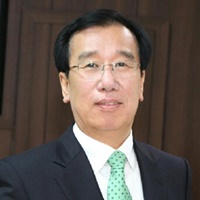
"I stake my name on it...."
An expression of 'resolve' that emphasizes honor and responsibility.
A person's name goes beyond a mere identifier and carries legal and honorific significance.
For this reason, the practice of 'naming (作名)' has long been treated with great care.
Particularly, there was a belief that what name one bears determines one's fortune in life—wealth and prosperity, and success and renown.
This is why birth date and time, or eight characters of destiny, physiognomy, and generational characters in genealogies are all consulted.
Of course, one cannot entirely believe in traditional naming conventions.
Yet naming undoubtedly marks the birth of a new person and cannot be taken lightly.
There is another significance to names: they represent a person during their lifetime and endure eternally after death.
Even without citing the proverb that tigers leave their skin behind and humans leave their names, everyone knows this.
From this, we can well understand that human names have 'souls.'
Yet time has changed the 'naming' style.
As trends shift, certain Chinese characters for personal names have emerged in each era.
Era-specific popular names have also appeared.
For example, Myeong-soo and Young-ja in the 1940s, Young-sik and Young-sook in the 1950s, and Min-jun and Eugene in the 2000s are typical examples.
Meanwhile, pure Korean names and distinctive, unconventional names breaking the two-character barrier have also mixed in.
While current law limits names to five characters, there are examples such as 'Park-cha-go-na-on-nom' and 'Son-go-jang-nan-byeok-si,' offering sufficient diversity.
Since a 'name' is assigned to distinguish one thing from another, it has an absolute impact on the existential value of objects, organizations, and phenomena.
Just as existence denotes name, everything in this world has a name, making this all the more true.
The power of naming is tremendous because the same person, object, or phenomenon creates different images depending on what name is given.
Perhaps for this reason, recent government and local autonomous bodies have been actively engaged in departmental 'naming' work.
While this is part of organizational restructuring, excessive reflection of the 'leader's' intentions has resulted in significant unfamiliarity with department names.
Examples include Gyeonggi Province's 'Fair Governance Vice Governor,' Daejeon City's 'Political Science Vice Mayor,' and Gyeonggi Provincial Office of Education's 'Wall-Breaking Cooperation Division'—a nationwide survey reveals so many that listing them all would be cumbersome.
Given that department names have continuously changed with each change in local government, it is difficult to escape accusations of 'naming politics' this time as well.
It is important to bear in mind that administrative efficiency and a city's future competitiveness do not emerge from simple administrative procedures of reshuffling departments and changing names.