Third Force Surge Was 'Momentary'... Cho Kuk Followed by Lee Jun-seok's Exit
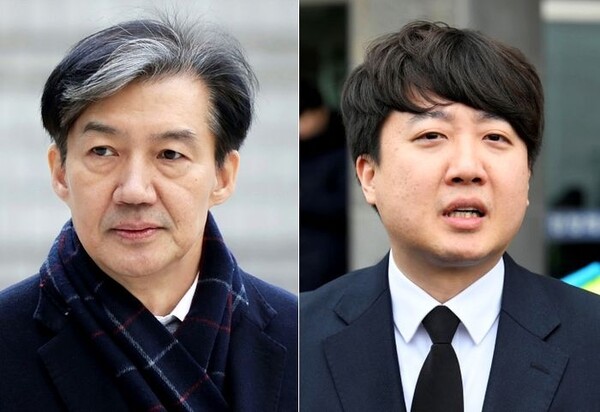
The figureheads of the 'third force' that created a surge in the 2024 general election by penetrating the gap between the two major parties have stepped down from their positions as party leaders just over two years later.
According to political circles on the 26th, Lee Jun-seok, chairman of the Reform Party, held a press conference at the National Assembly Communication Office that day and resigned from his position as party chairman. With senior leadership including the Supreme Council and Policy Committee chair also stepping down, Cheon Ha-ram, the floor leader, assumed the role of acting party chairman.
The defeat in the June 3 local elections served as a decisive turning point. Although the Reform Party fielded numerous candidates for provincial and municipal positions and local council seats, it secured only one basic council seat. The arrest and indictment of Jeong Yi-han, a candidate for Busan mayor, on suspicion of staging a self-inflicted attack added to the setbacks.
After the local elections, Chairman Lee pursued party reinforcement and reform, but approximately three months later, he stepped down from his position, saying he "did not receive sufficient support within the party."
Earlier, Cho Kuk, the former chairman who founded the Cho Kuk Innovation Party, also resigned shortly after the June local election defeat. He ran directly as a candidate in the special congressional election for Pyeongtaek, Gyeonggi Province, held alongside the local elections, but came in third and lost.
The departure of these two figures contrasts sharply with the situation two years ago.
In the April 2024 22nd general election, the Cho Kuk Innovation Party obtained 12 proportional representation seats and became the third party in the National Assembly, while the Reform Party secured three seats—Chairman Lee's victory in Hwaseong, Gyeonggi Province, and two proportional representation seats.
Although their political orientations differed, both parties shared the common point of leveraging strong personal brands of Cho Kuk and Lee Jun-seok to attract voters disappointed with existing two-party politics.
However, in the local elections, which require nationwide organizations and competitive candidacy, they could not sustain the surge from the general election. Ultimately, both founding figures who led the new party surge in the general election stepped down from their party chairman positions after going through the local elections.
Meanwhile, the political forces both within and outside major parties are taking different directions.
Jung Chul-rae, former chairman of the Democratic Party, lost to Chairman Kim Min-seok in the national convention on the 17th but garnered 45.92% of the vote. Politicians classified as part of the Jung Chul-rae faction, including Lee Seong-yun, Han Min-soo, and Choi Min-hee, also won Supreme Council positions, maintaining a substantial portion of their strength within the party.
Han Dong-hoon, an independent lawmaker who left the People Power Party, is also expanding his political base without forming a separate new party. He is maintaining independent activities while keeping contact with existing political circles, including successive enrollment in National Assembly research meetings with numerous current lawmakers from the People Power Party.
The situations differ between former Chairman Jung Chul-rae, who remains in the party, and Lawmaker Han, who is an independent. However, the fact that they are maintaining political influence and strength without creating a new party has become a comparative case for gauging the utility of founding an independent party.
In the past, third parties like the People's Party also temporarily expanded their presence in elections but subsequently faced difficulties in maintaining an independent political base for extended periods through division and mergers.
Structural challenges inherent to new parties were again revealed. In general elections, individual recognition and clear messaging could facilitate entry into the National Assembly, but backing it with a sustainable political force required local organizations, candidate pools, and stable support bases.
A political circle official stated, "In the general election, disappointment with the two major parties and expectations for new politics led to a surge in new parties, but this failed to translate into stable party support. Considering that independent political forces can be maintained both within and outside existing parties, we must soberly assess how sustainable founding a new party is for forming a political force."