


DMZ Indigenous Plant Garden Celebrates 10th Anniversary…Choo "DMZ Must Be Preserved as Symbol of Peace"
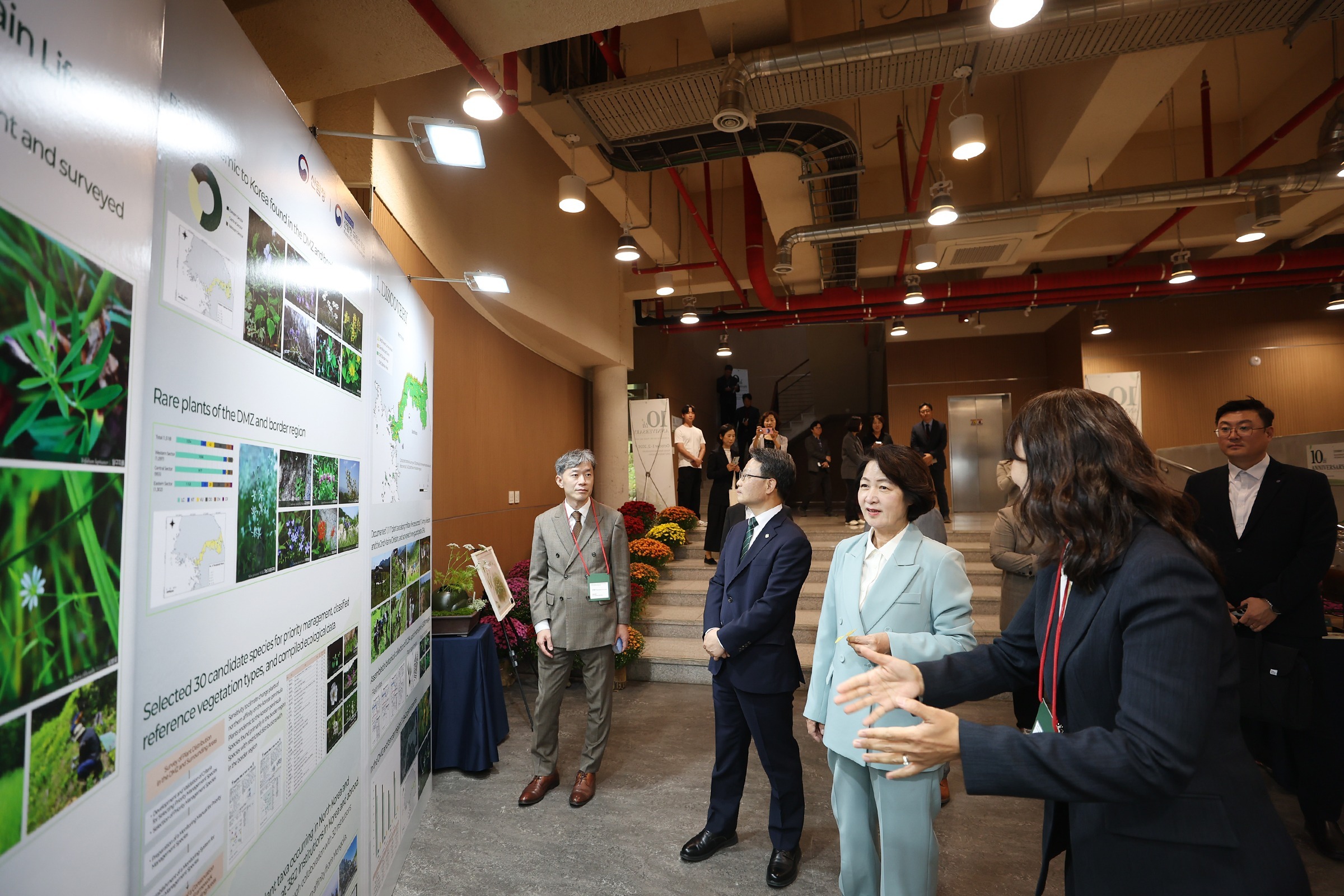
Gyeonggi Province Governor Choo Mi-ae attended the 'International Symposium Commemorating the 10th Anniversary of the Opening of the DMZ Indigenous Plant Garden' at the Korea National Arboretum in Pocheon on the 1st, evaluating the Demilitarized Zone (DMZ) as a space that has maintained strong vitality of life despite the scars of war, and emphasized that the region's biological resources must be preserved and developed as a symbol of peace.
Governor Choo stated in her congratulatory address, "The DMZ is a place symbolizing life. Although it bears the scars of war that destroyed peace, paradoxically it is a place symbolizing life that is the DMZ," and added, "I am deeply honored that this symposium is being held as we commemorate the 10th anniversary of the opening of the DMZ Indigenous Plant Garden, which awakens us to the preciousness of life in this way."
Governor Choo particularly urged the international guests participating in the forum, "The people of Korea are those with the strongest desire to preserve the biological resources in the DMZ and make it a symbol of peace on Earth," and requested, "I hope that all of you who have come today will truly become friends of the Republic of Korea and provide your friendship and support so that we can continue to preserve the self-reliant DMZ as a symbol of peace."
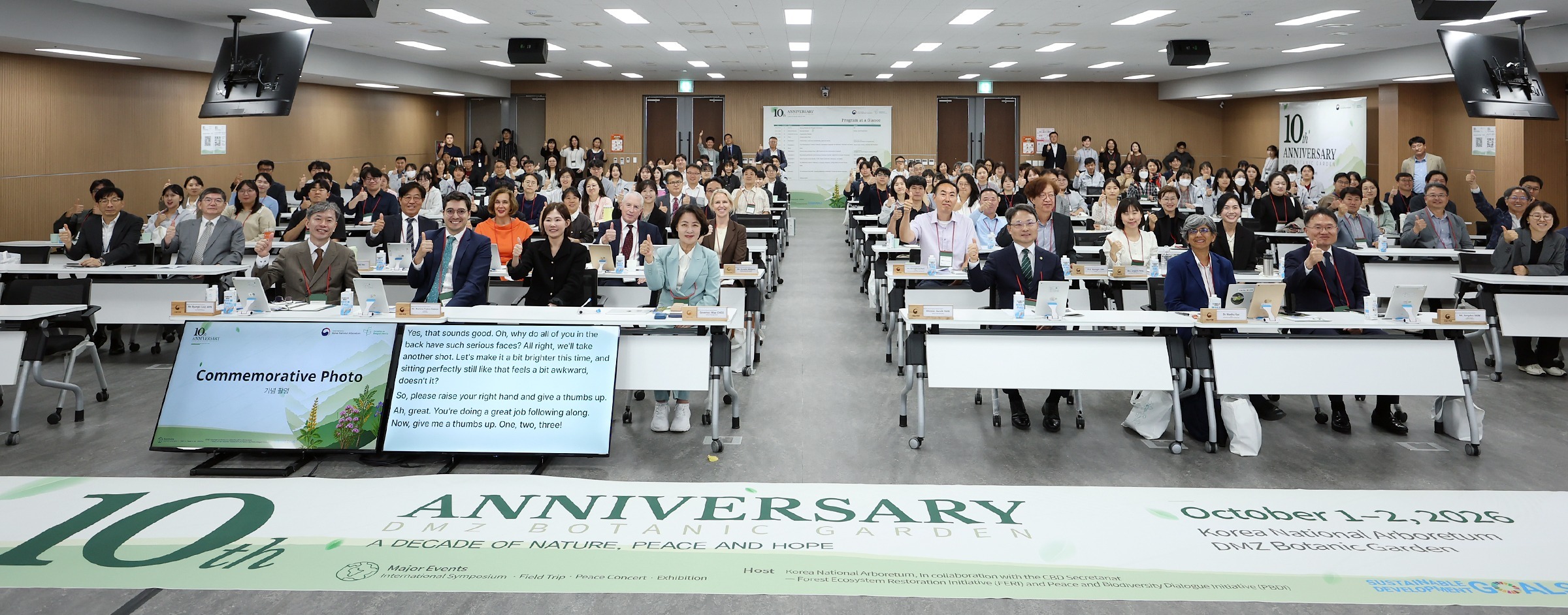
The symposium, jointly hosted by the Korea National Arboretum under the Korea Forest Service and the Convention on Biological Diversity Secretariat, will be held for two days from the 1st to the 2nd under the theme of 'Biodiversity and Peace, the Future Beyond the DMZ' at the Korea National Arboretum in Pocheon and the DMZ Indigenous Plant Garden in Yanggu, Gangwon Province.
The event is attended by approximately 200 domestic and international experts and officials in the ecology and environment fields, including the Korea Forest Service and Ministry of Unification, the Convention on Biological Diversity (CBD) Secretariat, the International Union for Conservation of Nature (IUCN), the United Nations Environment Programme (UNEP), Partnerships for Nature from the United States, Hybrid Space Lab from Germany, and the Hans Seidel Foundation.
On the first day of the symposium, presentations and discussions by domestic and international experts will be held on topics including international trends in transboundary protected areas, the value of DMZ conservation, environmental restoration and peace-building in conflict zones, and the European Green Belt case.
On the 2nd, a field visit and 10th anniversary commemoration event will be held at the DMZ Indigenous Plant Garden in Yanggu, Gangwon Province. A sealing ceremony for a peace time capsule containing peace wish messages written by participants and seeds of North Korean plants, as well as a peace concert, are also scheduled.
The DMZ Indigenous Plant Garden is an 18-hectare botanical garden created by the Korea National Arboretum to collect and preserve diverse plant resources of the DMZ and conduct research on forest ecosystem restoration in North Korean regions. It opened in 2016. Over the past 10 years, it has continued research on collection, propagation and conservation of boreal zone plants, North Korean plant research, and restoration of damaged areas.
The Korea National Arboretum and Gwangneung Forest, where the event was held, are UNESCO Biosphere Reserves and key centers of biodiversity in the Korean peninsula's forest ecosystems.
Gyeonggi Province has been investigating and protecting ecological resources in the DMZ area and creating and managing the Peace Nuuri Trail and ecological exploration trails, while promoting various projects to raise awareness of the historical and ecological values of the DMZ through ecological education and peace tourism.
Going forward, the province plans to strengthen cooperation with relevant agencies such as the Korea Forest Service and Ministry of Unification as well as the international community to systematically preserve the DMZ ecosystem and implement related policies so that the DMZ can establish itself as a key ecological and peace center for the Korean peninsula and the world.