Gyeonggi Province-Provincial Assembly 'Exclusive Communication Channel' Likely to Disappear … 'Collaborative Governance' Tested Amid Fiscal Crisis
Gyeonggi Province is reportedly reviewing the decision not to appoint a Cooperative Governance Chief, a position that has served as a communication channel with the Gyeonggi Provincial Assembly.
According to Gyeonggi Province and others on the 25th, the province appointed Political Affairs Chief Lee Gyoo-jin, Spokesperson Hong Eun-gwang, and Public Relations Planning Director Lee Won-gu on the 24th, but did not appoint a Cooperative Governance Chief.
While the Political Affairs Chief and Cooperative Governance Chief are similar in that they coordinate relationships with the political circle, their primary communication targets have differed. The Political Affairs Chief has primarily handled external political affairs such as the National Assembly and political parties, while the Cooperative Governance Chief has mainly been responsible for coordinating issues with the Gyeonggi Provincial Assembly.
The province is viewing overlapping duties and organizational size as key criteria for deciding whether to appoint a Cooperative Governance Chief.
Gyeonggi Province Spokesperson Hong Eun-gwang said, "While the Cooperative Governance Chief and Political Affairs Chief could divide their domains between the National Assembly and the Provincial Assembly, their fundamental nature is the same, creating overlapping jurisdictional issues, and we are also considering streamlining the organization," and "Although a final decision has not been made on whether to appoint, the likelihood of not filling the position is high from a practical standpoint."
If a separate Cooperative Governance Chief is not appointed, communication duties with the Provincial Assembly are expected to be integrated under the Political Affairs Chief.
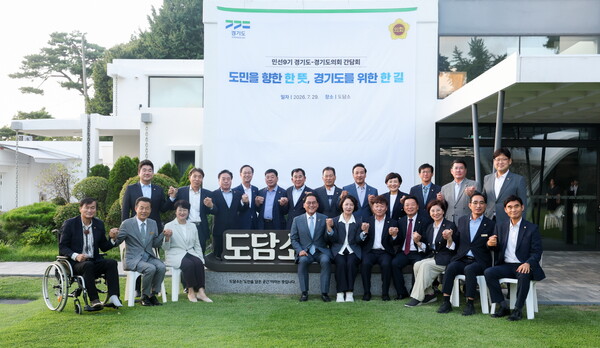
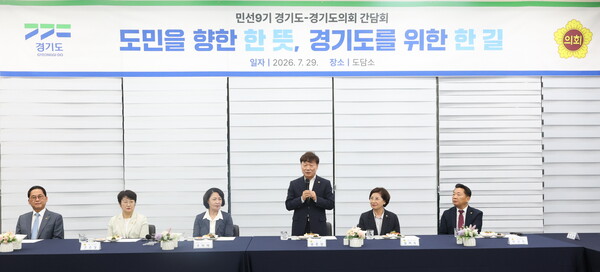
On the 29th of last month, Governor Choo Mi-ae emphasized continuous communication with the Provincial Assembly at the 'Civilian-Elected 9th Term Gyeonggi Province-Gyeonggi Provincial Assembly Meeting' held with Assembly Speaker Nam Jong-seop and others.
In the operational report submitted by the province to the Provincial Assembly, 'Establishment and operation of continuous communication bodies between the province and provincial assembly' was presented as a key business promotion task. The plan is to establish a consultative body to discuss budgets, ordinances, and livelihood issues, with operations starting from September.
Particularly in the process of overcoming the fiscal crisis, which Governor Choo has set as the top priority of the civilian-elected 9th term, coordination with the Provincial Assembly is unavoidable. This is because issues requiring Provincial Assembly approval and cooperation, such as reexamination of existing projects, budget restructuring, and supplementary budgets, will continue to emerge.
Governor Choo has also indicated through her SNS that she will reorganize the budget around essential spending and then explain and discuss it with the Provincial Assembly.
Within the Provincial Assembly, there are divergent views regarding the necessity of a Cooperative Governance Chief.
Representative Member Bang Seong-hwan of the People Power Party at the Provincial Assembly said, "If we are to pursue collaborative governance, there must be someone to fulfill that role so that substantive communication and coordination can occur," and "If we acknowledge the necessity but fail to appoint someone to perform the role, we cannot help but question whether this is an attempt at one-way communication."
However, the fact that the Democratic Party holds 144 of the 167 seats in the 12th Provincial Assembly represents a different political environment from the 11th Assembly, which had equal numbers of ruling and opposition parties. As both the governor and the majority party in the Provincial Assembly are from the Democratic Party, opinions diverge both inside and outside the Provincial Assembly on whether the same form of collaborative governance structure as the 8th civilian-elected term is necessary.
An anonymous Provincial Assembly member said, "In a crisis situation, party-government consultations would be far more efficient than formal collaborative governance arrangements," and "Streamlining the political affairs line could actually be viewed as a symbolic measure demonstrating the gravity of the fiscal crisis."
However, there is also a view that since the executive branch and assembly have different roles, consolidating the assembly's dedicated communication channel into one is a separate issue.
Gyeonggi Provincial Assembly Speaker Nam Jong-seop said, "The Provincial Assembly is very large, and without a communication channel, different opinions will emerge and opinions will inevitably conflict, so entrusting everything to only the Political Affairs Chief is risky," and "To communicate with the assembly, diverse channels should be opened, and consolidating into a single channel is not appropriate."
The province takes the position that the appointment of a Cooperative Governance Chief and collaborative governance between the province and Provincial Assembly are separate matters.
Vice Governor Kim Seong-joong said, "The provincial executive branch and Provincial Assembly are essentially inseparable, so will the purpose of collaborative governance disappear?," and "Regarding the appointment of a Cooperative Governance Chief, (Governor Choo, who has the authority to make personnel decisions) appears to be deliberating on it."