



Kim Chung-young's Suwon Microscope (50) Mayor Shim Jae-deok Registers Hwaseong as a UNESCO World Heritage Site
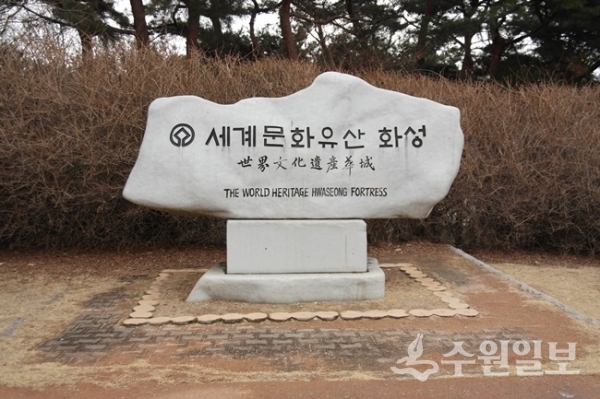
When 'Suwon Fortress' reclaimed its proper name as 'Hwaseong,' Mayor Shim Jae-deok launched a full-scale campaign to register it as a UNESCO World Heritage Site. At that time, the Cultural Heritage Administration decided to apply Korea's representative fortress and palace for UNESCO World Heritage registration in 1997. There was no disagreement about applying Changdeokgung Palace.
However, opinions were raised to apply Namhansanseong Fortress in Gwangju and Samnyeonsanseong Fortress in Boeun as world heritage sites. But the final selection went to Suwon Hwaseong. This was largely due to the strong recommendation of Kim Dong-wook, a professor of architecture at Kyonggi University and the foremost authority on Hwaseong, who is also an architectural historian.
Professor Kim wanted to inform people worldwide about the value and excellence of Hwaseong. It is not an overstatement to say that Hwaseong became a UNESCO World Heritage Site through the efforts of three people: Shim Jae-deok, Lee Jong-hak, and Kim Dong-wook. On June 21, 1997, a phone call came from the Ministry of Foreign Affairs: "It seems UNESCO's executive board will likely defer Hwaseong's World Heritage registration."
Mayor Shim Jae-deok was deeply shocked. He instructed the chief of the Cultural Heritage Team at Suwon City Hall to go on a business trip to Paris, France, where the UNESCO executive board was meeting. He also contacted Park Du-ho, a reporter from Yonhapnews who had always been interested in Hwaseong, proposing they travel together.
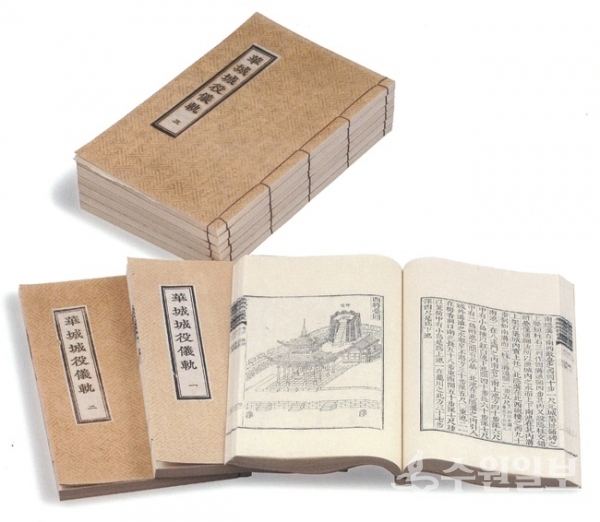
Before departing for Paris, Mayor Shim prepared a facsimile of the 'Hwaseong Songnyeok Uigwe' created by Lee Jong-hak and a 'bangpae yeon' (traditional Korean shield kite), a symbol of Korean traditional culture. With the determination to register Hwaseong as a UNESCO World Heritage Site, he boarded a flight to Paris on June 23, 1997. The campaign to register Hwaseong as a World Heritage Site proceeded at a rapid pace.
UNESCO decides whether to reject an application in the first stage based solely on the submission or to send an inspection team for on-site verification. Fortunately, both Changdeokgung Palace and Hwaseong passed the first review. In early March 1998, Professor Nimal De Silva from Sri Lanka, affiliated with the International Council on Monuments and Sites, visited Suwon to conduct an on-site inspection of Hwaseong.
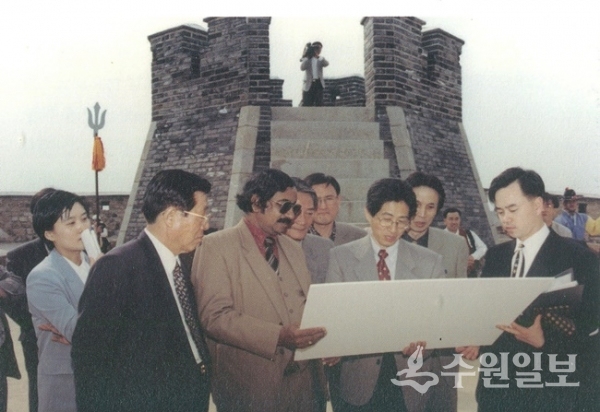
Since the assessment of the inspector conducting the on-site review influences the registration decision, Suwon City did its best to explain Hwaseong's excellence to Professor Silva. The interpreter at that time was Pastor Lee Sung-chul of Joong-ang Elementary School. Additionally, Professor Baek Seung-gil, who was the Korean chairman of the International Council of Museums (ICOM), assisted with interpretation.
Through these efforts, Professor Silva expressed considerably positive opinions before departing. Suwon City was merely waiting for UNESCO's executive board approval. However, Changdeokgung Palace received a recommendation for World Heritage registration, while Hwaseong received news of its deferral.

Believing that Hwaseong's UNESCO World Heritage registration was essential for Suwon's future, Mayor Shim Jae-deok departed for Paris, where UNESCO headquarters is located, two days after receiving the call. On his first day in Paris, the delegation visited the UNESCO Korean Representative Office.
According to reporter Park Du-ho's testimony from the Paris visit, the UNESCO Korean Representative Office said, "You didn't need to come all the way here. The executive members said it won't work..." and appeared displeased at the Suwon delegation's visit. The representative reportedly also made comments suggesting that UNESCO World Heritage registration was not such a significant matter. Feeling indignant, reporter Park Du-ho took out his notebook and pretended to take notes. Immediately, the tone changed: "That's not what I meant..."
The ambassador apparently felt he had received the delegation too negatively. The ambassador instructed one secretary at the representative office to assist Mayor Shim's delegation while they conducted UNESCO business. The ambassador also provided the only official vehicle available at the embassy besides the ambassador's car and a driver. This situation thus turned misfortune into fortune.
At that time, UNESCO's executive board judged that while Hwaseong itself possessed sufficient value as a World Heritage Site, the surrounding landscape was in poor condition and could not be properly preserved. In particular, many parts were destroyed during the Korean War, raising questions about whether Hwaseong could be recognized as a "complete heritage."
However, as if by divine intervention, Mayor Shim met Professor Baek Seung-gil and his wife in the heart of Paris. They were the ones who had previously assisted Professor Silva during the on-site inspection of Hwaseong. An English-speaking expert was needed, but due to the hurried nature of the business trip, they had departed without finding one.
Upon seeing Professor Baek, Mayor Shim immediately said, "I will arrange a separate European tour for you later, so please help me without fail." Professor Baek was an internationally active museum expert with many connections at UNESCO and was well-versed in international institutional protocols. He accepted Mayor Shim's request and proceeded to assist the Suwon delegation.
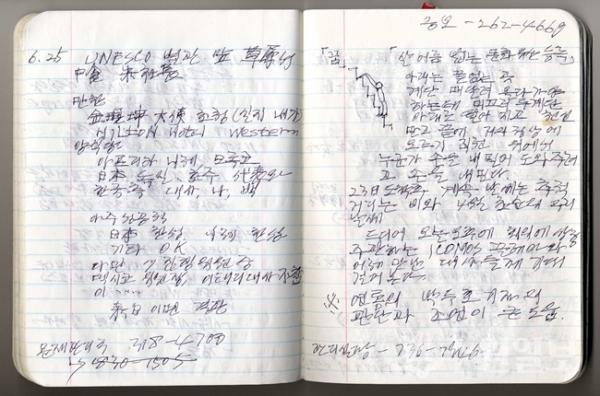
On the morning of June 25, Mayor Shim had a strange dream. He was climbing an endless staircase while hanging on. As he climbed with difficulty, he slid down two steps. After much hardship, when he nearly reached the summit, someone at the top extended a hand to help him. Mayor Shim grasped that hand and finally reached the summit. After having this dream, he had a premonition that something good would happen regarding Hwaseong's World Heritage registration.
Professor Baek Seung-gil arranged a meeting with the coordinator of the International Council on Monuments and Sites (ICOMS) and scheduled meetings with the seven executive board members' review committee. That day turned out to be June 25. At that time, Mexico held the chair, and the Suwon delegation met with review members from Australia, Japan, and Germany. UNESCO officials were impressed by Mayor Shim's proactive approach. They were moved by his sincere determination to register Hwaseong as a World Heritage Site.
At that time, 41 regions submitted applications for cultural heritage registration, but Mayor Shim Jae-deok was the only one who directly visited UNESCO. UNESCO executive members stated: "While we acknowledge Hwaseong's cultural value, we were concerned about the large residential population right next to the fortress walls. We deemed this as insufficient commitment to protecting cultural heritage and therefore deferred registration."
In response to this feedback, Mayor Shim Jae-deok promised to undertake large-scale restoration and maintenance projects to protect Hwaseong. The review committee members sensed the mayor's sincerity and requested several supplementary measures for registration. Mayor Shim explained the cases of cultural heritage protection zone designations and management under city planning law.
He explained that Suwon would purchase land surrounding Hwaseong to create distance between the fortress walls and residential areas, and would attract Hwaseong-related facilities on the purchased land. The UNESCO executive committee members viewed Mayor Shim's responses positively and placed Hwaseong and Changdeokgung Palace on the executive committee's main agenda.
Ahead of the executive committee's final decision, Mayor Shim requested that the UNESCO ambassador arrange a dinner with the 13 executive members. Such a spontaneous gathering was truly a difficult endeavor. The UNESCO ambassador was so moved by Mayor Shim's passion that he made the dinner happen. The dinner took place at a Paris hotel on the evening of June 26.
Having met with UNESCO executive members beforehand, Mayor Shim felt at ease and explained the Hwaseong protection program once more. Mayor Shim recalled what he said that evening:
"Currently, South Korea is experiencing a development boom. Suwon citizens are also demanding development from me. Particularly, the development demands from people living within Hwaseong fortress are intense.
Because of the Cultural Heritage Protection Law, people inside Hwaseong cannot build taller houses or even properly drive a nail. Therefore, if you do not register Hwaseong as a World Heritage Site, I will immediately return to Suwon and demolish Hwaseong. Be aware that the disappearance of Hwaseong will be caused not by me and the citizens, but by you.
Although many parts of Hwaseong were destroyed during the Korean War, it has been restored based on the 'Hwaseong Songnyeok Uigwe,' so it is essentially in its original form. I look forward to your wise judgment."
Mayor Shim expressed himself indirectly with humor, but it was effectively a subtle threat.
Through these efforts, UNESCO officials recognized Hwaseong's important value and decided it should be registered as a World Heritage Site. Two days after the dinner, Suwon Hwaseong achieved the remarkable feat of receiving a "registration recommendation" from UNESCO's executive board through supportive statements from Japanese and Australian representatives.
A "registration recommendation" was essentially equivalent to "registration." If Mayor Shim Jae-deok had not flown to Paris, this would have been impossible. Mayor Shim heard this news aboard an airplane heading to Townsville, Australia, which is a sister city to Suwon. The delegation celebrated Hwaseong's World Heritage registration recommendation by popping champagne on the plane.

On December 6, 1997, at the 21st General Conference of UNESCO's World Heritage Committee held in Naples, Italy, Hwaseong was officially approved alongside Changdeokgung Palace and registered as a World Heritage Site. This was Mayor Shim Jae-deok's foresight.
It was a remarkable achievement realizing the truth that if one earnestly desires and never abandons a World Heritage Site registration, it will surely be accomplished. A journalist once asked me: "Where does Suwon's strength to invest hundreds of billions of won in Suwon Hwaseong come from?" I answered: "It comes from the World Heritage Site registration certificate."
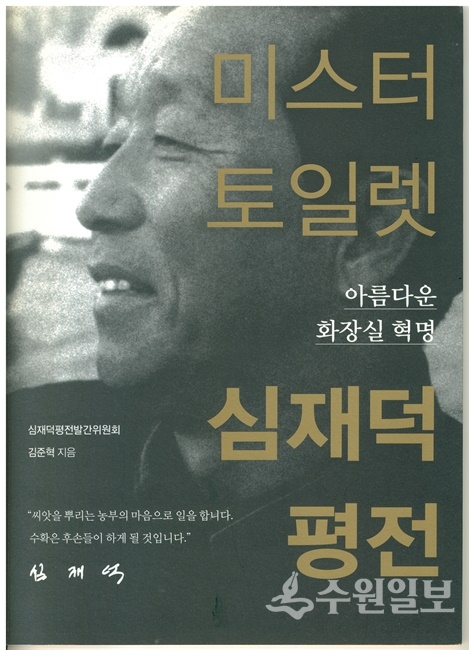
2022 is an election year for local government leaders. I hope that a candidate with the mindset of Mayor Shim Jae-deok—one who opens the future of Suwon—becomes mayor.
正在加载评论…