
[Contribution] Words That Endure Through the Ages... Rereading Gosan Yun Seon-do's 'Byeongjinso'

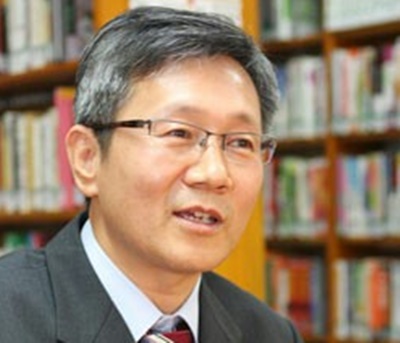
Yun Jae-yeol / Essayist

As the year drew to a close, I viewed the ‘Gosan Yugo’ at the ‘Gosan Yun Seon-do Museum.’ It is a collection of poetry and prose compiling the poems and essays of Yun Seon-do, published in 1791. It was published by order of King Jeongjo, and it contains poetry that shines in our literary history. It is thanks to ‘Gosan Yugo’ that Yun Seon-do's sijo can reach today's classrooms across hundreds of years.

This book contains the memorial to the throne, ‘Byeongjinso.’ A memorial is now read only as a document of the past. It is treated like the political language of an era already ended. But if you read it slowly, your thoughts change. You come to realize that the text is not merely a scene from the late Joseon period, but a question posed to us now.

Gosan's ‘Byeongjinso’ was written in 1616, the eighth year of King Gwanghaegun's reign. At the time, Yi Yi-cheom held power in the court and wielded it tyrannically. With unchecked, powerful force, he schemed unjust abuses. It was a situation in which no one could resist the abuse of political power that had Yi Yi-cheom at its apex.

At this time, Yun Seon-do submitted a memorial demanding that they be punished. He was then a Confucian student at Sungkyunkwan, aged 30. Though merely a saengwon without any special official post, he had passed the preliminary jinsa examination at 17 and taken first place in the seungbosi at 20. At 26, he was a rising bureaucrat who had placed first in the jinsa examination, an elite official with a promising future. However, this memorial was not delivered to the king. He submitted it to punish the faction that had stifled the court, but that very faction intercepted it midway. The forces who felt threatened ultimately framed Gosan and exiled him to Gyeongwon in Hamgyeong Province. Over a single memorial, they brought down a harsh blade of 17 years upon a young scholar.

The ‘Byeongjinso’ begins by directly pointing out the abuse of power by Minister of Rites Yi Yi-cheom. It declares that if a subject is unworthy, state affairs also cannot stand upright, and it notes that political corruption originates from disorder in personnel appointments. It records that rumors of unfair civil service examinations had already become a common topic, and that word was going around that more than a dozen people were implicated among just the successful candidates of a special palace examination. In particular, it raises the issue that Yi Yi-cheom's four sons passed the examinations by illicit means, sharply exposing the reality of power eroding the system through blood ties. Going beyond rumor, it denounces the corruption by citing specific cases he himself experienced.

After the death of King Seonjo, the court was divided between Prince Yeongchang and Gwanghaegun over royal succession. There were forces that supported the legitimate son Prince Yeongchang, but ultimately Gwanghaegun became king. As a result, Yi Yi-cheom, who had supported Gwanghaegun, became a first-rank meritorious subject overnight. Gwanghaegun tried to stabilize the political situation, but things did not go as he wished. Through the Gyechuk Prison Incident of 1613, Prince Yeongchang met his death, and Queen Dowager Inmok was confined. In this process, power became excessively concentrated in Yi Yi-cheom, and the court gradually lost its way.

The memorial exposing their misconduct was a choice made in the face of death. At the end of the memorial he wrote, “(This subject's father) pitied that his son was going forward to his death, and sat blankly, saying nothing.” This single sentence contains the fact that not only Gosan but also his own father had, to some extent, foreseen its outcome. Even so, the father did not stop his son's resolve to step forward to set the nation right. Gosan's loyalty transcended fear, and the father's silence became a solemn, tragic permission.

Gosan asks, “Does Your Majesty regard today as a time of good governance, or a time of chaos?” He chose to ask a question instead of criticize, but this was an indirect way of saying that governance had gone astray. He also did not hesitate to speak frankly, close to an ultimatum. He pleaded that not only Yi Yi-cheom but also the crimes of Park Seung-jong and Yu Hui-bun be dealt with together. These men had formed powerful forces while forging in-law relationships with the royal family. They were mountains that could not dare be toppled, yet he pushed forward with upright conviction. Each and every sentence that emerged was like an arrow shot from a bowstring drawn with all one's might. The bow was unrelenting, as if piercing the very heart of corruption and irregularity.

Even looking back now, Gosan's memorial is an excessively reckless protest. He had neither power nor a political base to lean on. The result, too, was foreseen. The now-familiar landscape of injustice did not waver in the slightest, and the situation in the end did not move. What remained was only the silence of the majority and gazes that deliberately turned away. Gosan was pushed out by the force of the entrenched, and driven to the edge of isolation.

Although it is difficult to make a flat comparison between Gosan's situation then and today, even now the phenomenon so-called ‘iptulmak’ (mouth-covering) is repeated. The right to speak exists institutionally, but in reality there exists social and structural oppression that prevents people from speaking. Such a phenomenon is enough to create enforced silence even without physical violence.

This is also the reason I paused for a moment before an old memorial. It was not to honor the past. It was to reflect on the language of today. Gosan's memorial was recorded as a failure in its own time. He did not achieve his aim, nor did he set reality right. But the language of right and wrong survived beyond failure. When languages that ride the tide of their times perish quickly, this one shines, unworn even after long years. Is it not the archetype of the channels of democratic expression today? In particular, it is remembered fervently in that he thought first of the duty to the nation and the lives of the people, before his own safety.

윤재열 수필가
Send a news tip to Suwon IlboYour tip becomes the news · Your identity is protectedSend tip