[Kim Seung-jong's Literary Miscellany (179)] 'And Yet We Must Walk Somewhere'
The advancement of medicine and public health. Thanks to their benefits, everyone now expects to reach the age of 80. I asked Gemini how large Korea's current population of 80-year-olds is. It said there are 261,648 in total—111,661 men and 149,987 women (Korea's total population is about 51.08 million). It was unexpected, and I felt the weight of turning eighty all the more. We approach the age of 80 from various angles. Each age group, starting with teenagers, will have a different sense of quantity and image regarding the age of 80, and so of course will those in their 90s. But above all, the reflections of those who have reached this age would likely draw the most interest as something all age groups share.
In the following poem, the poet, having reached eighty, begins his reflective introspection with, 'All the things I long for remain just as they were / and I look back anew, wondering how this could be.' Indeed, there is a customary usage of 'mangpal' (望八, looking toward 80) as soon as one passes seventy, and the poet himself would have been conscious of it even before then. And because the sentiment seems unrelated to advanced age, we might easily find it puzzling. It is hard to say the poet was unaware of such a reaction, yet he candidly and directly pours out his regret just as it is.
To think I have reached eighty (八旬) already
All the things I long for remain just as they were
and I look back anew, wondering how this could be
Every longed-for corner is still hidden there
Have I arrived at an unexpected
barren (荒蕪) land?
I said I was searching for something
but at this age it all feels distant
Everything that came to me and left
I grope through the pages of life
I grope, and yet they cannot even be grasped
Beauty and longing are a distant rainbow
And yet I am moving my steps somewhere
Am I perhaps heading toward a speck of dust in the wilderness?
And yet we must walk somewhere
Where is the distant rainbow?
Where am I?
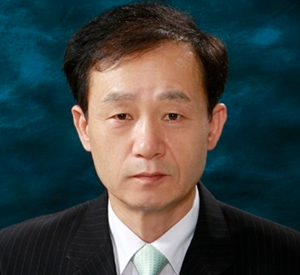
─ "I Have Reached Eighty (八旬)" / Yun Hu-myong (1946-2025)
In other words, the phrase 'all the things I long for remain just as they were' implies both an awareness that even at 80 the 'things' longed for since youth and the aspiration toward them have not declined, and the sense that, upon actually turning 80, the related yearning has instead grown fresh. The same is true of the statement 'To think I have reached eighty (八旬) already.' It carries a greater distance from turning eighty—and a less intense self-consciousness of lament—than phrases like 'I have reached eighty already' (in a resigned tone) or 'So I have come to eighty.'
Still, one hesitates to call it excessive desire or undeserved attachment—that is, the greed of old age (老貪). To so easily categorize this state of the poet's heart may be the habit of preconception or a hasty side effect thereof. And by now we no longer hear the remark that the body has aged but the heart is still young as a lament, but rather resonate with it as one of life's realities. There are many around us who diagnose themselves as being still young at heart though aged in body, and thus—unable to restrain themselves amid momentary confusion—do they not end up mocked as unbecomingly foolish, especially by the young of the opposite sex, or leave them quite displeased?
One also hesitates to regard the ensuing remorse—'Every longed-for corner is still hidden there / Have I arrived at an unexpected barren (荒蕪) land?'—as excessive modesty or a display of sentimentality. We wish that our hopes and aspirations, our attempts and explorations, will come to fulfillment, but even having reached 80 or beyond, we cannot be certain whether we can acknowledge that achievement, subjectively or objectively. And so we are likely to accept the poet's confession while recalling the arduous, unresolved tasks of our own lives.
Furthermore, we can express sympathy—though not at the same age or the same stage—with the confession, 'Everything that came to me and left / I grope through the pages of life / I grope, and yet they cannot even be grasped.' On the whole, the recollection of a past life cannot easily be 'grasped.' There are proud moments and shameful ones alike, but memory is prone to distortion, and even the same scene can shift in perspective and evaluation with the passage of time. Thus the statement 'Beauty and longing are a distant rainbow,' set in parallel with the earlier 'Every longed-for corner is still hidden there,' makes this nostalgia-like feeling seem no exaggeration.
The poet at last synthesizes the above reflections and encourages himself with the following realization: that even at 80 he will still pursue the 'beauty and longing' he has always sought, and that though his journey may ultimately end at 'a speck of dust in the wilderness,' 'and yet' he must still seek a path and 'walk somewhere' that for now remains unknown.
In many poems we have heard, in low and high tones, the voice saying that life is a wayfarer through space and time, and this poem too, on the basis of such recognition, remains consistent in its course around the age of 80. The poet passed away in the year he wrote this poem, and so his progress was cut short, yet inwardly he must have been happy. Unlike other ordinary wayfarers, he knew what the 'distant rainbow' of 'beauty and longing' was, and though he asked himself 'Where is the distant rainbow?', he seems to have glimpsed it, even across an 'immeasurable' distance. And though, even after a lifelong, endless search, he says 'Where am I?', at some point it was no longer wandering, and perhaps he had never, from the start, cared about whether he would arrive.