


Hwaseong Special City Returns Over 5,600 Shopping Baskets Collected by Citizens Back to Citizens
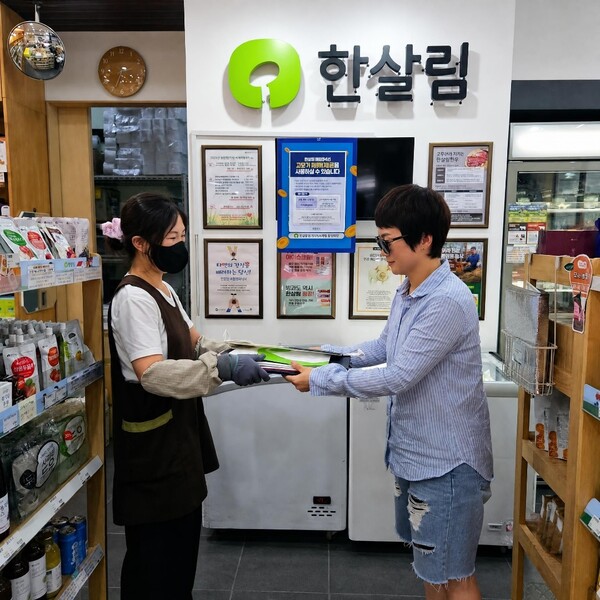
Hwaseong Special City (Mayor Jung Myeong-geun) announced that it has concluded the 'Collect Shopping Baskets!' resource circulation practice campaign, which was launched to commemorate 'World Day Without Single-Use Plastic Bags' on July 3rd, with the participation of approximately 400 citizens.
Through this campaign, over 5,600 unused shopping baskets from households were collected, and the gathered baskets are being reused and provided to citizens in need through local shops and institutions.
Now in its fourth year, the 'Collect Shopping Baskets!' campaign is a citizen-participation resource circulation campaign that collects reusable shopping baskets such as paper shopping bags and eco-bags unused in households, delivers them to local shops and institutions, and enables citizens in need to use them again.
The campaign ran from July 1st to September 13th, with participation from various local shops and institutions including Hanasalim, Hwaseong City Local Food Direct Store, zero-waste shops, and Namyang Seongmo Sanctuary.
Shopping baskets donated by citizens during the campaign period are being provided free of charge to citizens who visit participating shops and institutions. After the official campaign period ends, all remaining shopping baskets at each participating location will continue to be reused until they are completely distributed.
The city explained that this campaign is significant in creating a circulation structure of 'sharing-reuse' in which unused shopping baskets from households are shared with neighbors and reused within the community. Through this, the city expects it will help extend the usage period of shopping baskets while promoting the spread of resource circulation practice culture in daily life that reduces the use of single-use plastic bags.
Kim Bong-gyun, head of the Resource Circulation Division, said, "The significance of this campaign is great in that shopping baskets voluntarily provided by citizens are delivered to those in need within the community and used again. We hope that the experience of sharing goods and reusing them, moving away from a consumption pattern of single-use and disposal, will lead to citizens' everyday practice of resource circulation."