


Gyeonggi Province Governor Choo Mi-ae Demands Local Tax System Reform; National Assembly Responds with Six Bills
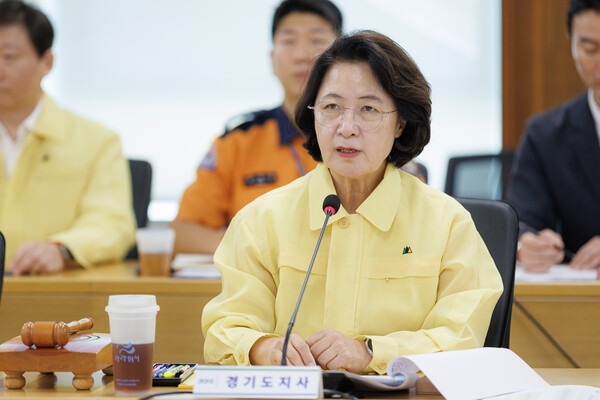
A tax system reform plan proposed by Gyeonggi Province Governor Choo Mi-ae as a solution to overcome the province's fiscal crisis is being concretized through legislative procedures in the National Assembly.
According to Gyeonggi Province on December 1, 18 National Assembly members including Rep. Kim Tae-nyeon (Democratic Party, Seongnam Sujeong-gu) plan to sequentially introduce 6 bills containing three major tasks for restructuring the local tax system by December 2.
The six bill amendments include ▲amendments to the Local Tax Law and Value Added Tax Law (2 bills) ▲amendments to the Corporate Income Tax Law, Local Tax Basic Law, and Local Tax Law (3 bills) ▲amendment to the Local Tax Law (1 bill).
Looking at specific details, the first set of amendments to the Local Tax Law and Value Added Tax Law (2 bills) includes provisions to increase the local consumption tax rate from the current 25.3% of value added tax to 40.3% (increasing 5% annually over 3 years).
The aim is to supplement the revenue structure centered on acquisition tax, which fluctuates significantly due to changes in real estate transactions and government policies, and to expand the proportion of local consumption tax based on consumption, thereby strengthening the local government's stable tax revenue base.
The amendments to the Corporate Income Tax Law, Local Tax Basic Law, and Local Tax Law (3 bills) were revised with the aim of establishing an equitable tax revenue distribution structure so that metropolitan local governments can also benefit from the fruits of corporate and regional economic growth. Accordingly, a "Local Corporate Income Tax" will be newly established as a tax item in metropolitan local taxes (regular taxes), and 5% of national corporate income tax will be converted to local corporate income tax.
Gyeonggi Province estimates that if 5% of corporate income tax is transferred to metropolitan local taxes, the province will see approximately 4.3 trillion won in increased tax revenue over four years.
The amendment to the Local Tax Law (1 bill) includes provisions to convert part (43.99%) of the local education tax portion of cigarette consumption tax, which is scheduled to sunset on December 31, 2026, to regional resource facility tax for fire services, to be used to support firefighting personnel costs and other expenses.
Through this, Gyeonggi Province anticipates that approximately 1.5 trillion won in fire service resources will be secured over four years without imposing additional tax burdens on residents.
If all three tasks are institutionalized, Gyeonggi Province projects that it can secure an additional 14.1 trillion won in fiscal resources over four years based on the province's estimates.
The introduction of these six bill amendments aligns with the direction of the government's national agenda of "expanding local fiscal autonomy and revitalizing regional economies through enhanced local fiscal resources" (National Agenda Item 53). National Agenda Item 53 includes as its major tasks improving the ratio of national taxes to local taxes to around 7:3 and strengthening local tax revenue expansion to increase local autonomous resources and enhance the autonomy of local finances.
Governor Choo Mi-ae stated, "National Agenda Item 53 clearly presents the direction of enhancing local autonomous resources and strengthening local fiscal autonomy. As the three major tasks for restructuring the local tax system that Gyeonggi Province has proposed are being concretized through National Assembly legislation, I will work closely with the National Assembly and the government to strengthen local governments' fiscal autonomy and the foundation for sustainable growth in the region."