


Walking Through Suwon's Cultural Heritage Retracing King Jeongjo's Procession from 1795
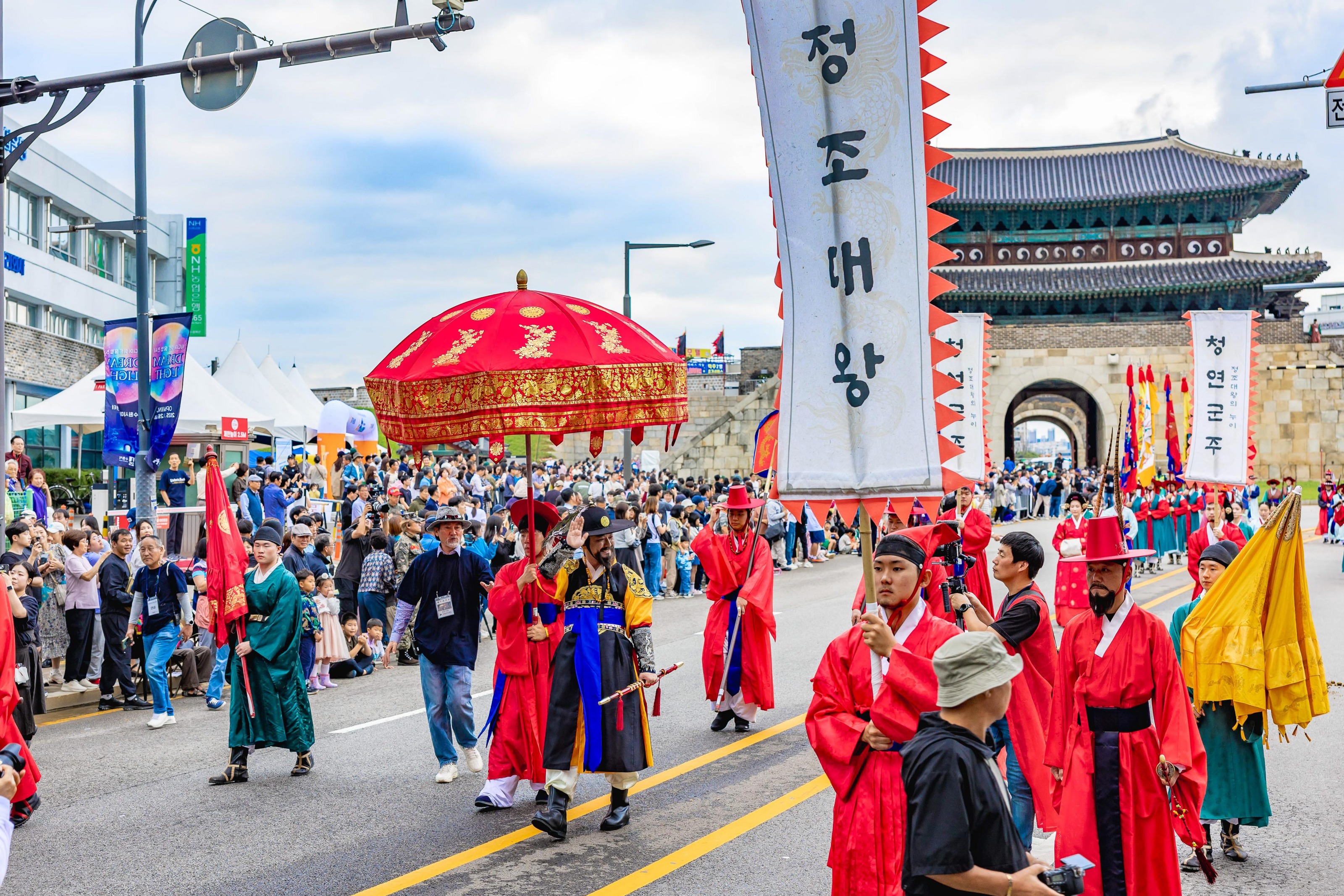
The path that King Jeongjo and his mother Hyegyeongung Hong traveled 231 years ago to visit his father Prince Sado's tomb will unfold once again through Suwon's city center.
King Jeongjo's Royal Procession Joint Recreation and the 63rd Suwon Hwaseong Cultural Festival will open simultaneously on the 4th. As King Jeongjo's procession crosses through Suwon, diverse performances, experiences, and citizen participation programs will continue through the 11th over eight days around Suwon Hwaseong.
As the king's historical procession meets today's citizens, Suwon becomes a grand stage of historical and cultural significance during the first weekend of October.
King Jeongjo's Procession from 231 Years Ago, Now in Today's Suwon
King Jeongjo's Royal Procession is an event that recreates the historical procession based on the "Wonhaeng-eul-myo jeongni-uigwe," which documents the 1795 Hwaseong journey during the Year of the Rabbit.
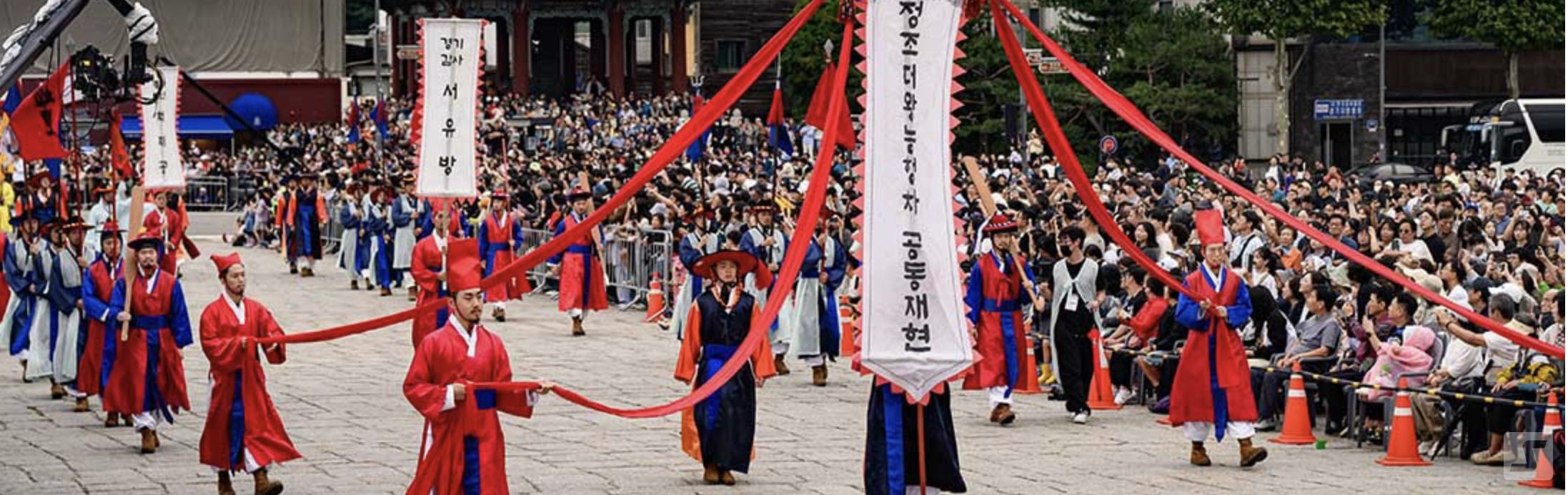
A large-scale historical and cultural parade departing from Changdeokgung Palace in Seoul and passing through Siheung and Anyang to reach Suwon Hwaseong and Yongneung in Hwaseong, jointly recreated by Seoul, Gyeonggi Province, Suwon, and Hwaseong.
This year, the Gyeonggi section spans 12.1km total, including 5.3km in Anyang and 6.8km in Suwon. In the Suwon section, the procession departs from Nosong Forest Area, passes through Suwon Sports Complex, heads toward Jangmun Gate, and continues to Haengung Plaza. A citizen-participated parade at Suwon Sports Complex will also be held, allowing people to reflect on the significance of King Jeongjo's Royal Procession.
Rather than merely recreating King Jeongjo's procession, citizens directly participate in the event, transforming the 18th-century royal procession into a 21st-century Suwon street festival.
Suwon Hwaseong, the Stage for Eight Days of Festival
The 63rd Suwon Hwaseong Cultural Festival, opening the same day, runs from the 4th through the 11th around Suwon Hwaseong. This year's festival focuses on connecting history and contemporary culture based on King Jeongjo's benevolent spirit and Suwon's urban identity.
Centered on Haengung Plaza and Haengung Palace, performances and experience programs unfold throughout Suwon Hwaseong, including at Yeonmudae, Yongyeon, and the Suwon Traditional Culture Center.
Beyond performances utilizing historical spaces, contemporary content such as hanbok (traditional Korean clothing) experiences, citizen participation programs, global programs, and XR experiences are prepared, allowing citizens and tourists to experience Suwon Hwaseong in diverse ways.
Particularly at Haengung Palace, the nighttime on-location program "Haengung Yahwa" runs from the 3rd through the 11th. Performances combining dance, song, traditional Korean music, media art, and light take place on the actual spaces of Haengung Palace including Uwhagwan, Hwaryeoungjeon, Naknamheon, Bongsudang, and Yuyeotaek.
The characteristic of this year's Suwon Hwaseong Cultural Festival is its shift from a festival viewing past history to one where citizens directly participate and experience it.
From the King's Procession to the Citizens' Festival
Diverse citizen participation programs have been prepared for the Suwon Hwaseong Cultural Festival. These include a group architecture project where citizens complete large paper structures together, along with experiential programs such as gama racing, citizen painting studio, and fortress building playground throughout the festival.
The Hwaseong fortress that King Jeongjo envisioned was not merely a castle wall. It was a space embodying King Jeongjo's vision to construct a new city and care for his people's lives. In this regard, King Jeongjo's Royal Procession and the Suwon Hwaseong Cultural Festival hold significance beyond mere historical recreation. They are occasions for citizens today to reflect on how to remember historical spaces and figures, and what cultural values to carry forward.
However, the simultaneous execution of a large-scale procession and festival is expected to cause significant traffic congestion in Suwon on the 4th.
Vehicle traffic is restricted from 1:30 p.m. to 6:30 p.m. on the Suwon Sports Complex to Jangmun Gate section where the procession travels, and from 2:00 p.m. to 8:00 p.m. on the Jangmun Gate to Haengung Plaza section. Traffic control is also planned in the afternoon hours on the Haengung Plaza to Joongdong Intersection and Changnyong Gate section.
Citizens visiting the festival are advised to check traffic control zones and times in advance and use public transportation when possible.
On the path that King Jeongjo once walked, today's citizens stand again 231 years later.
The role is shifting from spectators viewing the royal procession to protagonists of the historical and cultural festival, which imbues this year's Royal Procession and Suwon Hwaseong Cultural Festival with considerable significance. The king's path does not remain in the past. On the 4th, as the procession's drumbeats again sound through Suwon's city center, King Jeongjo's historical journey meets today's citizens and continues into a new culture.
In October, Suwon unfolds the time from 231 years ago anew over today's cityscape.