


Gwanggyo New Town Uiwon 8 Elementary and Middle School Complex Proposes New Solution with 'Low-Noise Road Pavement'
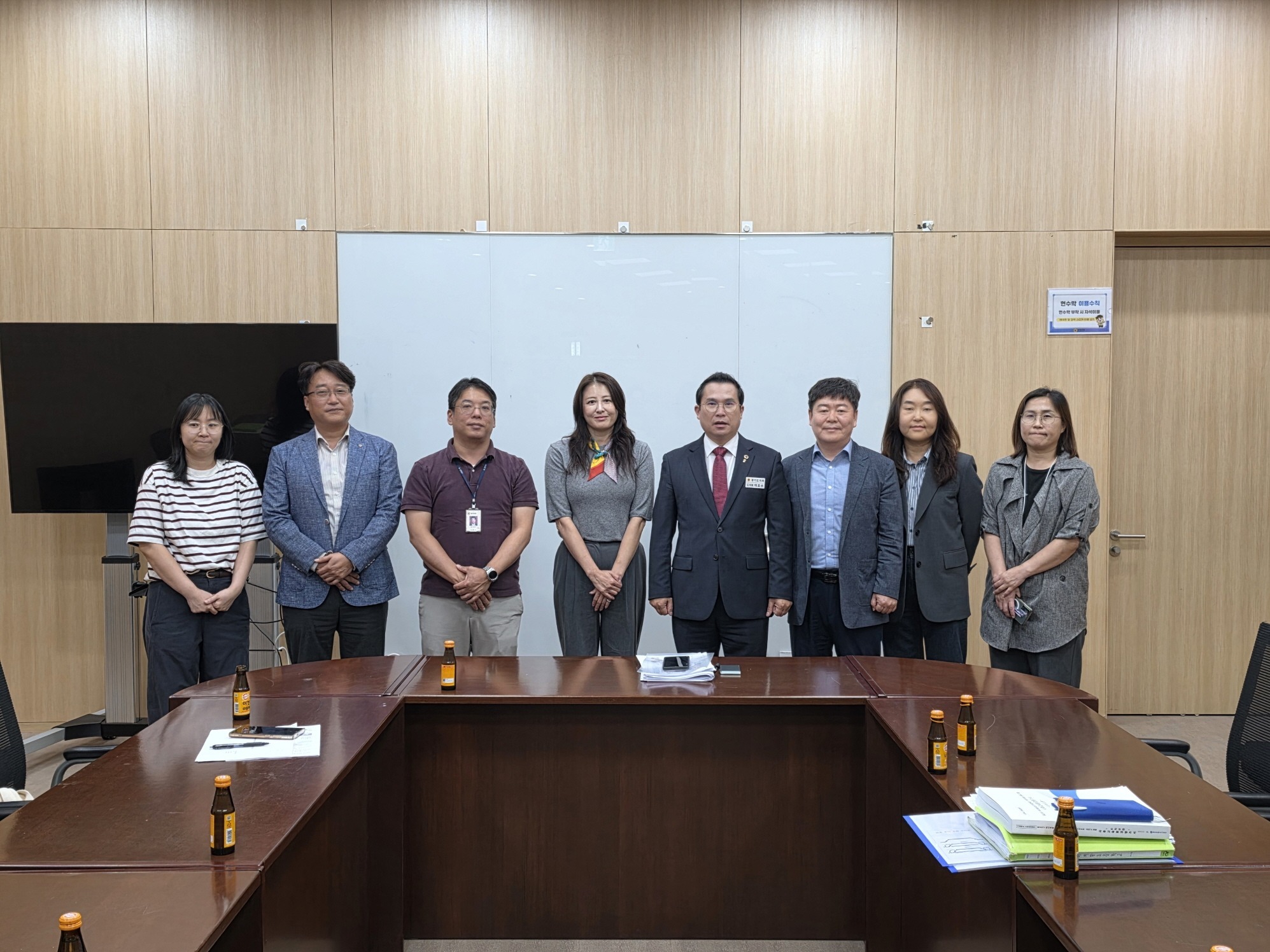
Lee O-su, Vice Chairperson of the Culture, Sports and Tourism Committee of the Gyeonggi Provincial Assembly (People Power Party, Suwon District 9), held the 10th consultative meeting on the 30th regarding the construction of Gwanggyo Uiwon 8 Elementary and Middle School Complex at the Gyeonggi Provincial Assembly's conference room and discussed solutions for installing noise-reduction facilities near the school.
The consultative meeting was attended by Suwon City Councilmember Geum Ga-hyun and officials from Suwon City, Gyeonggi Housing and Urban Development Corporation (GH), Gyeonggi Provincial Office of Education, and Suwon Education Support Office.
This consultative meeting was held to coordinate differences of opinion among related agencies regarding the location of the sound barriers being promoted during school construction, utilization of school sites, educational environment for students, and future facility management. Vice Chairperson Lee has continued consultative meetings with related agencies through 10 rounds, coordinating each institution's positions and requesting practical alternatives.
In particular, opinions were raised that if high sound barriers are installed as planned, the available space within the school would be reduced and students' views and educational environment could be affected. On the other hand, a plan to move the sound barrier outside the school site requires additional consultation on issues related to road site occupation and future facility maintenance responsibilities.
Therefore, in this meeting, a method of applying low-noise pavement to the road in front of the school was intensively discussed as an alternative to adjust the existing sound barrier installation plan to determine whether noise standards can be met.
GH decided to review through a professional organization the expected noise reduction effects and whether related standards are met when low-noise pavement is applied. The participating agencies agreed to continue follow-up consultations to determine whether the existing sound barrier installation plan can be adjusted if the review results confirm that noise standards are met.
However, opinions were also raised that since low-noise pavement requires management to maintain noise-reduction performance even after construction, maintenance methods and responsible parties, required costs, as well as post-construction noise measurements and performance management plans should be reviewed together.
Vice Chairperson Lee O-su stated, "The 10 rounds of consultative meetings were not intended to push for any single institution's position, but to find a practical solution that can protect students' right to learn and their safety while minimizing inconvenience to residents. If low-noise pavement can actually meet noise standards, we can secure school space while reducing problems arising from installing high sound barriers. GH and related agencies should promptly proceed with follow-up consultations based on objective review results."