


AI Independent Living Assistant Pilot Program to Launch in October at Disability Independent Living Support Housing
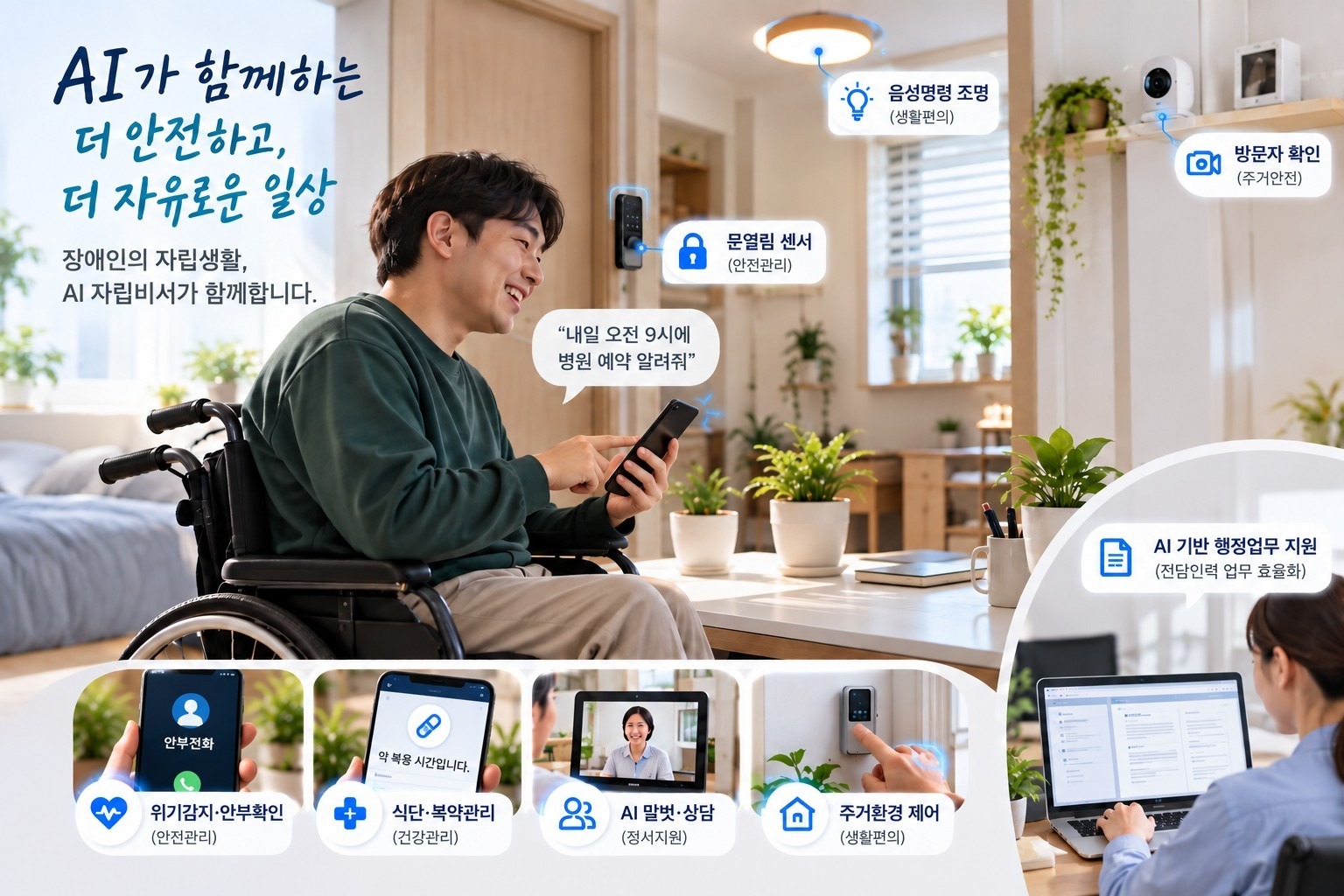
Gyeonggi Province will operate an "AI Independent Living Assistant" pilot project from October through December that leverages artificial intelligence (AI) and the Internet of Things (IoT) to support the safety, health management, and daily living needs of people with disabilities.
The "AI Independent Living Assistant" is a project that provides customized AI and IoT services tailored to the individual disability characteristics, living environments, and needs of people with disabilities residing in independent living support housing, enabling them to live more safely and autonomously in their communities. The project develops the AI utilization capabilities of people with disabilities and independent living support staff, and supports work efficiency by employing AI in repetitive administrative tasks.
The project targets 252 people with disabilities and support staff residing in 194 independent living support housing units across the province, with applications for program participation to be received from 46 operating organizations of independent living support housing, including disability independent living support centers.
Key services include enhancement of AI utilization abilities and leisure activity support, crisis detection and emergency response with welfare checks, health management such as meal planning and medication adherence, emotional support including AI conversation companions and counseling, cognitive improvement training, and phishing prevention with identification of financial and contract-related risks.
Depending on individual needs, IoT devices for convenient living—such as door sensors, voice-controlled lighting, and visitor confirmation systems—will also be provided. During times when activity support workers or dedicated independent living support staff are not present, the project plans to use AI to monitor welfare and changes in living patterns to complement care gaps.
AI will also be used in administrative work by independent living support staff. It will assist with establishing and updating independent living plans, completing surveys, analyzing official documents and contracts, searching civil service information, and interpreting legal terminology, allowing staff to focus more on face-to-face support such as counseling and case management with people with disabilities.
The project is being promoted as part of the disability independent living transition support system establishment project operated under commission by the Gyeonggi Province Comprehensive Support Center for Disability Welfare (Nurim Center), with project costs of 43 million won in provincial funds. Gyeonggi Province plans to monitor service usage performance, major cases, errors, and safety matters during the pilot period, and after project completion, will analyze the effectiveness of safety monitoring and living support gap compensation for people with disabilities and changes in the workload of dedicated staff.
Lee Eun-joo, Head of the Disability Independent Living Support Division at Gyeonggi Province, stated, "Advances in AI technology should become an opportunity for greater choice and independence for people with disabilities, not a new source of disparity." She added, "We will verify services that provide genuine practical help at the field level and develop them into a Gyeonggi Province-style AI independent living support model that backs the safety and independence of people with disabilities."