


Pine Wilt Disease Spreads to 25 Municipalities in Gyeonggi Province...Gyeonggi Launches Task Force for All-Out Response
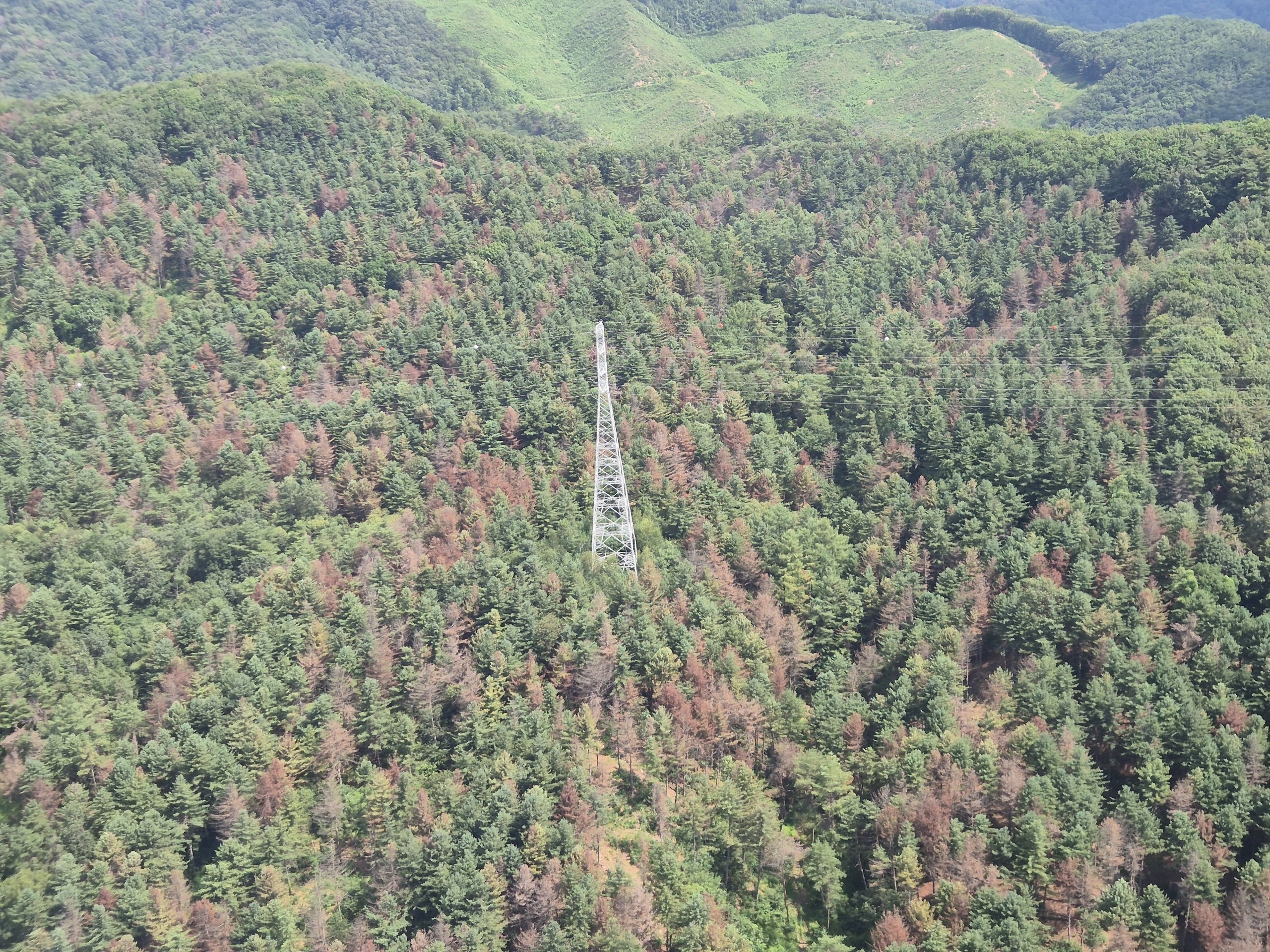
As infected pine trees in Gyeonggi Province have surged by nearly 70% compared to last year, Gyeonggi Province has launched a strong response by organizing a dedicated task force (T/F) and establishing a regional response system.
On the 5th, Gyeonggi Province announced reinforced control measures in response to the spread of pine wilt disease and revealed it will begin operating a dedicated task force (T/F) from this month.
The measures were ordered by Gyeonggi Province Governor Choo Mi-ae, who received reports that the spread of pine wilt disease within Gyeonggi Province is severe and directed ▲immediate establishment of a dedicated pine wilt disease T/F ▲creation of a dedicated team ▲establishment of a 5-year regional prevention strategy ▲operation of a capital region joint prevention consultative body ▲establishment of a cooperation system with the Korea Forest Service.
According to data compiled by the province, pine wilt disease in Gyeonggi Province has spread to 25 municipalities with 116,665 infected trees over 20 years since it was first confirmed in 2006 at 7 larch trees in Gwangju. Over the past year (June 2025 to May 2026), infected trees increased by 67.8% compared to the previous year.
Gapyeong and Yangpyeong are classified as "severe" areas with over 30,000 dead trees from damage, and Yangpyeong was designated as a special control area for the first time in Gyeonggi Province in August. Approximately 90% of the total damage is concentrated in five municipalities in the northeast: Gapyeong, Yangpyeong, Pocheon, Namyangju, and Gwangju.
Following Governor Choo's directive, the province plans to establish a pine wilt disease dedicated task force (T/F) this month with a total of four employees including one team leader. The dedicated task force will be responsible for ▲establishing Gyeonggi Province's regional prevention strategy (5-year plan) and operating the capital region joint prevention consultative body ▲providing guidance on customized prevention methods (complex prevention and species conversion) and surveillance inspections for cities and counties ▲operating the prevention regional consultative meeting.
The pine wilt disease dedicated task force (T/F) plans to establish a regional prevention strategy linked with the Korea Forest Service's national prevention strategy (2026-2030) by the end of this year and will also provide support for cities and counties to establish regional prevention strategies annually. The province has also decided to pursue formally establishing a pine wilt disease dedicated team next year.
Additionally, the province plans to establish a pine wilt disease prevention regional consultative meeting comprising relevant government officials, academic experts, forestry technicians, forestry workers, and local representatives to reflect on-site opinions in prevention strategies.
The province will also implement regional prevention plans including conducting joint surveillance of border areas with adjacent municipalities such as Seoul and Gangwon Province, and strengthening cooperation systems with related agencies including the Korea Forest Service through business agreements.
Gyeonggi Province Governor Choo Mi-ae stated, "Pine wilt disease results in 100% mortality once infected, so preventing it in the early stages of spread is paramount. With the dedicated T/F at the center, the province, cities and counties, and related agencies will move as one prevention network to reduce damage."