


Suwon's 2016 Budget Size Reaches 2.9061 Trillion Won
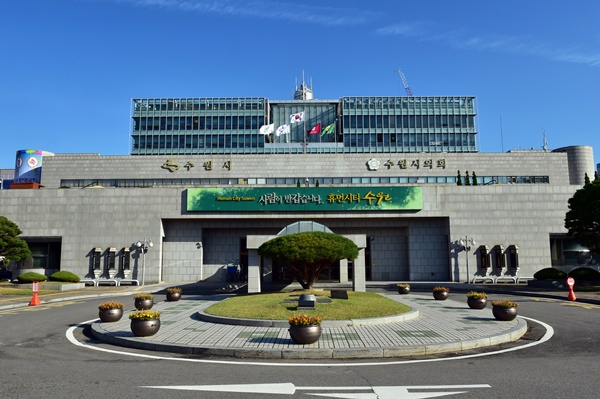
Suwon's total budget size in 2016 was 2.9061 trillion won, up 6.3% (173.3 billion won) from the previous year.
On the 28th, Suwon announced the 'Local Finance Operational Results Based on 2016 Settlement' on its website.
'Budget size,' which refers to total revenue, is the sum of independent revenue, transferred funds, local bonds, and inter-departmental transactions.
'Independent revenue' from local taxes and other revenues totaled 1.2013 trillion won. Suwon's local tax revenue in 2016 was 789.569 billion won, with per capita local tax burden at 661,000 won per resident.
'Transferred funds' from local allocation tax, adjustment grants, and subsidies amounted to 801.3 billion won, while local bonds, other revenue, and inter-departmental transactions totaled 903.5 billion won.
Suwon's total revenue has consistently increased: 2.1594 trillion won in 2012, 2.3980 trillion won in 2013, 2.5323 trillion won in 2014, and 2.7328 trillion won in 2015. The 2016 total revenue represents a 34.6% increase compared to 2012.
Compared to 'similar local government entities' classified based on population and financial scale, Suwon's budget size (2.9061 trillion won) exceeds the average of similar entities (2.3518 trillion won) by 554.3 billion won (23.6% higher).
Suwon's debt stands at 80.3 billion won, which is 600 million won less than the average of similar entities (80.9 billion won). Per capita debt is 67,000 won, 34.3% lower than the average of similar entities (102,000 won), the city explained.
Suwon is classified as a similar local government entity alongside 14 other cities: Seongnam, Goyang, Bucheon, Yongin, Ansan, Anyang, Namyangju, Hwaseong, Cheongju, Cheonan, Jeonju, Pohang, Changwon, and Gimhae.
Further details can be found on Suwon's website (www.suwon.go.kr) in the 'Information Disclosure' section (Open → Budget & Finance → Financial Disclosure).