Exclusive 1 out of 4 households with net inflow from non-metropolitan to metropolitan areas chooses Gyeonggi Province
수원일보Updated 2020.02.10 17:03
Published 2020.01.20 06:44
Updated 2020.02.10 17:03
Inter-city/county migration centered on major cities such as Suwon, Seongnam, Yongin, Goyang, BucheonInter-regional migration shows higher single-person household ratio and younger head of household age than intra-regional migration
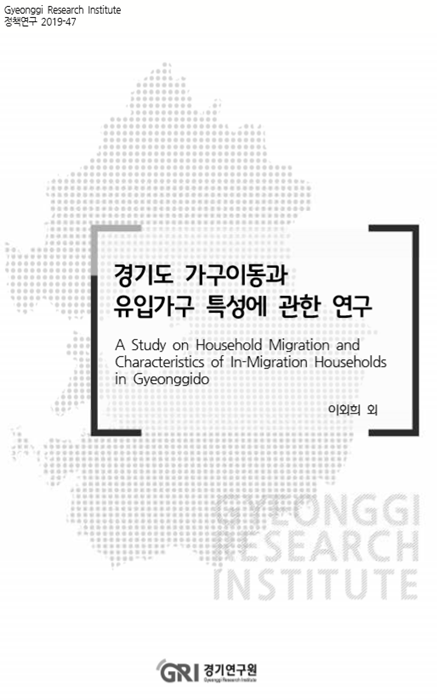
[Suwon Ilbo = Reporter Park No-hun] One out of four households with net inflow from non-metropolitan areas to the metropolitan area has chosen Gyeonggi Province.
This was revealed in 'Research on Household Movement and Characteristics of Inflow Households in Gyeonggi Province,' published by the Gyeonggi Research Institute based on Statistics Korea data to analyze household movement in the metropolitan area and characteristics of inflow households in Gyeonggi Province and to draw implications for urban policy.
According to the Gyeonggi Research Institute's report released on the 20th, the net migration of households between the metropolitan and non-metropolitan areas was 65,633 households as of 2018, with high inflow to the metropolitan area, of which Seoul accounted for 49,575 households, Gyeonggi Province for 15,320 households, and Incheon for 738 households.
Metropolitan inflow and outflow account for 89.2% and 91.9%, respectively, representing approximately 90%, while metropolitan-to-non-metropolitan movement accounts for approximately 10% of migration.
In Gyeonggi Province, migration to and from Seoul has decreased compared to the past, and movement within Gyeonggi Province has become more active.
The scale of inter-city/county migration in Gyeonggi Province is centered on major cities such as Suwon, Seongnam, Yongin, Goyang, and Bucheon; however, inflow has increased significantly in areas where new city development is active, such as Hwaseong.
Examining the characteristics of inflow households, it can be seen that the migration rate of single-person households is high. While the national average is 60.6%, Seoul is 64.9%, and Gyeonggi Province is lower at 54.9%. The age of inflow household heads shows a national pattern of people in their 30s, 40s, 20s, and 50s in that order. Seoul has the highest proportion of people in their 20s, showing active migration of youth households, while Gyeonggi Province shows 30s, 40s, and 50s in that order, indicating more middle-aged household migration.
The reasons for migration are housing, employment, family, and transportation in that order nationally, and the same applies to Gyeonggi Province. In the case of single-person inflow households, the housing ratio is relatively low and the employment ratio is high. Examining the migration reasons by age of inflow household heads, for people in their 20s, the order is employment, housing, and family or education (Seoul) for all national, Seoul, and Gyeonggi Province data; for those in their 30s and above, it is housing, employment, family, and education in that order. As age increases, the housing ratio rises and the employment ratio falls.
As a result of analyzing the characteristics of inflow households by city/county in Gyeonggi Province, focusing on inter-regional migration, single-person inter-regional migration households show high scale in major cities and high ratios in peripheral cities/counties of Gyeonggi Province. Inter-regional migration refers to movement between cities, counties, and districts, excluding movement within cities, counties, and districts. Among age groups, particularly cities/counties with high inter-regional migration household head ratios in their 50s were identified as Gapyeong County, Yangpyeong County, and Yeoju.
The reasons for inter-regional migration in Gyeonggi Province are housing, employment, family, transportation, and education in that order, and 13 cities/counties with employment as the top reason include Yeoncheon County, Icheon, Pyeongtaek, Pocheon, and Osan, which were found to be high.
Lee Wae-hee, Senior Research Fellow at the Gyeonggi Research Institute who conducted the research, stated, "Since household movement is determined by the characteristics of household heads and household members, examining population migration on a household basis can provide implications for urban policy," and proposed several policy directions.
The senior research fellow cited examples including ▲housing policies considering the characteristics of single-person households with high proportions of youth and elderly populations ▲policies to attract young people considering migration reasons such as employment for people in their 20s ▲residential and educational environment development reflecting the inflow characteristics of people in their 30s-40s in cities adjacent to Seoul ▲creation of an age-friendly society in areas with high proportions of elderly households aged 50 and above.
© Suwon Ilbo. Unauthorized reproduction and redistribution prohibited.