Gyeonggi Province Launches Pilot Program for Counseling Services for Seon감 School Survivors
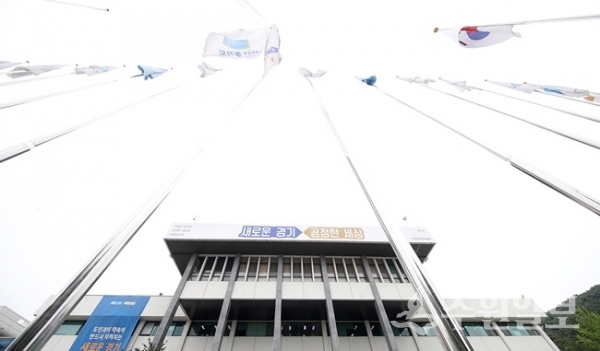
[Suwon Ilbo=Reporter Park No-hun] Gyeonggi Province announced on the 26th that it will pilot a healing project called "Counseling Services That Come to You" through November to aid in the psychological recovery of survivors of Seon감 School.
Seondam School was a reformatory established in Ansan in May 1942 following the announcement of the Joseon Youth Ordinance at the end of Japanese colonial rule. After liberation, Gyeonggi Province took over the facility and, under the pretext of rehabilitation and education for vagrants, forcibly isolated and confined street children from urban areas until 1982. Approximately 4,700 boys were subjected to forced labor, and many lost their lives attempting to escape the abuse, malnutrition, and human rights violations they suffered.
At the "Counseling Services That Come to You" program, which has been underway at the Seondam School Incident Victim Reporting Center since the 14th, six individuals recommended by the Seondam School Children National Violence Victim Task Force (chaired by Kim Young-bae) are receiving individual and group counseling. Three counseling and psychology therapy specialists will visit the center directly and conduct a total of 18 sessions of counseling through November.
Seondam School survivors experienced physical abuse including hunger, various forms of labor, and heavy work in a zone without human rights protection in the past, and thus carry trauma symptoms such as sleep anxiety and fear of confined spaces (post-traumatic stress disorder). Additionally, because they spent their childhood in labor rather than education, they have difficulties with Korean literacy and lack experience in communication and interpersonal relationships through social life. Most of them are currently basic livelihood security recipients or living as single, unmarried households.
As these individuals face integrated difficulties, alongside psychotherapy related to trauma, psychological education in basic social skills for living life is also being provided.
Dr. Sin Cha-seon, a psychotherapy specialist participating in the program, stated: "When survivors recall memories of past abuse, they remember it as vividly as if it were happening now, and they feel the fear in their bodies clearly, returning to the physical and emotional state of an abused child. Through somatic therapy, we are helping them recover emotions related to past memories and enabling them to design their futures."
Park Chan-goo, Gyeonggi Province's Human Rights Officer, said: "Through counseling, we hope that the warm experiences and emotions that they should have received during childhood will fill their bodies and hearts. After this year's pilot project, if the effectiveness of the project is verified, we will expand the scope of services."
Earlier, Governor Lee Jae-myung of Gyeonggi Province posted a tribute to Lee Dae-jun, Vice Chair of the Seondam School Children Victim Task Force, who passed away in January, on his social media account, stating: "Seondam School, where human rights violations were perpetrated, was an institution operated by Gyeonggi Province. As the top administrator of the province, I deeply feel responsible and apologize to the victims. We will not only establish a victim reporting center and conduct commemorative and healing activities, but also push for amendments to past history laws and ensure that investigations into the truth proceed properly as we fulfill Gyeonggi Province's role."
Seondam School victims or families of the deceased can make visit reservations through telephone registration (1899-7298) and then visit the center (2nd floor, Exhibition Administrative Building of Gyeonggi Creation Center, 101-19 Seondam-ro, Danwon-gu, Ansan) to file damage reports. The center is open weekdays from 9 a.m. to 5 p.m.
As of now, 108 cases of damage reports have been filed at the Seondam School Incident Victim Reporting Center, which opened on April 16.