Gyeonggi Province Seizes 230 Million Won in Unpaid Taxes Through First-Ever P2P Financial Investment Investigation
# Mr. A, a high-level tax delinquent who failed to pay 29 million won in local income tax, repeatedly cited financial hardship despite multiple payment reminders from Pyeongtaek City authorities.
However, Gyeonggi Province investigation revealed that Mr. A had invested 20 million won across three P2P finance companies—a cutting-edge fintech investment sector—generating returns of up to 16% annually, leading to seizure of the investment assets.
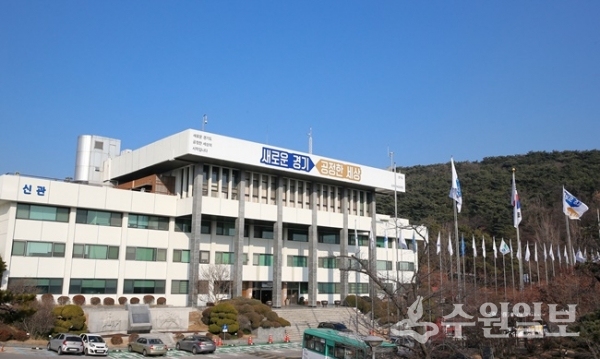
[Suwon Ilbo=Reporter Park No-hun] Gyeonggi Province announced on the 17th that following an investigation into hidden assets in P2P (online-linked investment) finance held by high-tax delinquents, it identified seven delinquents and seized 230 million won in unpaid taxes.
P2P finance is a financial service where borrowers and investors meet through an online platform without going through traditional financial institutions.
Due to advantages such as cash liquidity, acquiring principal and interest collection rights through P2P finance loan investment is attracting attention as a new investment method.
In response, the province conducted the nation's first investigation into P2P finance principal and interest collection rights from late June through early August targeting approximately 30,000 high-tax delinquents in the province owing over 10 million won in local taxes.
The investigation proceeded by examining the status of principal and interest collection rights being invested in seven online-linked investment finance operators and 19 P2P-linked lending operators holding loan balances exceeding 10 billion won.
The province explained it initiated the preemptive investigation noting that the P2P financial market is establishing itself as an alternative investment market by providing medium-interest benefits to borrowers and investors.
Such diverse financial markets could be exploited as a means to evade tax collection measures.
Kim Min-kyung, Director of Tax Justice at Gyeonggi Province, stated: "As the traditional financial market evolves and P2P finance establishes itself, the concealment methods used by tax delinquents to evade collection measures are becoming increasingly sophisticated. Gyeonggi Province will pay attention to major social and economic phenomena, discover and implement preemptive collection techniques, and lead efforts to foster a social atmosphere that 'taxes must be paid.'"
Meanwhile, P2P finance, introduced to the financial market in 2015, is evaluated as a fintech (technology + finance) investment sector with the enforcement of the Online Investment-Linked Finance Business and User Protection Act in May of this year.