Gyeonggi Province: 58% Say Government "Performed Well" Over Past 3 Years, 70% Express Trust
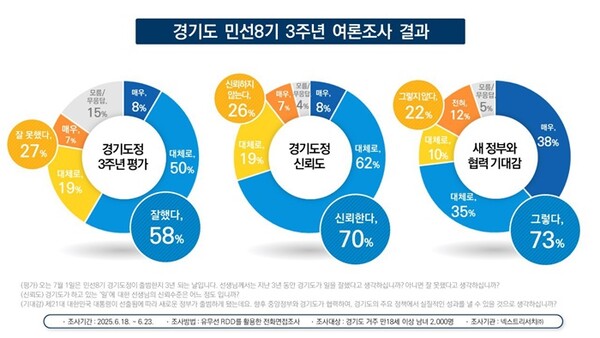
[Suwon Ilbo = Reporter Kim Gap-dong] Fifty-eight percent of Gyeonggi Province residents said the provincial government "performed well" over the past three years, while 70% expressed "trust" in the 8th elected Gyeonggi provincial administration. Additionally, 73% of residents showed confidence that the new administration and Gyeonggi Province can achieve tangible results through cooperation, according to a survey.
On the occasion of the 8th elected administration's third anniversary, Gyeonggi Province commissioned NextResearch, a public opinion polling firm, to conduct a telephone interview survey on the "Gyeonggi Province 8th Elected Administration's Third Anniversary" targeting 2,000 residents aged 18 and older from June 18-23. The results were announced on July 2.
Residents' approval rating and trust in the provincial administration, as well as expectations for cooperation with the new administration, all recorded high figures exceeding 50% (58%, 70%, and 73%, respectively).
In contrast, negative assessments that the government "performed poorly" over the past three years accounted for 27%, "lack of trust" was 26%, and negative responses regarding cooperation with the new administration were 22%.
Residents who said the provincial government performed well cited reasons including △ "many policies that actually benefit residents' lives" (18%), △ "provincial administration and policy direction align with my preferences" (14%), △ "clean and transparent administration" (14%), and △ "balanced administration without bias toward specific regions or classes" (14%).
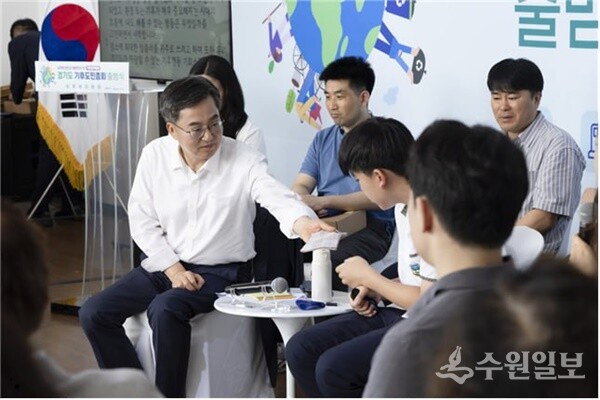
When asked to identify representative achievements among nine priority policies the province has promoted, the largest number of residents chose △ "transportation policies including promotion of 'More Gyeonggi Pass'" (24%).
Followed by △ "welfare including '360-degree care promotion'" (11%), △ "livelihood economy including support for small and medium enterprises and small business owners" (10%), and △ "regional balanced development including 'Northern Gyeonggi Major Development promotion'" (10%). Other policies included △ "youth policies including 'Gyeonggi Youth Ladder'" (9%), △ "future growth engines including '1 trillion won investment attraction'" (8%), △ "investment in social value including 'opportunity income and 4.5-day work week promotion'" (6%), △ "housing including 'jeonse damage prevention and support'" (4%), and △ "climate crisis response including 'renewable energy expansion'" (4%).
Most age groups selected "transportation policies including 'More Gyeonggi Pass promotion'" as the top achievement. However, among those aged 70 and over, "welfare including '360-degree care promotion and emergency caregiving SOS project'" (18%) appeared highest. "Transportation policies including 'More Gyeonggi Pass promotion'" was selected as the representative achievement across all regions by area. In the northern inland region, responses for "regional balanced development including 'Northern Gyeonggi Major Development promotion'" (18%) stood at similar levels to transportation policies (19%), drawing attention.
Most age groups selected "transportation policies including 'More Gyeonggi Pass promotion'" as the top achievement. However, among those aged 70 and over, "welfare including '360-degree care promotion and emergency caregiving SOS project'" (18%) appeared highest. "Transportation policies including 'More Gyeonggi Pass promotion'" was selected as the representative achievement across all regions by area. In the northern inland region, responses for "regional balanced development including 'Northern Gyeonggi Major Development promotion'" (18%) stood at similar levels to transportation policies (19%), drawing attention.
Separate from questions on representative achievements among the nine priority policies, residents were also asked about their positive or negative views on each policy. Results of positive evaluation rates by policy area were similar. "Transportation sector" (75%), "welfare sector" (64%), "livelihood economy sector" (59%) showed positive evaluation rates in that order. For "future growth engines sector" policies, 58% of residents gave positive assessments, exceeding half. These were followed by "regional balanced development" (55%), "youth policies" (52%), "social value investment" (50%), "climate crisis response" (49%), and "housing" (47%).
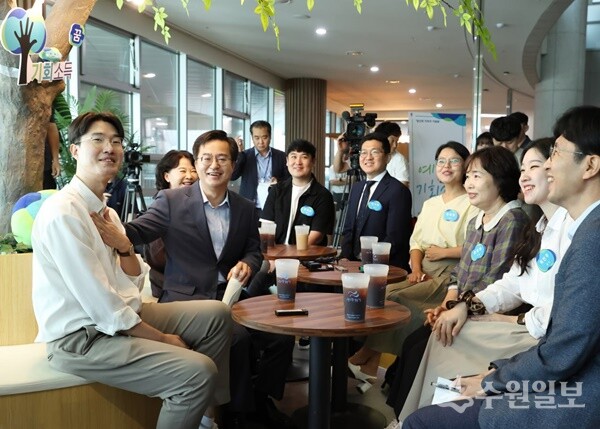
Governor Kim Dong-yeon of Gyeonggi Province recently stated at an executive meeting, "My term begins anew each day," emphasizing "there is more work to be done in the year ahead than in the past three years." He further stressed, "Let's not say 'we are wrapping up provincial governance.' Even with two weeks remaining, we can change the world."
Following the governor's directive, the province plans to expand successful outcomes based on each sector's policy satisfaction and address shortcomings to further enhance resident satisfaction.
This public opinion survey was conducted via telephone interview (landline and mobile RDD) rather than an automated response system (ARS), with a confidence level of 95% and a sampling error margin of ±2.2%p.