Gapyeong County Recycles 4.5 Tons of Annual Discarded Banners as 'Resources'
[Suwon Ilbo=Reporter Eom In-yong] Gapyeong County has converted approximately 4.5 tons of discarded banners generated annually—which have been a burden on the environment and disposal—into useful resources for residents' daily lives, setting a new milestone.
The significance lies in the fact that this is a 'two birds with one stone' policy that reduces environmental burden by recycling previously discarded waste while helping residents' daily lives.
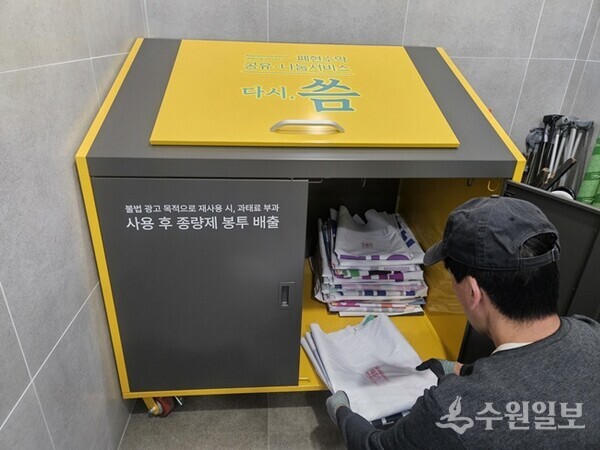
The county announced that it will fully implement a 'voluntary resource circulation sharing project for discarded banners (brand name: Dashi Sseum)' that allows residents to freely take and use discarded banners for necessary purposes.
This news outlet has compiled measures including how Gapyeong County has supplemented the limitations of existing discarded banner recycling methods.
Some local governments have promoted methods of making shopping bags and aprons from discarded banners, but there have been concerns about low budget efficiency because manufacturing costs amount to approximately 1,000 to 2,000 won per unit while actual demand is limited.
In response, the county noted that there is considerable real-world demand to utilize banners in their original form, such as for weed prevention in farms, as material covers at homes and construction sites, and for floor protection during moving and cleaning.
The aim is to establish a resource supply system that residents can feel while minimizing processing costs.
The county selects only banners in good condition, excluding those with heavy contamination from collected materials.
It then removes support frames (wooden strips) and strings to prevent safety accidents before providing them to end-users.
The selected banners are stored in dedicated storage boxes installed at eup/myeon administrative welfare centers within the county, and residents can freely take them as needed.
The range of uses for discarded banners is broad. They can be used as mulching materials in vegetable gardens or weekend farms, and as protective coverings for floor protection during painting or moving at homes.
They can also be used as covers to block rain and sunlight from outdoor stored materials.
The county has also put safeguards in place to prevent illegal advertisement reuse and unauthorized dumping.
The provided banners are stamped to indicate they are recycled products, and residents are guided to take no more than 10 sheets per person per day to prevent monopolization by specific individuals.
A voluntary management ledger is placed next to the storage boxes for residents to voluntarily record the date and purpose of use.
Shin Yun-sung, Director of Urban Affairs at the county, said, "We expect this project to not only reduce disposal costs for discarded banners but also help reduce carbon emissions. For residents, it will be a resource circulation policy with high perceived benefits, as they can reduce the burden of purchasing miscellaneous covers and protective materials for farming."