Pyeongtaek Enters the One Million Population Special City Era...'2040 Urban Master Plan' Approved
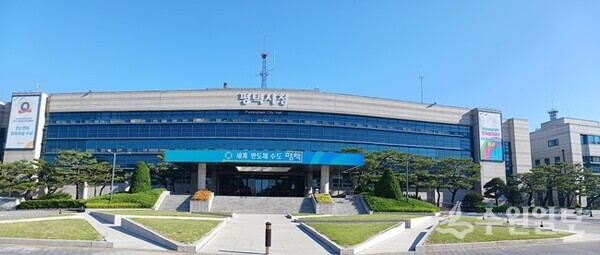
[Suwon Ilbo=Reporter Park Chan-hyuk] The foundation has been laid for Pyeongtaek to enter the one million population special city era.
This follows the final approval by Gyeonggi Province of the '2040 Pyeongtaek Urban Master Plan,' which encompasses Pyeongtaek's future vision and long-term development direction.
The urban master plan is the highest-ranking statutory plan in Pyeongtaek's urban planning that presents the city's future vision, spatial structure, and major policy directions.
With this approval, the city has confirmed a planned population of 1.054 million for 2040, making it the seventh municipality in Gyeonggi Province among local governments nationwide to establish an urban master plan reflecting a planned population of over one million. The significance is considerable as Pyeongtaek evolves into a one million population special city and becomes a city capable of continuous growth based on both capital region and non-capital region capacities.
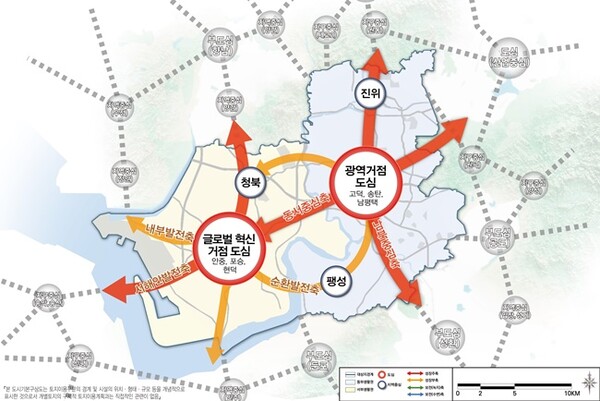
□ Foundation Laid for Urban Master Plan to Propel to One Million Population Special City
The plan was established with a focus on systematically managing Pyeongtaek's rapid growth and building urban infrastructure befitting a one million population special city. Based on the region's core industrial foundation in semiconductors, hydrogen, ports, and logistics, the plan strengthens future growth engines and incorporates the expansion of metropolitan transportation systems and living infrastructure, establishing a basis for sustainable growth.
Furthermore, the plan enhances the connectivity between major transportation axes and urban functions to strengthen future urban competitiveness and incorporates a systematic spatial structure capable of responding to large-scale population increases and industrial changes. Through this, the city plans to proactively respond to rapid urban growth and systematically build institutional and spatial foundations for realizing the one million population special city.
□ Promoting Balanced Development Where East and West, Original and New Downtown Areas Grow Together
This urban master plan reflects balanced regional development as a core agenda, not merely settling for outward urban expansion. The city will build an urban structure where the east and west regions, and original and new downtown areas grow together, alleviating regional development disparities and presenting a balanced development direction so all citizens can evenly benefit from development outcomes.
The eastern living area will strengthen competitiveness centered on advanced industries, research and development, and international exchange functions, while the western living area will be developed primarily around logistics linked to Pyeongtaek Port, hydrogen industry, and marine tourism functions. By preserving the characteristics of each region while establishing interconnected development systems, the policy aims to prevent function concentration in specific areas and encourage co-growth across Pyeongtaek.
□ Improving Living Conditions Through Metropolitan Transportation Networks and Expansion of Living Social Infrastructure (SOC)
Expanding living-focused infrastructure to improve citizens' quality of life is an important aspect of this plan. The city plans to balance the expansion of living social infrastructure (SOC) including childcare, education, culture, sports, and welfare across living areas, and continuously improve residential conditions so citizens can access public services near their daily lives.
Additionally, the 2040 Pyeongtaek Urban Master Plan reflects directions for metropolitan transportation network expansion and systems connecting major hubs in the plan, enhancing citizen mobility convenience and urban accessibility, and creating a sustainable urban environment where industry, residence, and transportation are harmonized, presenting a sustainable development vision including 'improved quality of life for citizens,' 'carbon-neutral smart city,' and 'expansion of welfare and cultural infrastructure.'
Mayor Jeong Jang-seon stated that "this final approval of the 2040 Urban Master Plan is an important turning point laying the foundation for Pyeongtaek to leap forward as a one million population special city," and "going forward, based on balanced development where east and west, and original and new downtown areas grow together, I will create a future city Pyeongtaek that all citizens can experience."