"Touting Sustainability," Olive Young Keeps Lights On Even When Stores Close Late at Night
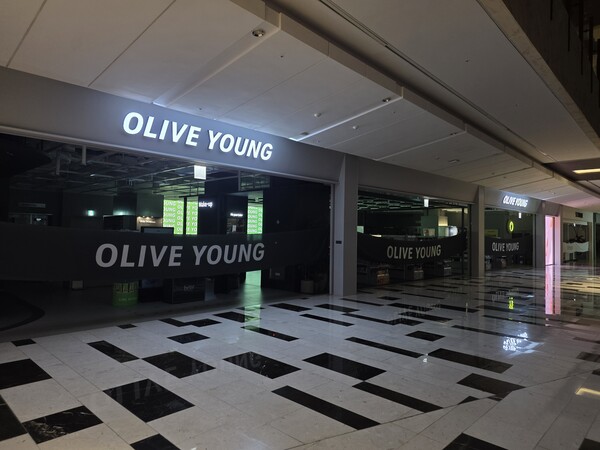
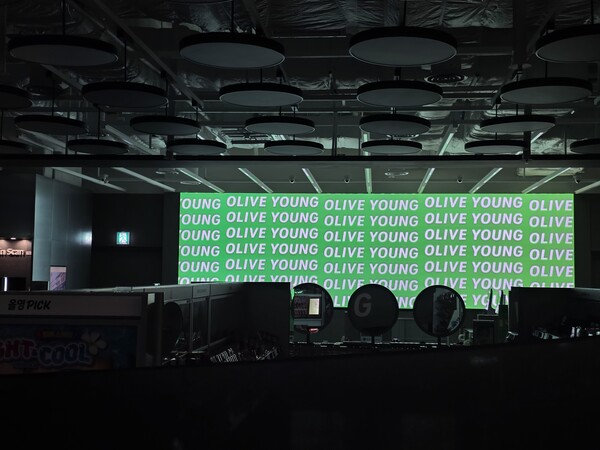
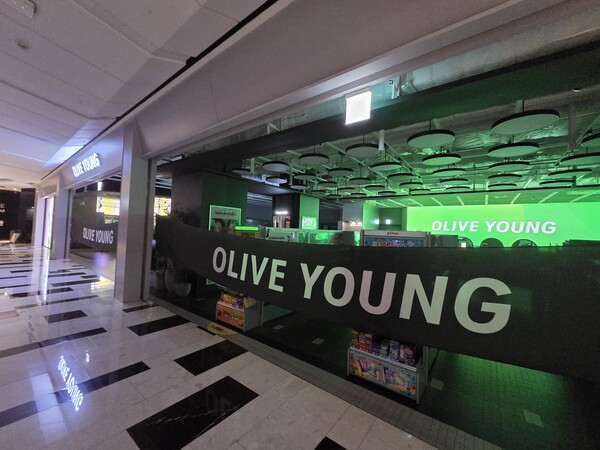
CJ Olive Young, a company that has touted itself as “delivering positive value to society and the environment,” has been found keeping external signage and display window lights on even after stores close late at night. The electricity that illuminates stores through the early morning hours when no one is watching carries a greater carbon burden than daytime electricity.
In late August after closing hours, Olive Young stores throughout Seoul kept their signage, interior displays, and display window lighting on in dark streets with no customers.
Late-night illumination is problematic for reasons beyond simple “wasted electricity.” After sunset, solar power generation stops completely, so late-night power relies more heavily on fossil fuel generation such as coal and LNG. Even using the same 1kWh, electricity consumed at night produces more greenhouse gases. The power generation sector accounts for approximately 32% of domestic greenhouse gas emissions, making it the largest after the industrial sector. This is why experts have pointed out that “turning off unnecessary late-night lighting is the cheapest form of carbon reduction,” and the government has repeatedly restricted or recommended turning off outdoor signage and neon signs at night during power supply crises.
While the power load of a single store's signage and display window may seem small, viewed across Olive Young's nationwide network of some 1,300 locations, it represents a significant power demand that cannot be ignored. Lighting left on all night during non-operating hours amounts to power consumption and carbon emissions that are essentially pure waste unrelated to sales.
CJ Olive Young is a company that has emphasized sustainable management by publishing the “2025 Olive Young Impact Report” in compliance with GRI Standard 2021. In the CEO's message, it presented itself as “delivering positive value to society and the environment.” However, if the company talks about environmental values in its reports while simultaneously keeping lights on at store locations even after closing, it will be difficult to avoid criticism that sustainable management remains confined within the pages of the report.
This publication inquired with CJ Olive Young regarding their lighting operation standards following business closure and energy conservation measures, but received no response.