


Gyeonggi Province Urges Caution Against Tick-borne Diseases During Agricultural and Outdoor Activities
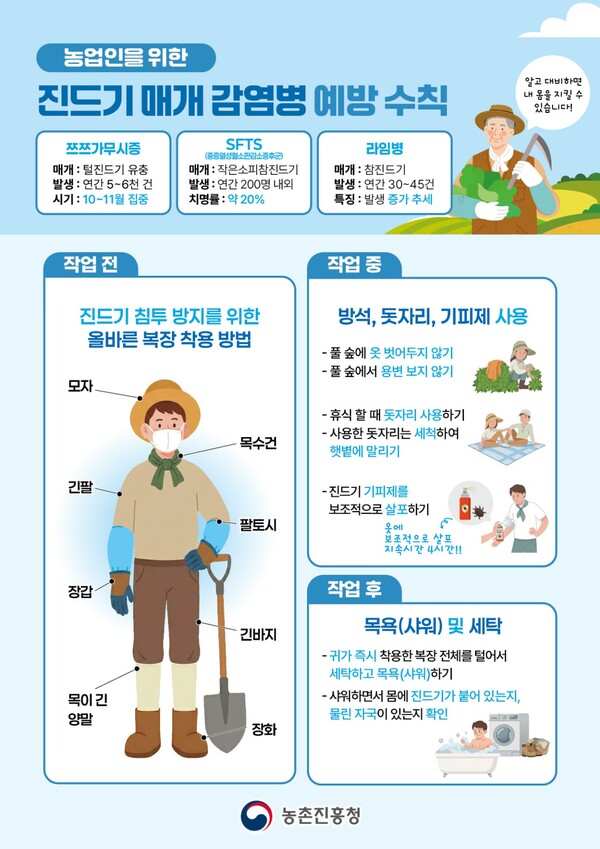
Gyeonggi Province has urged residents to follow tick-borne disease prevention measures as outdoor activities increase during the season of farm work such as rice paddy and field operations, weeding and harvesting, as well as cemetery visits and mountain hiking.
Tick-borne diseases including Severe Fever with Thrombocytopenia Syndrome (SFTS), tsutsugamushi disease, and Lyme disease occur intensively between April and November when agricultural work and outdoor activities are most active.
SFTS is a Class 3 notifiable disease transmitted through bites from infected hard ticks carrying the virus. After an incubation period of 5 to 14 days following infection, symptoms such as high fever, vomiting, diarrhea, muscle pain, and chills may appear. In severe cases, it can lead to reduced platelets and white blood cells and multiple organ failure.
Currently, there are no preventive vaccines or treatments available, making prevention all the more important.
According to test results from the Gyeonggi Province Institute of Health and Environment, which tested 204 suspected SFTS cases from January to August this year, 12 cases tested positive, recording a 5.9% positivity rate. While the number of test cases decreased by 10.5% compared to the same period last year, the number of positive patients increased from 10 to 12. Among positive patients, those aged 50 and above accounted for 75% (9 cases), requiring special caution during agricultural work and outdoor activities among middle-aged and elderly residents.
During outdoor activities, it is advisable to minimize skin exposure by wearing long sleeves, long pants, gloves, and socks, and to use tick repellents. Clothing should not be removed or laid on grass, and established hiking trails should be used during mountain climbing. After completing work or outdoor activities, clothes should be immediately washed and a shower should be taken, carefully checking areas where ticks tend to attach such as hair, around ears, armpits, lower back, and behind the knees. If a tick is found attached to the body, it should not be crushed by hand; instead, it should be removed with tweezers followed by a visit to a medical institution for treatment.
The Gyeonggi Province Agricultural Technology Center has distributed 1,830 promotional leaflets and 1,680 tick repellents from April onwards to provide prevention education to provincial farmers who engage in extensive outdoor activities during the farming season. Additionally, prevention guidelines are being continuously provided through agricultural work safety managers and heat-related illness prevention personnel.
Kim Myeong-gil, head of the Infectious Disease Research Division at the Gyeonggi Province Institute of Health and Environment, stated, "Not all people bitten by hard ticks become infected, and only some ticks carry the virus, so it is important to adhere strictly to prevention measures rather than be excessively anxious. In autumn, there are numerous opportunities for tick exposure not only from agricultural work but also from cemetery visits, grave maintenance, and hiking, so it is essential to practice prevention guidelines before and after outdoor activities."