



Record-Breaking $6.4 Billion Heist 5:20 AM, $6.4 Billion Gone in 20 Minutes...Binance Hacking Timeline

Crypto history's largest theft was over in just 20 minutes. In the early hours of October 30th Korea time, approximately $6.4 billion—or 8.4 trillion won in Korean currency—vanished from Binance, the world's largest exchange, through its hot wallet. However, the timeline of this incident began far earlier. Based on tracking by blockchain analytics firms, the incident has been reconstructed chronologically.
◇ D-36 Hours: Quiet Preparation
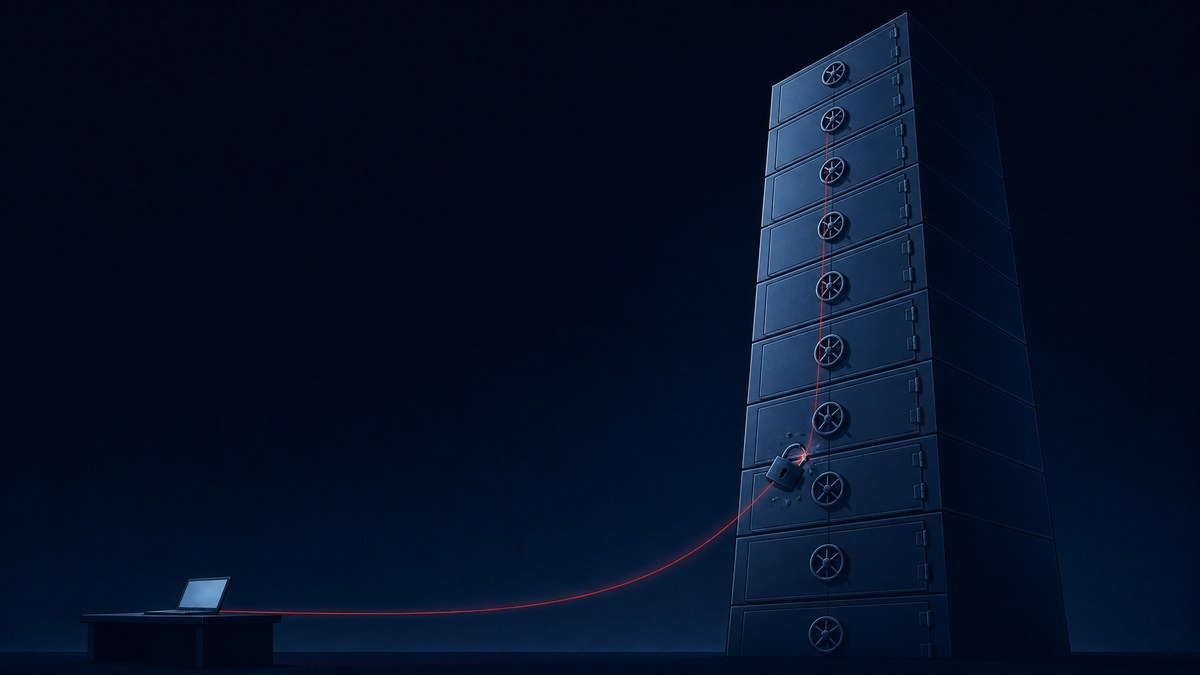
The attack was not spontaneous. According to TRM Labs, the attackers began their operation at least 36 hours in advance. They prepared wallets in advance that had received funds from the money laundering tool "Tornado Cash," and pre-staged "signed approvals" that would cause Binance's hot wallet (internet-connected wallet) to execute the attacker's code. There were no traces of private key theft. Rather than duplicating keys, the approach made the vault open itself.
◇ October 30th, 5:20 AM: 20 Minutes of Outflow
At approximately 5:20 AM Korea time on October 30th (4:20 PM Eastern Time on October 29th), assets began moving almost simultaneously across 10 blockchains. Cross-verified counts by Chainalysis and TRM Labs put the total at approximately $6.4 billion. In some cases, a single transaction moved over $2.5 billion. The outflow was complete in about 20 minutes. That amounts to approximately 400 billion won per minute.
◇ Same Morning: "Your Funds Are Safe"
Binance immediately suspended all deposits and withdrawals. Founder Changpeng Zhao (CZ) wrote that it "appears to be a hack" but that "user funds are safe," while Co-CEO Richard Teng declared, "The bottom line is this: your funds are safe, and all losses will be covered by us." The company secured funds of $6.34 billion through its emergency fund SAFU and its own capital, and disclosed that 80% of the affected assets are held in the same coins. In its initial announcement, the company identified the breach point as a compromise of a DevOps engineer's laptop.
◇ 7:46 AM: Seoul's Domestic Exchange Defenses
Seoul's morning began with an announcement. Upbit issued a caution and restriction notice for withdrawals to Binance at 7:46 AM, followed by Bithumb and Coinone. No individual damage to domestic users has been reported, and there is no official stance from the financial authorities yet. The market shook. Bitcoin plummeted 5%, briefly hitting 76,300 dollars, its lowest level in six weeks, with Bitcoin futures liquidations alone reaching $479 million. Share prices of Coinbase and Robinhood also fell sharply in tandem.
◇ That Afternoon: The Perpetrator's Fingerprints
On-chain tracking was swift. Chainalysis, TRM Labs, and Elliptic all pinpointed the Lazarus faction of "TraderTraitor," a hacking group linked to North Korea's Reconnaissance General Bureau. The decisive evidence was the scene on-chain where funds stolen from Bitget exchange last month and this theft were mixing in real-time. With Tether freezing $157 million alone, approximately $2.8 to $3 billion has been frozen to date, and the U.S. Federal Bureau of Investigation (FBI) and Secret Service have launched joint investigations. North Korea's accumulated crypto theft, including this incident, is estimated to exceed $6.5 billion.
◇ October 31st, and Remaining Questions
As a day passed, the incident became more complex. CEO Teng corrected his account, stating that it was not a single laptop but "additional breach points were discovered," and the exact attack pathway remains under investigation. Binance is sequentially resuming withdrawals and has announced it will disclose proof of reserves (PoR) on November 2nd. The scale is unprecedented. It exceeds four times the Bybit hack last year ($1.5 billion), and Elliptic assessed it as potentially "the largest theft of any kind in history, beyond just cryptocurrency."
Nevertheless, the fact that this amount represents 3.9% of Binance's custodial assets ($162.8 billion) reveals two sides of the incident. Few exchanges in the world can compensate fully, and those few are still being breached. 36 hours of preparation, 20 minutes of execution, and an investigation that is still ongoing. Once again, what was compromised was not the vault's lock but people and operational procedures. An old adage about not keeping one's entire fortune on an exchange has now gained an 8-trillion-won piece of evidence.



Loading comments…