Kim Se-hwan, Who Carried the Torch of Suwon's March 1st Movement, Selected as "Independence Activist of the Month"
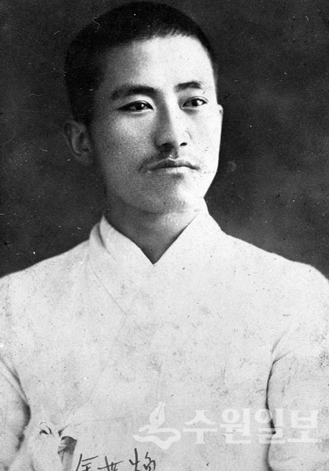
·[Suwon Ilbo=Reporter Seo Dong-young] The Veterans Affairs Agency selected Kim Se-hwan (金世煥, 1889–1945), an independence activist from Suwon, as the "Independence Activist of the Month" to commemorate the 101st anniversary of the March 1st Movement.
Born at 242 Nam-su-dong, Suwon, Kim Se-hwan was one of the 48 representatives of the nation in the March 1st Movement and led independence movement organizational activities in Suwon, Icheon, and South Chungcheong regions, while also engaging in active work in Suwon's educational circles.
In childhood, he frequented the Methodist church in Bosi-dong, Sung-an (present-day Suwon Jongno Church in Buk-su-dong), where he nurtured his dreams not only as a Christian believer but also as an educator and independence activist.
After that, Kim Se-hwan attended the National Institute of Foreign Languages in Seoul, traveled to Japan where he studied at Chuo University, and returned to Suwon to work as a textile supervisor at a commercial institute (present-day Suwon Middle and High School), while simultaneously teaching students at Samil Girls' School (present-day Maehyang Middle School and Maehyang Girls' Information High School), dedicating himself to education.
He also served as one of the 48 representatives of the nation in the March 1st Movement. Through Park Hui-do, a YMCA secretary, he participated in preparatory meetings for the March 1st Movement and served as an organizational director in South Chungcheong and Suwon regions.
He met key figures at local churches and obtained their consent to sign as national representatives, but due to his late arrival in Seoul, he was unable to sign the Declaration of Independence.
After participating in the independence rallies and being arrested by Japanese police, when asked by the judge in court, "Will you continue to work for Korean independence in the future?" Kim Se-hwan answered without hesitation, "Yes."
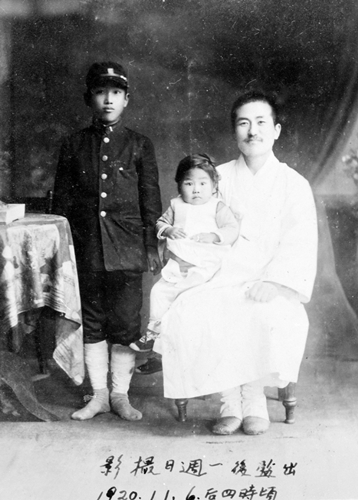
After serving over a year in prison, Kim Se-hwan was released in October 1920 and returned to Suwon. Unable to resume his position as a teacher due to Japanese interference, he operated a grain business in the city while continuing his social and community activities.
In 1927, he participated in the Korean Association for the Independence Movement, serving as chairman of the Suwon branch and head of the Suwon Sports Association, continuing his nationalist activities.
Afterward, Kim Se-hwan based his activities at Hwaseong Academy (formerly Suwon Kangseup Institute, present-day Suwon High School), Samil Girls' School, and Jongno Church, dedicating himself to nurturing the next generation and advancing Suwon's educational circles.
He then witnessed liberation in 1945 and passed away at his home on September 16th, a little over a month later. He was buried in the National Cemetery, and in 1963, he was posthumously awarded the Order of Merit for National Foundation, Independence Class.
In line with the Veterans Affairs Agency's selection of Kim Se-hwan, a leader who preserved the national spirit of Suwon, as the independence activist of the month, Suwon Museum has established a permanent exhibition space dedicated to independence activists from Suwon.
Starting in March, the museum plans to redesignate the permanent exhibition corner 'Notable Figures of Suwon's Modern Era' in the History Hall of Suwon Museum as the 'Independence Activists of Suwon' corner.
The permanent exhibition is designed to showcase Suwon's distinguished independence activists, including Kim Se-hwan (who received the Order of Merit for National Foundation, Independence Class) and one of the 48 national representatives, along with other independence activists from Suwon who relentlessly resisted Japanese colonial rule and proclaimed the cause of national independence.