Gyeonggi Province to Operate 20 Wildfire-Fighting Helicopters in 20 Cities and Counties with 10 Billion Won Investment
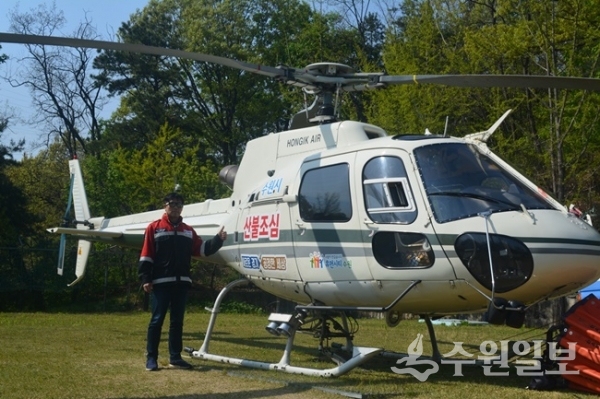
[Suwon Ilbo=Park No-hun] Gyeonggi Province announced on the 4th that it plans to invest 10 billion won in 2021 to lease and operate 20 wildfire-fighting helicopters to protect the lives and property of residents from wildfires.
This represents 29% of the total 68 wildfire-fighting helicopters currently operated by local governments nationwide, making it the largest operational scale among all local governments in the country. In particular, this is an increase of 2 billion won from the previous year's budget of 8 billion won, focusing on proactively responding to the increasing number of wildfires by expanding the water capacity and operation period of wildfire-fighting helicopters.
This year, to enable rapid response, helicopters will be distributed across 20 cities and counties including Seongnam to operate the 'Golden Time System,' which enables arrival at the scene within 30 minutes of wildfire outbreak.
Additionally, helicopters will be concentrated during spring and fall seasons when wildfires frequently occur, and a coordination system for firefighting with the Korea Forest Service and fire departments will be maintained by utilizing the 'Real-time Video Transmission System for Wildfire Sites' to share wildfire information in real-time with related agencies.
Furthermore, when wildfires occur in Seoul or Gangwon Province, which are adjacent to Gyeonggi Province, support will be provided regardless of administrative boundaries to minimize forest damage.
Meanwhile, last year, 208 wildfires broke out in the province, accounting for 35% of all wildfires that occurred nationwide, but through rapid initial response using wildfire-fighting helicopters, the affected area was 53 hectares, which represents only 1.8% compared to 2,916 hectares nationwide.
More notably, last year saw many dry days in spring and fall seasons, and the population enjoying forest recreation such as camping and mountain climbing in forests near the Seoul metropolitan area increased significantly due to COVID-19, making wildfire response challenging, making last year's achievements particularly noteworthy, according to the province's explanation.
In fact, the province mobilized wildfire-fighting helicopters a total of 1,464 times last year for firefighting activities, and in addition, implemented various forest project support including wildfire prevention activities and pest surveillance activities such as monitoring for pine wilt disease.
Lee Sung-gyu, head of the Forestry Division of Gyeonggi Province, said "Although Gyeonggi Province experienced the most wildfires in the country last year, we were able to minimize damage through initial firefighting efforts using wildfire-fighting helicopters," and "We will continue to protect the lives and property of residents through rapid response to wildfires."
Since initial response is critical for wildfires, if a fire is discovered or dangerous wildfire-related behavior is witnessed, it must be reported immediately to the fire department or the relevant municipal or district office.