Gyeonggi Province-Led 'Transportation Innovation' to Establish National Disaster Response Standard
[Suwon Ilbo=Reporter Kim Gap-dong] Gyeonggi Province is expanding the 'Regional Emergency Vehicle Priority Signal System' to Chungcheongnam-do and Gangwon-do following Incheon, establishing Gyeonggi Province-originated transportation innovation as a national disaster response standard.
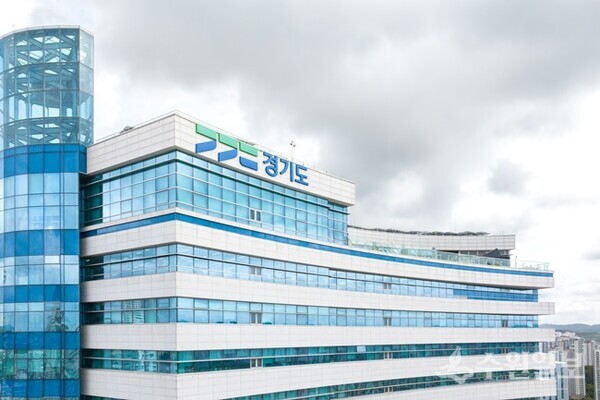
On the 9th, the Province held a 'Regional Emergency Vehicle Priority Signal System Regional Cooperation Briefing Session' at the Provincial Government Office with attendance from the National Fire Agency, Chungcheongnam-do, Gangwon Special Self-Governing Province, fire departments of each province, and officials from the Korea Intelligent Transportation Systems Association, discussing technology sharing and cooperation measures for nationwide expansion.
The core of this project is for Gyeonggi Province, Chungcheongnam-do, and Gangwon Special Self-Governing Province to interlock an advanced transportation system that automatically controls traffic signals according to the movement routes of emergency vehicles such as fire engines and ambulances, enabling them to pass through intersections without stopping.
The existing priority signal system had a critical limitation: signal control would cease once emergency vehicles crossed administrative boundaries of cities and counties. However, Gyeonggi Province integrated this at the regional level, completing technology that enables non-stop passage to destinations regardless of boundaries between local governments, and following the launch of a related inaugural briefing session with Incheon City in March, plans to expand the scope to Chungcheongnam-do and Gangwon regions.
Gyeonggi Province's regional coordination system completely resolves the signal disruption problem that occurred when fire engines or ambulances crossed city and county boundaries. If this system spreads nationwide, emergency vehicles will be able to travel smoothly even during long-distance emergency patient transport crossing provincial boundaries, expected to bring groundbreaking changes to the disaster response system. In particular, by breaking down technical barriers between regional local governments, it is being evaluated as critical infrastructure that raises the entire nation's disaster response capacity to the next level.
Beginning with this briefing session, the Province will continue close technical consultations with adjacent regional local governments such as Chungcheongnam-do and Gangwon-do, anticipating that from the first half of next year when the system is formally introduced, ambulances heading to large hospitals across regional boundaries will be able to travel roads smoothly without obstruction.
Yoon Tae-wan, Director of the Provincial Transportation Bureau, stated, "Building on Gyeonggi Province's excellent transportation technology capabilities, we will actively cooperate with other regional local governments," and "We will do our utmost to establish a nationwide safety network so that emergency patients nowhere in the Republic of Korea will waste precious time waiting at traffic signals."