Historical Journey Meeting Prehistory at Horogo Fortress Where Goguryeo's Spirit Flows
The Pyeonghwa Nuri Trail is the northernmost pedestrian route connecting four municipalities (Gimpo, Goyang, Paju, and Yeoncheon) in Gyeonggi Province's DMZ-adjacent areas. Walking along the barbed wire fence near the DMZ allows visitors to experience the reality of division firsthand, while also enjoying outstanding natural scenery and historical traces. Opened in 2010, the Pyeonghwa Nuri Trail consists of 12 courses with a total length of approximately 189km. It is composed of 3 courses in Gimpo, 2 in Goyang, 4 in Paju, and 3 in Yeoncheon.
The Pyeonghwa Nuri Trail adjacent to the DMZ captures the characteristics of all four seasons. With autumn's arrival, Gyeonggi Province introduces Course 10 of the Pyeonghwa Nuri Trail under the theme "Contemplating the Four Colors of the DMZ" to allow visitors to savor the seasonal hues slowly.
Pyeonghwa Nuri Trail Course 10 is the "Gorangpo Path," which follows Jangnam-myeon in Yeoncheon County and the Imjin River area. Walking around the river, harbors, royal tombs, and historical sites, visitors can encounter traces of their ancestors in a single path—from just over a hundred years ago through the Goryeo and Three Kingdoms periods, and reaching back to the prehistoric era.
◇ A Prehistoric Journey Beginning at Jangnam Bridge
The starting point is Jangnam Bridge, and from here the path already feels extraordinary. During reconstruction work in 2008, Paleolithic artifacts including hand axes were unearthed, which demonstrates that the Imjin River area has been an important living ground for people since prehistoric times.
Passing fields and areas around the river, one enters Samicheon. This is the site of the "Pork Chop Hill Battle," where UN and Chinese Communist forces conducted fierce combat over the river during the Korean War. By securing this area, a crucial opportunity to defend the Imjin River was created. Walking while facing the Imjin River, which takes on new significance, one enters Nogok-ri Village. If walking this path in late autumn, visitors can appreciate the charm of reed fields. The village name Nogok-ri (蘆谷里) itself derives from the dense growth of reeds in the area.
◇ Encounters with Dolmens and Stone Cairn Tombs—Traces of Imjin River People from Thousands of Years Ago
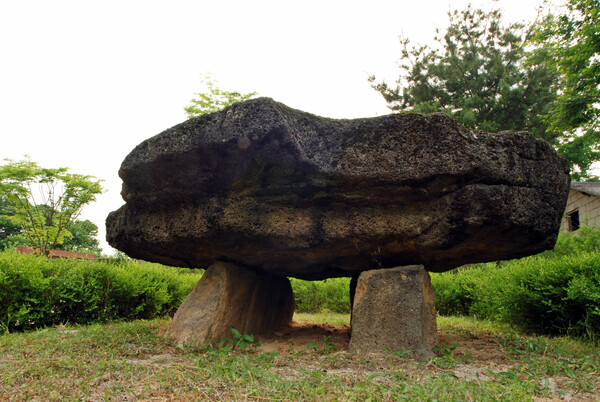
Entering Hak Gok-ri after passing Nogok-ri, the historical timeline recedes to the Bronze Age. A massive dolmen stands in the center of the village. Dolmens from that time are known to be tombs of the ruling class possessing economic or political power, and the Hak Gok-ri dolmen particularly catches the eye with its 2.7-meter-long basalt capstone.
Walking just over 10 minutes from here, one encounters a stone cairn tomb presumed to have been built in the early Baekje period. Encountering these two relics in succession naturally evokes imagination about the lives and power of ancient people who lived with the Imjin River as their foundation.
Walking toward the endpoint, one encounters Sungui Hall, which honors the Goryeo dynasty. A royal shrine created during the Joseon period where memorial rites were performed for Goryeo kings and meritorious subjects. The orderly arrangement and tranquility unique to ritual spaces harmonize well with September's seasonal atmosphere. Upon reaching Sungui Hall site, Pyeonghwa Nuri Trail Course 10 concludes, but returning to the starting point at Jangnam Bridge, there is one more location worth highlighting.
◇ Gorangpo Harbor, Once the Heart of the Imjin River, and King Gyeongshun's Tomb Buried Behind
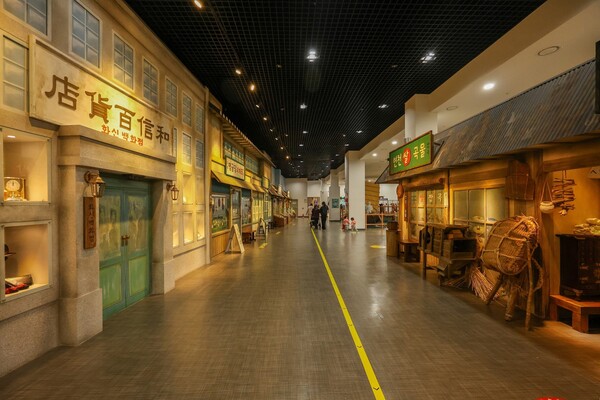
Moving approximately 5km from Jangnam Bridge, one reaches Gorangpo Harbor, which was the central trading point of the Imjin River. In the 1930s, a branch of Hwashin Department Store was located here, making it a hub of commerce and logistics. However, after the fierce Korean War, the harbor's function disappeared, and only the sound of water flowing gently conveys the transience of time. Instead, visiting Gorangpo Harbor Historic Park vividly recreates the bustling atmosphere of that era.
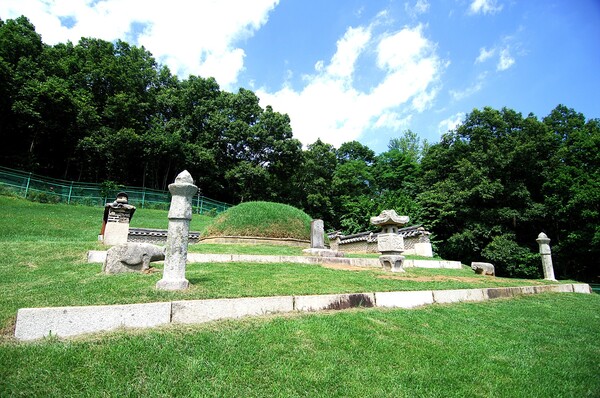
Climbing the gentle hill behind Gorangpo Harbor, one encounters the tomb of King Gyeongshun, the last king of Silla. A tragic monarch forced to surrender the thousand-year kingdom to Goryeo, King Gyeongshun's tomb is the only Silla royal tomb located not in Gyeongju but in Yeoncheon, Gyeonggi Province. A prevailing theory suggests that early Goryeo dynasty imposed control on the principle that "royal tombs must be located within a hundred ri of the capital Gaegyeong."
As time passed, King Gyeongshun's tomb faded from people's memory, and even the location of the site became unknown. In the 23rd year of King Yeongjo's reign (1747), a stone tablet inscribed with "Tomb of King Gyeongshun of Silla" was accidentally discovered in the surrounding area, bringing the site back to public attention. Subsequently, during the turbulent modern era of Japanese colonial rule and the Korean War, King Gyeongshun's tomb was again left neglected until it was accidentally discovered by an Army captain conducting an inspection of the civilian control zone, and finally restored to its current state as a royal tomb. King Gyeongshun, unable to rest in peace, gazing at his homeland with deep longing, must now finally find peace, enduring difficult history together with his descendants.
◇ Horogo Fortress Overlooking the Imjin River and the Unification Hopes Festival
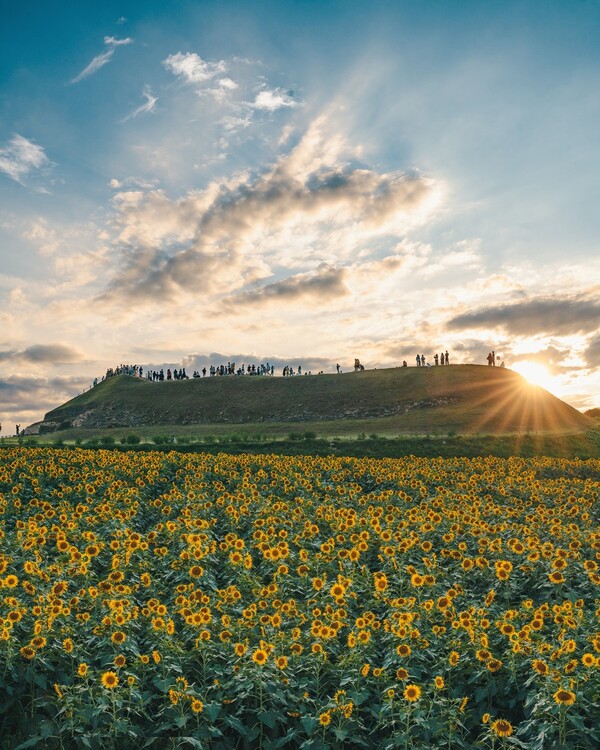
Moving from Gorangpo Harbor, one reaches Horogo, a representative historical site where Goguryeo expanded its territory. Standing atop these fortress walls built with basalt, the Imjin River area unfolds before one's eyes as a naturally blessed fortress. One can feel the spirit of the Goguryeo people in their heyday, who used the river and nature as their defense line. Meanwhile, Horogo hosts the Unification Hopes Festival from September 3rd to 6th, filled with sunflowers and cosmos flowers.
The Gorangpo Path was once a bustling and renowned route as the logistics hub of the Imjin River. Now it preserves only memories alongside the scars of division, yet historical traces testify to those glorious times. From the Paleolithic hand axes to Goguryeo fortress walls, the tomb of Silla's last king, Sungui Hall honoring the Goryeo dynasty, the thriving modern harbor, and the victory of the Pork Chop Hill Battle—thousands of years of history lie layered upon this single path.