


Interview From Nantes, France to Gwangju: Art Director Lee Jung-joo of 'Maison Ium' Draws the Horizon of Bidirectional Culture
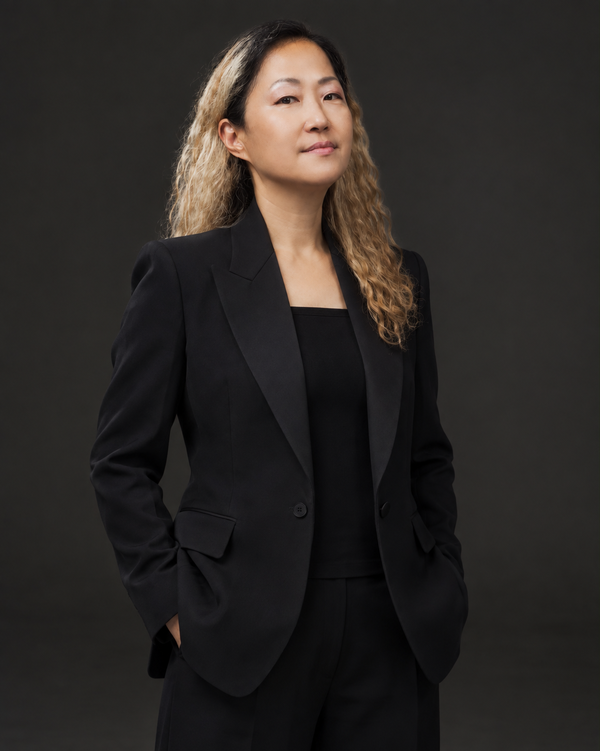
The landscape of cultural exchange, which has been limited to one-time events or one-directional benefits, is shifting. The fervor of Korean culture that took root in Nantes, France for 12 years is now moving its stage to Gwangju, the southern hub of arts and culture, bearing fruit in genuine bidirectional exchange.
The 2nd 'Autumn of France' festival, held for four days starting October 9 at Urbanbrook in Nam-gu, Gwangju, is a symbolic venue of this transformation. It is an officially recognized project commemorating the 140th anniversary of Korea-France diplomatic relations and a result of long-term private-sector exchange under the slogan "The Table That Binds Cities (La Table qui relie les villes)".
At the center of planning and leading this grand endeavor is Art Director Lee Jung-joo, a gayageum (traditional Korean zither) performer and composer. He was the first Korean traditional instrument musician selected for the "Génération SPEDIDAM 2025-2027" world music category, a major French government arts support program, accumulating distinctive artistic achievements in France. Having founded the 'Spring of Korea' festival in Nantes, France in 2013, we met with him to directly hear about the philosophy of bidirectional cultural exchange and the vision of the incoming nonprofit organization 'Maison Ium'.
Q. Your belief that "if Spring of Korea blossomed in France, then Autumn of France must bear fruit in Korea" is impressive. What prompted you to host the 2nd 'Autumn of France' in Gwangju?
"As I traveled through local regions, I always wondered: 'Why must cultural exchange always flow only toward Seoul or in one direction?' Over 15 years of activity in Nantes, France, I deepened Korean culture in the local community through the 'Spring of Korea' festival.
However, exchange only gains vitality when it flows bidirectionally. Just as Spring of Korea blossomed in France, I thought that French culture should now bear deep fruit in Korean regions, particularly in Gwangju, which possesses the rich sensibility of an arts hub. I wanted to create a genuine meeting place where artists and craftsmen, chefs and local residents directly encounter one another and share their lives and creative endeavors."
Q. Alongside this festival, the establishment of the nonprofit 'Maison Ium' is also being promoted. What significance does it hold?
"Even after the brilliant fireworks of a one-time festival have faded, the cultural solidarity and breathing between the two nations must continue. 'Maison Ium' is the sustainable framework for this. 'Maison Ium' carries the philosophical meaning of connecting (ium) people to people, city to city, nation to nation, with Maison (house) representing the spatial meaning—the starting point of individual lives and stories.
Going forward, it will establish itself as a solid permanent exchange platform organically connecting France's 'Spring of Korea' and Korea's 'Autumn of France'."
Q. As art director, you likened your role in Maison Ium to a "crane." What does that mean?
"As an artist, I don't wish to be the person who does everything directly. If I must compare my role, it resembles a 'construction crane.'
When constructing a building, the crane is the most visible entity, but it is not the protagonist of the building itself. It moves necessary materials to where they are needed when they are needed, helps people in each field fulfill their roles, and allows the building to rise layer by layer. However, if the crane loses its center or fails to function properly, even the best materials and technology cannot produce a sturdy building.
I wish to become a facilitator who discovers and connects good people and resources scattered among artists and craftsmen, chefs and planners, regions and institutions, and between Korea and France, helping each find their necessary place to demonstrate their capabilities."
Q. You were selected as a representative musician of this era ("Génération SPEDIDAM") by France's SPEDIDAM, becoming the first Korean traditional instrument musician to do so. How did this artistic activity and cultural exchange experience in France provide the foundation for envisioning 'Maison Ium'?
"The 'Génération SPEDIDAM' administered by SPEDIDAM is a program that rigorously selects and intensively supports next-generation artists with artistic originality and growth potential in France. Being the first Korean traditional instrument musician to be named to this list is a great personal honor, but more meaningfully, it signified that the French stage fully recognized our musical language not as mere 'event-style cultural introduction' but as living art of our times.
What I learned through experience working as a musician in France is that art can ultimately only be sustained on the foundation of 'trust between people.' Rather than relying on one-directional communication with audiences or institutions or single-instance support, I experienced firsthand how local craftsmen and artists grapple with their concerns in daily life and how they connect their lives and art.
The deep trust and networks I built rubbing shoulders with local artists at that time extended far beyond merely realizing a few more performances. It became the most precious foundation for designing 'Maison Ium,' a permanent platform and structure that helps the cultural resources and people of both nations weave together firmly."
Q. Maison Ium aims to be a comprehensive platform transcending mere artistic exchange. What are your specific plans?
"Culture and art are precious in themselves, but they become more solid when they breathe with local communities and industry. Maison Ium will not remain within artistic exchange but will carry two forms of practical expansion.
One is a project-based learning (PBL) project providing tangible global stage experience to regional university students, and the other is B2B business development helping excellent local businesses enter European markets. Rather than an organization that disappears after a one-time festival ends, our ultimate goal is to build 'a house of Korea-France cultural exchange' that grows for a long time, a comprehensive platform connecting not only culture and art but also regional industry, education, and tourism, all based on trust between people."
Q. What are your long-term dreams and personal hopes for 'Maison Ium' going forward?
"I hope Maison Ium becomes not a project that glitters momentarily and disappears, but a steadfast 'spiritual home' where young people and artists from both nations can always visit and lean upon. Many connections flowing between France and Korea gaining inspiration through this space and each laying another bridge in their own place—that is the most beautiful harmony and wish I dream of while playing the gayageum."
Concluding the Interview
The reason Art Director Lee Jung-joo's gayageum melodies always resonate deeply is likely because they transcend mere string vibrations, carrying steadfast sincerity that connects person to person, heart to heart. His journey from Nantes to Gwangju and onward to the world demonstrates the genuine power of healing and solidarity inherent in culture and art.
Like the name 'Maison Ium,' we anticipate that artists and citizens of both nations will build trust as though constructing a warm home in their respective places. Rather than one-time, flashy packaging, a nest where trust is shared through seeping into each other's lives, a deep friendship that remains unshaken through long years. We sincerely hope that on this sturdy bridge, Korea-France cultural exchange will soar toward a wider world, and this beautiful companionship transcending borders will continue endlessly in the time to come.