



"[My Tax Diary] 2046, the Morning Commute at Ninety-Six... "40.8% of Business Succession Special Exemption Holders Face 10 More Years of Retroactive Taxation""

#. On a Monday morning in 2046, ninety-six-year-old representative Park still commutes to his factory. It's a company he founded at thirty-six. His son has passed sixty, and succession paperwork has sat in a drawer for twenty years. The reason he cannot retire is neither health nor passion. If he steps back now—more precisely, if he passes away now—the company cannot bear the inheritance tax. The person is fictional. However, all the numbers below are real.
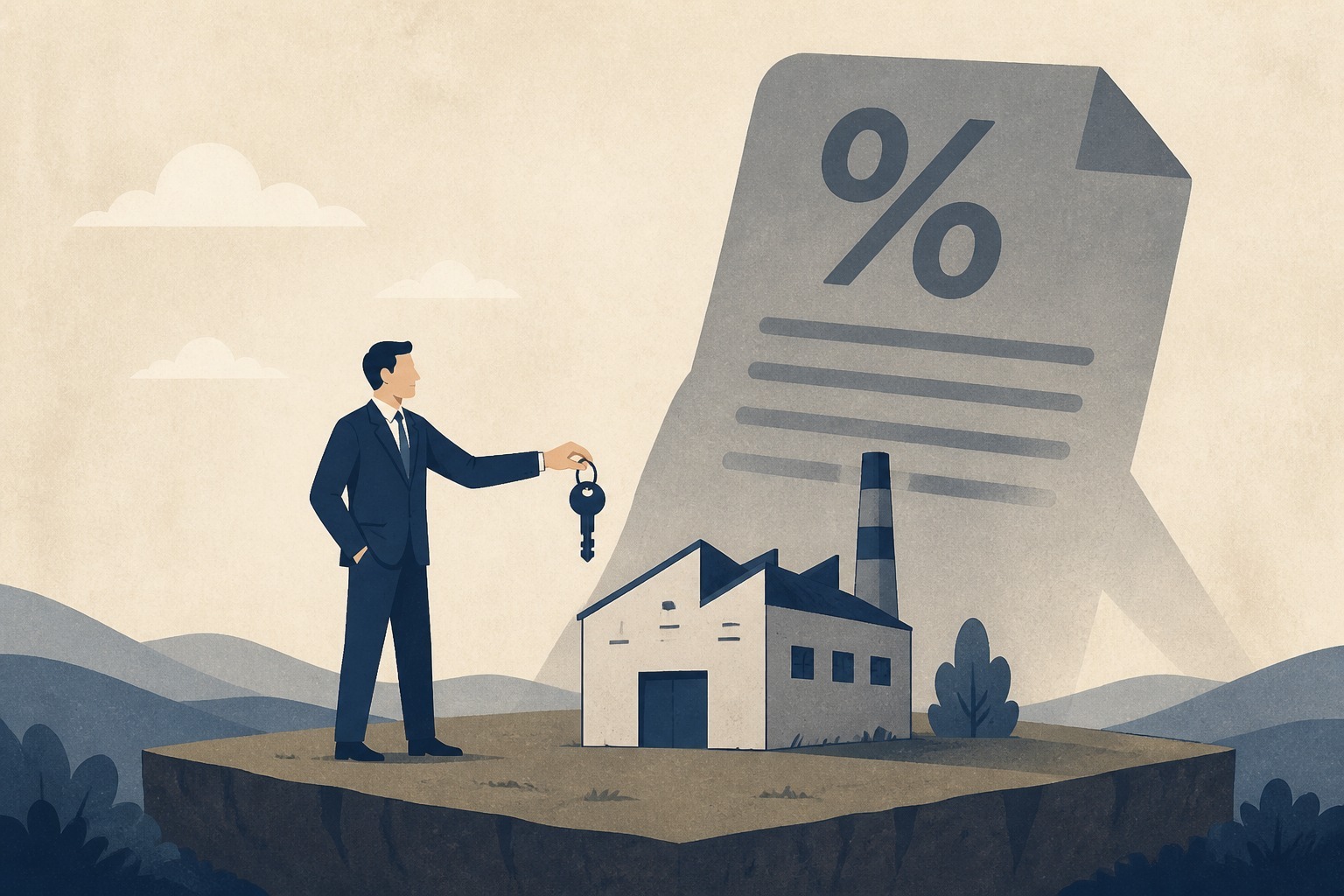
The government's overhaul of business succession deduction in the tax reform plan announced on August 3 is built on strengthened requirements. The minimum operating period for the heir to receive the deduction has been extended from 10 years to 30 years, and if 20 years have been completed, post-succession management is extended by the remaining period. The post-succession management period has also been extended from 5 years to 10 years. The intent is to prevent abuse such as evading inheritance tax through large bakery cafes that do not bake bread, and the deduction ceiling was raised from 60 billion won to 100 billion won as a carrot. If this reform is implemented as planned, what kind of future will be created? Transferring the timetable of average individuals in National Tax Service statistics shows this:
Future Diary: A Record of Succession
△2024 = Representative Kim, who had been running a parts factory in southern Gyeonggi Province for 15 years, transferred all his shares to his son. He received the special exemption for business succession gift tax. He had comfortably satisfied the 10-year operating period requirement that was the condition at the time. According to the original plan, he could have reduced his tax burden through the business succession deduction at the time of inheritance. △August 2026 = Tax reform plan announced. Representative Kim's operating period is fixed at 15 years from the date all shares were transferred. There is no way to meet the new minimum threshold of 20 years. He has become ineligible for the deduction no matter what effort he makes. △Same year, seventy-six-year-old representative Park's calculation, who began partial transfers in his tenth year of operation, is even harsher = To meet the changed requirements, he must operate for 20 more years. Until age ninety-six. △2046 = We return to the first scene of this article.
National Tax Service figures reveal that this timeline is not merely hypothetical. According to data submitted by the National Tax Service to Assemblyman Jeong Sung-ho (Democratic Party, Dongducheon and Yeoncheon) of the Parliamentary Committee on Budgets and Economy, among 1,278 donors who received the business succession gift tax exemption over the past three years, 522 (40.8%) were in the 10-20 year operating period range at the time of their gift. If the reform passes as is, these are people who would need to operate for up to 10 more years, and investigations have found cases where some would need to work until age ninety-six to satisfy the requirements. Expanding to the past five years, 1,955 individuals received the exemption, with transferred property totaling 3.7195 trillion won.
What is even more difficult to understand is the timing. This year, the national treasury is overflowing with tax revenue. Buoyed by semiconductor boom and stock market rally, excess tax revenue is expected to reach a record-high 63 trillion won. This is not a year when the government lacks tax revenue and must search for places to collect more. In such a year, the government is pushing through a reform that retroactively increases the tax burden on those who believed in the system and began their succession.
Abuse must be prevented. However, preventing abuse is possible through precision targeting that examines industry type and substance. Across-the-board tripling of requirements is an overreach that retroactively penalizes the majority who have been faithfully preparing for succession. Taxation is a promise between citizens and the state, and the life of that promise is predictability. If business succession planned over decades is overturned in a single day of announcement, entrepreneurs have no reason to trust the state's institutions and establish long-term plans.
This is also a problem for Gyeonggi Province. Gyeonggi Province is the region where manufacturing small and medium-sized enterprises are most concentrated across the nation, and companies preparing for succession are densely clustered in tandem with the retirement of founding generations. When succession is blocked, companies' options are sale or liquidation, and the cost is borne by the region's jobs and industrial foundation.
Measures to reduce uncertainty have also been discussed. The government plan has a review committee decide on the applicability of business succession deduction, but taxpayers only learn the result at the time of reporting inheritance tax. This means the success or failure of succession prepared for decades cannot be known until the final moment. Alternatives proposed include introducing a pre-review system to determine deduction eligibility before inheritance, or adopting an automatic application method by defining business operations in law based on National Tax Service industry codes. Assemblyman Jeong Sung-ho stated, "The more significantly a system changes, the more thorough deliberation and careful consideration must be premise," and announced his commitment to reflecting field opinions as much as possible in addition to transitional measures and pre-review.
Parliamentary review is expected to examine a transitional provision applying the previous regulations to transfers made before the announcement of the revised plan. It should do so. The morning of 2046 has not yet come. If the National Assembly includes transitional measures, this diary remains fiction; if not, it becomes record.


Loading comments…