



Autumn Stroll A Peace 'Journey' Along the Imjin River into Autumn
A walking path was created at the northernmost part of South Korea, connecting four cities and counties—Gimpo, Goyang, Paju, and Yeoncheon—in the DMZ border region. This was in May 2010. It is called Pyeonghwa Nurii-gil (Peace Nurii-gil).
This path is a trail of aspiration for peace, bearing intact traces of the Korean War. Visitors frequently come to this path to enjoy the pristine natural beauty of the Imjin River estuary area, a haven for flora and fauna and a habitat for endangered species.
Pyeonghwa Nurii-gil consists of 12 courses in total.
In November, Gyeonggi Province recommended the 9th course 'Yulgok-gil' of Pyeonghwa Nurii-gil as an ideal walking trail, where visitors can encounter both the late autumn scenery of the Imjin River and traces of the Korean War.
Yulgok-gil spans a total of 18 km, departing from Yulgok Wetland Park in Paju and passing through the Red Cliff Walking Trail, Jajang-ri Village Community Center, and the yellow cloth sailboat before ending at Jangnam Bridge, which marks the boundary between Paju and Yeoncheon counties. The walk takes approximately 5 hours. Following the Imjin River, visitors encounter diverse natural landscapes including Yulgok Arboretum, the Red Cliff Walking Trail, and Revi Bridge as they walk through forest paths and riverside trails.
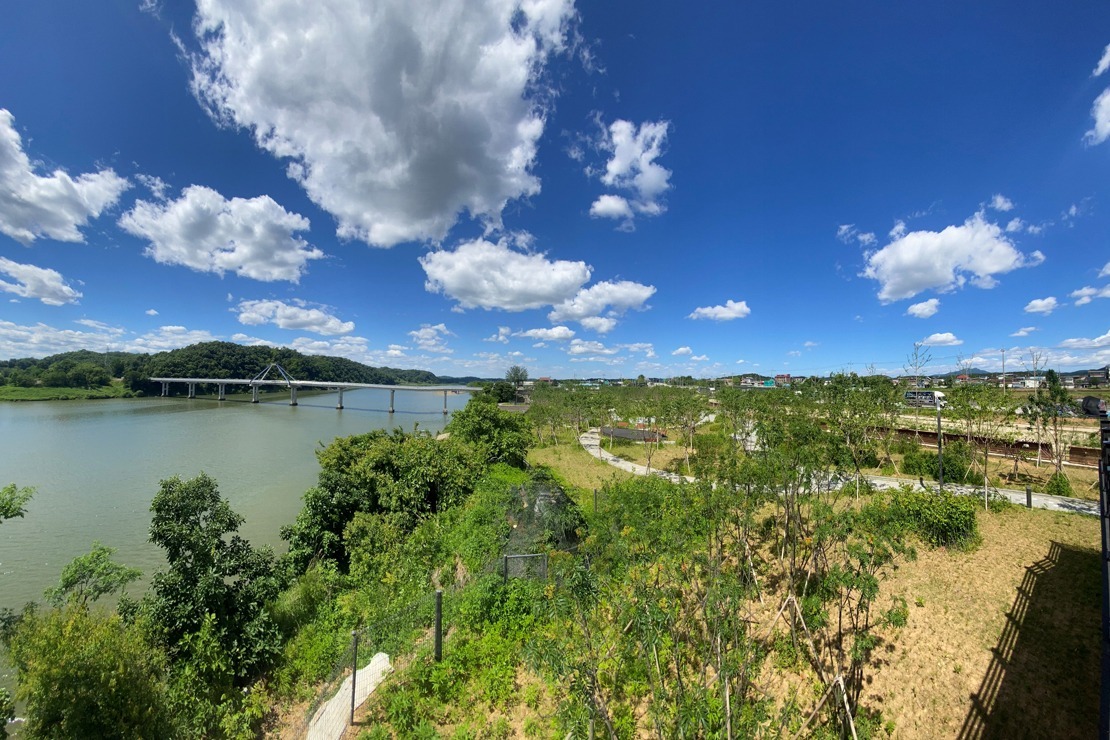
The starting point of Yulgok-gil is Yulgok Wetland Park, located on the banks of the Imjin River. Originally constructed as a reservoir to prevent flood damage, local residents have transformed it into the flower field it is today by planting and nurturing flowers themselves.
In November, visitors can experience the late autumn scenery left where the flowers have faded and feel the serene atmosphere along the Imjin River. Currently, construction is underway in some areas, so it is advisable to check on-site guidance when visiting.
Beyond Yulgok Wetland Park, visitors can visit Yulgok Arboretum. Upon entering the forest, dense trees and subtle pine scent enhance the walking experience. The arboretum offers various forest experience programs including forest bathing for children, forest healing, family forest, and Nordic walking.
The approximately 5 km circumferential path surrounding the arboretum is also an unmissable experience. Passing through the Pine Scent Trail and Moon Rock and ascending to the observation deck, the winding Imjin River and the landscape of Paebyeongsan and Gamaksan mountains come into full view.
The scenery not to be missed on Yulgok-gil is the Imjin River's Red Cliff. Columnar joints formed by Cenozoic volcanic activity spread along the riverbank, creating a unique landscape.
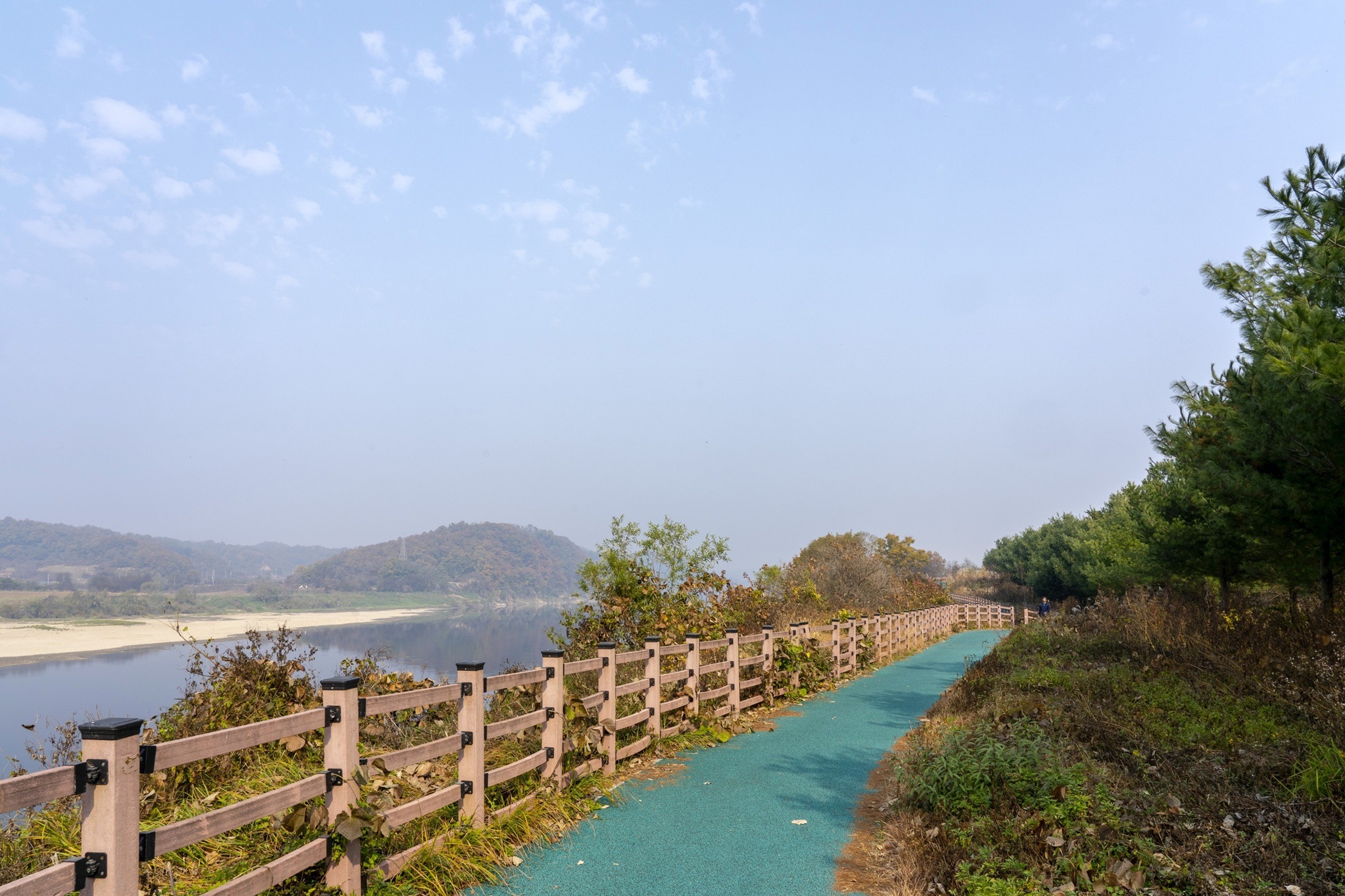
The approximately 1.4 km Red Cliff Walking Trail is constructed with a wooden boardwalk and can be completed in about 20 minutes. Along the riverside path, visitors can admire the dark reddish cliffs and the gently flowing Imjin River up close.
Beyond the Red Cliff Walking Trail stands Revi Bridge, constructed in 1953 for transporting military supplies during the Korean War. It was named after U.S. Army Sergeant George Revi, who died in the Battle of Daejeon District.
Revi Bridge ceased traffic in 2016 due to deterioration but reopened in 2023 after reconstruction works. The inscriptions and graffiti left by American servicemen on the structure during the Korean War convey memories of the war.
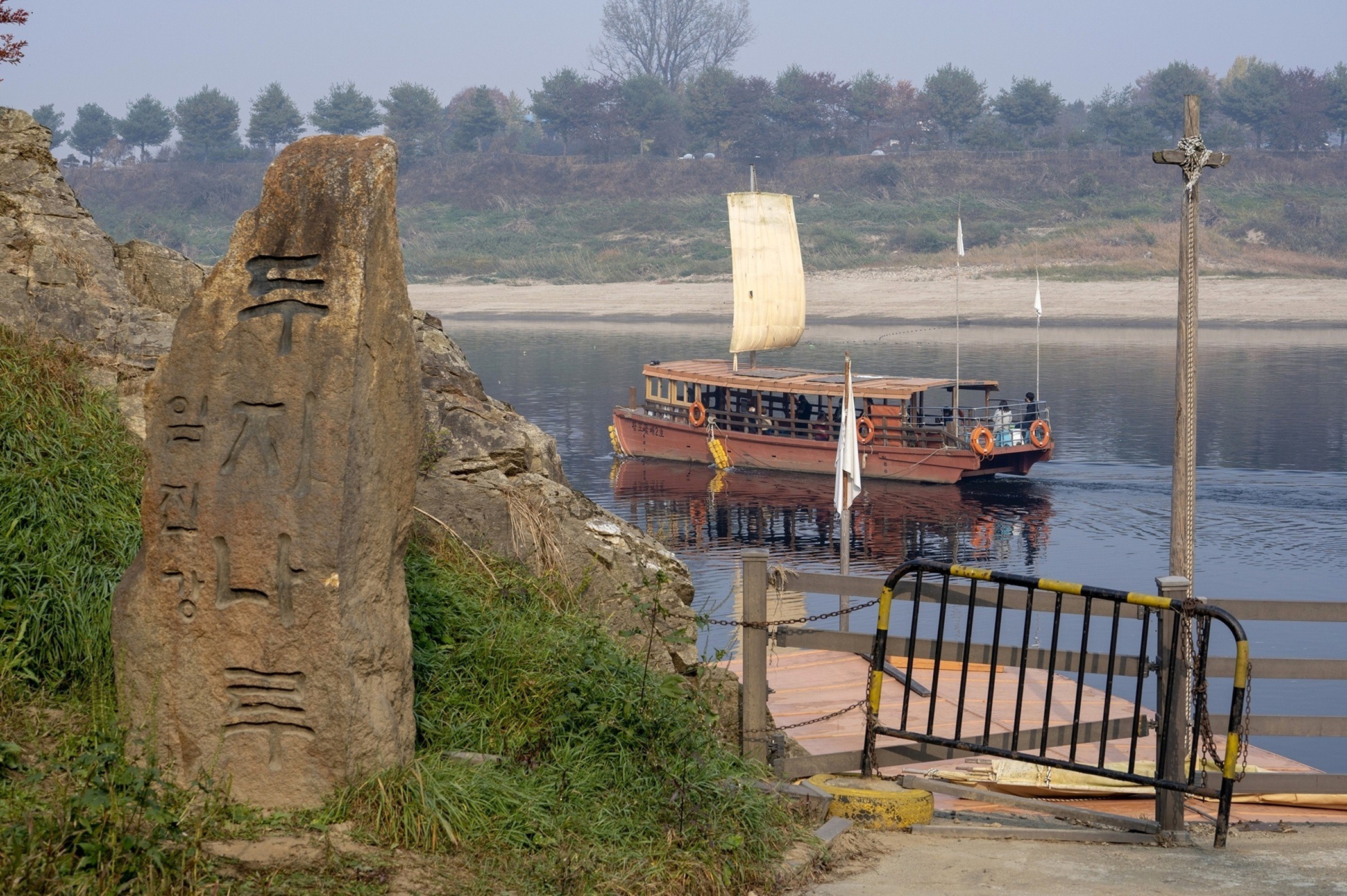
The yellow cloth sailboat is a sightseeing boat that has restored an ancient sail vessel, which was a major transport means on the Imjin River. It departs from Duji-ri Wharf and takes visitors around the Imjin River's Red Cliff and Horogoruseong Fortress before returning.
The Yulgok-gil journey concludes at Jangnam Bridge, which marks the boundary between Paju and Yeoncheon counties. As a path where visitors can encounter both natural landscape and the history of national division along the Imjin River, it is perfect for experiencing the charm of late autumn.

Loading comments…