



Cultural Heritage "Major Surgery After 29 Years"…Korea's Oldest Existing Palace Gate 'Donhwamun of Changdeokgung' Enters Full-Scale Disassembly and Restoration
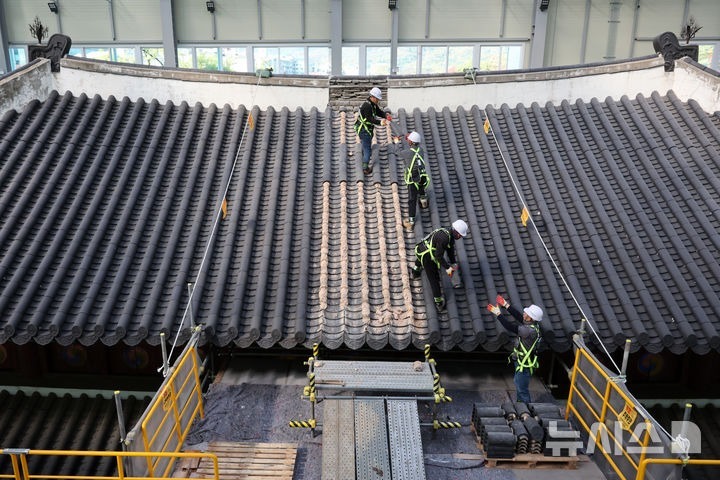
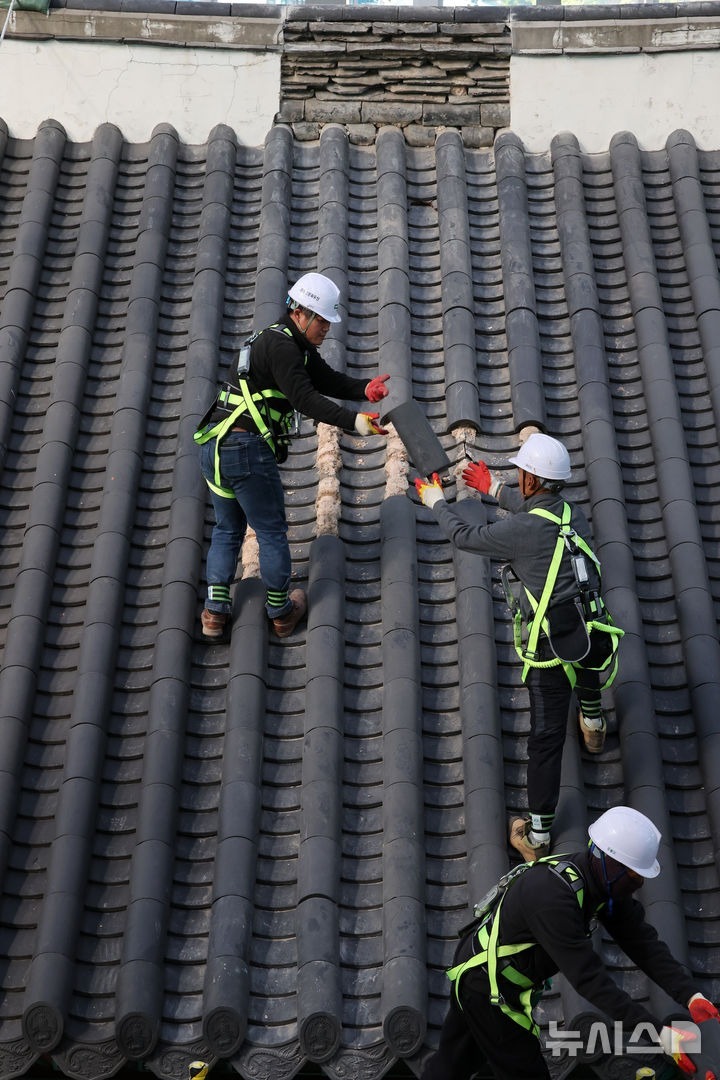
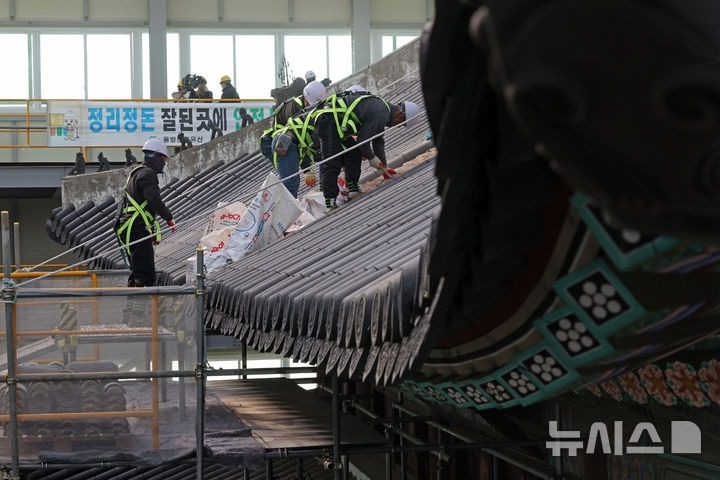
Donhwamun of Changdeokgung Palace, a treasure that boasts the longest history among Joseon royal palace gates, has begun full-scale disassembly and restoration work to address deterioration and structural safety issues.
On the 9th, the National Heritage Administration's Royal Heritage Division held a site briefing at Changdeokgung Palace in Jongno-gu, Seoul, announcing that comprehensive disassembly and restoration work on Donhwamun will proceed until October 2028, beginning with the disassembly of roof tiles. This major renovation, undertaken for the first time in 29 years since 1997, will involve a total investment of 13.5 billion won.
Donhwamun, first constructed in the 12th year of King Taejong's reign (1412), takes its name from a passage in the "Doctrine of the Mean (中庸)" stating "Great virtue transforms all things thoroughly (大德敦化)," embodying the Confucian ideal of royal governance in which a ruler employs great virtue to transform and educate the people. Though completely destroyed during the Japanese invasions of the 1590s, it was reconstructed in the first year of King Gwanghae's reign (1609), and has effectively maintained its original structure for over 400 years, remaining the oldest surviving palace gate. It was designated as a National Treasure in 1963.
Architecturally, the building features a 2-story hip-and-gable roof with a 5-bay front facade and 2-bay sides. It is distinguished by having doors only on the three central bays, while the end bays are blocked with stone walls to enhance its grandeur. It employs an ornate multi-bracket (多包) architectural style, with decorative brackets placed not only above the columns but also between them. The roof is topped with decorative finials representing royal dignity and carrying shamanistic meaning for averting disasters.
However, recent precision safety inspections have repeatedly sounded alarm bells. From 2020 to 2022, the building received an "E grade (requiring repair)," the highest risk level in three consecutive annual precision inspections. Expert assessments concluded that full disassembly of structural members had become inevitable, as severe column warping and sagging of rafters and beams due to upper load have intensified.
Consequently, the Royal Heritage Division has installed protective temporary structures surrounding the entire building and plans to sequentially disassemble and examine roof tiles, rafters, beams, and other major wooden members. The construction process will be accompanied by rigorous academic research, including tree-ring dating analysis, documentation of decorative paintings, and development of Heritage Building Information Modeling (HBIM).
During construction, palace access will be redirected from Donhwamun through alternative western gates, Geumhogate and Sobangmun. Meanwhile, a "public viewing program" has been arranged to allow visitors to directly observe the traditional restoration work. From the 25th of this month, visitors can view the disassembly site from the viewing facility within the temporary structure on the second and fourth Wednesdays of each month. Registration applications will be accepted on the National Heritage Administration's website starting from the 16th.
A Royal Heritage Division official stated, "Through this restoration project, we will correct structural deformation and precisely record and preserve the distinctive architectural and historical value of Donhwamun."



Loading comments…