



Gyeonggi Province Considers Selling Gwanggyo Provincial Government Building to Overcome 7 Trillion Won Debt
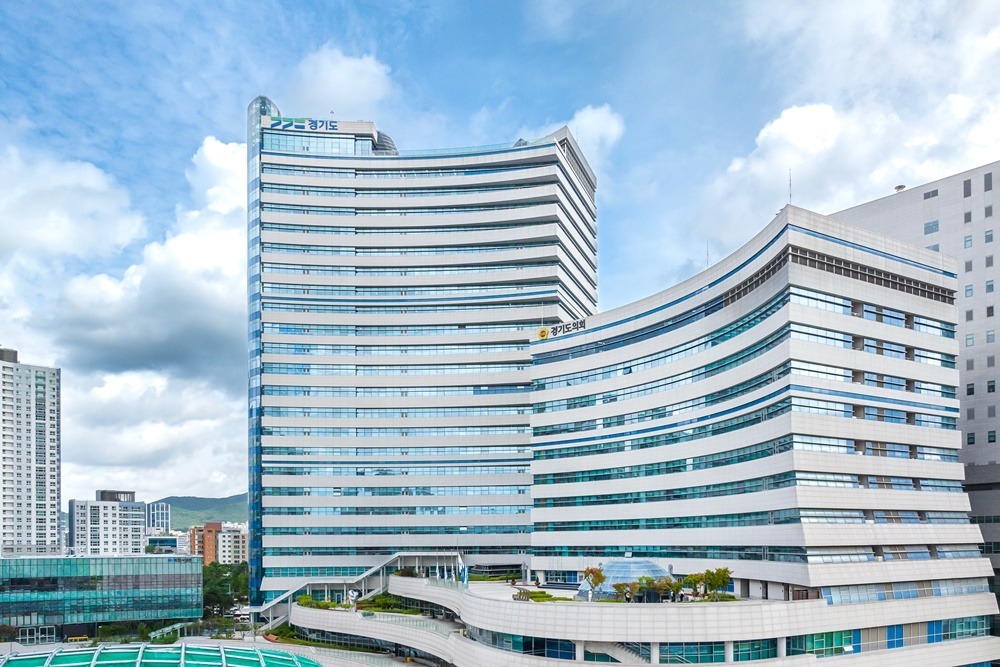
It has been confirmed that Gyeonggi Province is considering selling the Gwanggyo Provincial Government Building in Suwon, which was occupied less than five years ago, as a measure to overcome mounting fiscal crises. It is highly unusual for a metropolitan local government to place a core government building on the sales block due to financial difficulties, and significant repercussions are expected in administrative and political circles.
According to Gyeonggi Province and others on the 9th, the province has recently initiated legal review and preliminary investigation regarding the sale of land and buildings owned by the province, including the Gwanggyo building and parking lot located within the Gyeonggi Convergence Town in Youngtong-gu, Suwon, to secure fiscal soundness and secure short-term available funds.
Hong Eun-gwang, a spokesperson for Gyeonggi Province, stated in a written briefing, "The Gwanggyo Provincial Government Building land and structures have been included in the review targets for public property sales as part of implementing strong self-help efforts and securing independent financial resources to overcome fiscal crises."
However, Spokesperson Hong added, "Legal and administrative procedures must be preceded by comprehensive review of administrative space planning and consultation and approval procedures from the provincial assembly," and stated, "We will carefully decide on the final push forward after careful review."
7 Trillion Won Debt Pressure…Reviewing 'Sale and Leaseback' Method
The decisive catalyst for Gyeonggi Province to consider this government building sale plan is severe fiscal hardship. Choo Mee-ae, Gyeonggi Province Governor, who declared a "fiscal emergency situation" in August, stated, "The scale of Gyeonggi Province and fund borrowing that must be repaid by 2038 amounts to approximately 7 trillion won," and previewed high-intensity expenditure restructuring. However, analyses suggest that as real estate market downturn has caused a sharp decline in local tax revenues, there are limits to expanding revenues alone.
The Gwanggyo Provincial Government Building under review for sale was completed in November 2021 and finished occupancy in May 2022, with a scale of 4 basement levels and 25 above-ground stories. The total project cost was 470.8 billion won, and the book value price based on land public notice price and building market standard price combined is approximately 290 billion won.
Real estate industry and political circles estimate that considering the central location of Gwanggyo New Town and proximity to Gwanggyo Central Station on the Shinbundang Line, the appraised value would reach a minimum of 720 billion won to 870 billion won, and actual transaction prices could reach up to 1 trillion won. The province is reviewing the "Sale & Leaseback" method as a major promising option, whereby it would sell the asset to immediately secure funds and then lease the building again for use.
Provincial Assembly Approval and Administrative Coordination…Procedural Issues to Overcome
However, procedural and political difficulties are inevitable before actual sales are carried out.
According to the "Public Property and Goods Management Act," to dispose of major public property of a local government, approval must be obtained from Gyeonggi Provincial Assembly for "changes to public property management plans," but there are observations that convincing the provincial assembly will not be easy. Additionally, concerns have been raised that since the Gwanggyo Provincial Government Building site is a core facility within the Gyeonggi Convergence Town where Gyeonggi Provincial Assembly and Gyeonggi Province Office of Education are also located, administrative coordination could be hindered if the building is sold alone.
Some political circles cite the fact that Gyeonggi Province's debt ratio relative to budget (approximately 13.7%) is lower than the Ministry of the Interior and Safety fiscal crisis caution judgment standard (exceeding 40%), raising controversy over the feasibility of pursuing symbolic government building sales instead of fundamental expenditure structure reform.
Gyeonggi Province plans to finalize a comprehensive plan for public property sales through future consultation with the provincial assembly and related agencies.
Loading comments…