Government Reviews Strait of Hormuz Deployment as US Alliance Factor
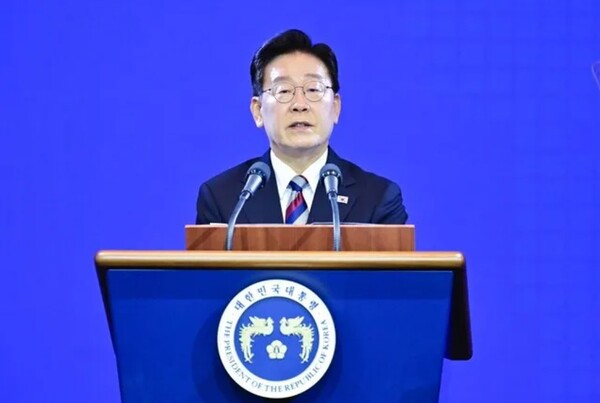
The government's review of deployment to the Strait of Hormuz has put the political solidarity of the ruling coalition to the test.
The Presidential Office stated on the 4th that "substantive contributions to freedom of navigation in the Strait of Hormuz include military contributions," and indicated that deployment could be reviewed within a range that does not compromise Korean Peninsula readiness. The Soo Yang-class frigate, P-8A maritime patrol aircraft, and mine countermeasures capabilities are mentioned as options. Parliamentary consent is required for actual deployment.
The South Korea-US alliance underpins the government's review of deployment. The logic is that relying on the United States for safety in the Strait of Hormuz while importing Middle Eastern crude oil and liquefied natural gas constitutes shirking the alliance's burden. Concerns have emerged that continued refusal of US requests could negatively affect trade and Korean Peninsula issues.
The Democratic Party leadership maintains a cautious stance, but opposition voices to deployment have begun emerging within the party. The Cho Kuk Innovation Party and the Progressive Party are amplifying their opposition, arguing that even non-combat forces supporting US operations would amount to de facto war participation, exposing troops and Korean vessels to retaliatory attacks.
The People Power Party generally agrees with the necessity of deployment while criticizing the government for responding belatedly. The party's position is that the government should transparently explain to parliament the background of the deployment review, its practical benefits, and the South Korea-US relationship situation.
The government may review limiting missions to Korean vessel escort and rescue, surveillance and reconnaissance, and mine detection. However, if surveillance intelligence and military supplies are used for US offensive operations, the boundary between non-combat support and war participation becomes blurred. The surveillance gap regarding North Korea following P-8A deployment must also be considered.
The possibility of North Korea-US dialogue resumption is also a variable. There is a view that managing US relations is necessary to secure South Korea's voice on Korean Peninsula issues, but there is no clear evidence that deployment guarantees South Korea's participation in negotiations.
If the government refuses deployment, international pressure and opposition party pressure may intensify. In case of North Korea-US dialogue resumption, South Korea's voice could also become unclear. On the other hand, if the government decides on deployment, it must accept internal Democratic Party conflict and ruling coalition defection. Parliamentary debates are expected to intensify in the future regarding deployment objectives, command structure, intelligence sharing scope, and rules of engagement.