



Suwon Under the Microscope with Kim Chung-young (48) Shim Jae-deok's Story of Love for Suwon
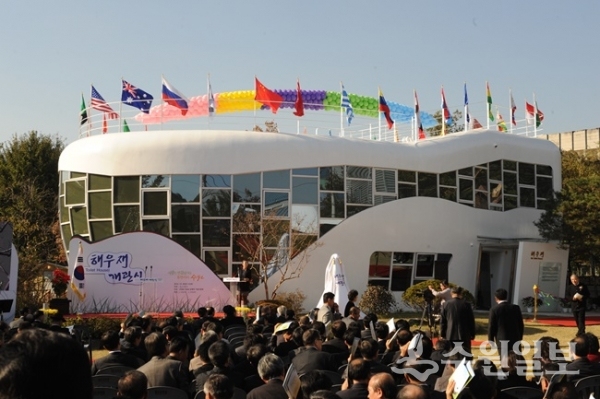
The restoration and preservation of Suwon Hwaseong to its present state as a UNESCO World Heritage Site required the sacrifice and efforts of many people. As revealed in the previous article "Lee Byung-hee's Story of Suwon Hwaseong Restoration," if Lee Byung-hee opened the path to the restoration of Suwon Hwaseong, then Shim Jae-deok's contributions to the restoration of Hwaseong Palace and its designation as a UNESCO World Heritage Site have made today's Suwon Hwaseong possible.
In May 2008, the "Commemorative Collection Publishing Committee for Sangok Shim Jae-deok's 70th Birthday" published a collection titled "Mr. Toilet, I Am Happy With You." Then on January 14, 2019, the "Shim Jae-deok Biography Publishing Committee" oversaw the publication of "Mr. Toilet, The Beautiful Bathroom Revolution: The Biography of Shim Jae-deok," written by Professor Kim Jun-hyuk. It should be noted that "Shim Jae-deok's Story of Love for Suwon" and "The Story of Hwaseong Palace Restoration and UNESCO World Heritage Designation" are excerpts from the aforementioned books.
In 1976, after concluding his public service career, Shim Jae-deok founded Dongseo Steel in the tool street of Gucheon-dong, the old downtown area of Suwon. The business at that time was, in name only a steel company, but in reality little more than a small shop without even a single vehicle. At that time, Suwon was in the midst of the Suwon Fortress Wall Restoration and Beautification Project championed by Minister Lee Byung-hee.
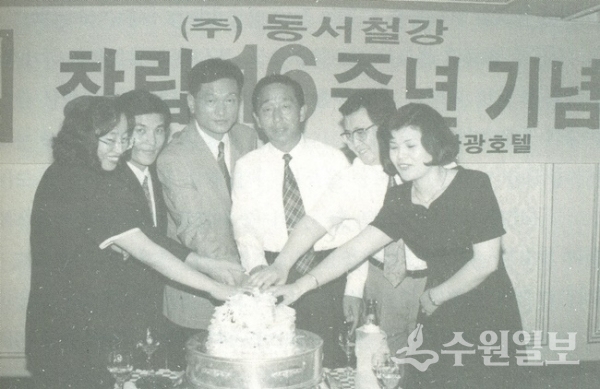
The market around Paldalmun Gate regained its vitality with many commercial buildings being constructed. Dongseo Steel, operated faithfully despite difficult circumstances and recognized by customers, quickly became established. In 1980, Shim Jae-deok learned that Kim Yong-hwan, a student from his alma mater (Suwon Agricultural High School) who became a six-time national champion gymnast at the National Sports Festival, was living with a single mother in difficult circumstances and training while subsisting on instant noodles.
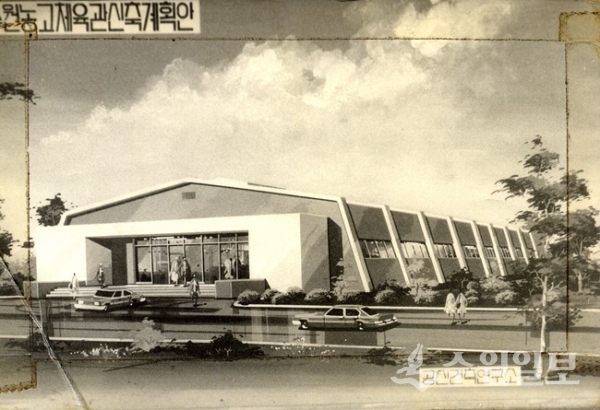
Shim launched a fundraising campaign with fellow alumni to secure housing for Kim Yong-hwan, collecting 8 million won to help him. Through this process, learning that there was no dedicated gymnastics facility and training was conducted in an open field, he spearheaded a movement to build a gymnasium. Construction of the gymnasium required an investment of 30 million won at the time. He conducted a fundraising campaign targeting approximately 10,000 alumni and held the "Gwanggyo Festival," a gymnasium completion ceremony, on October 30, 1982.
Park Jong-hoon, a gymnast who trained at this facility, won bronze medals at the 1986 Asian Games and 1988 Olympics respectively, marking the first Olympic medals in Korean gymnastics history. The Suwon Agricultural High School alumni association that built the Gwanggyo Gymnasium, particularly the class-year-based alumni organizations, would later play a significant role in Shim Jae-deok's victory in the Suwon mayoral election.
1987 was a year of strong democratization movements. Democratic Justice Party presidential candidate Roh Tae-woo declared direct presidential elections through the June 29 Declaration. This social atmosphere influenced society at large. Suwon's cultural circles also faced change. As the tenure of cultural center director Lee Su-young expired, Suwon's cultural community began searching for a new cultural center director suited to the new era.
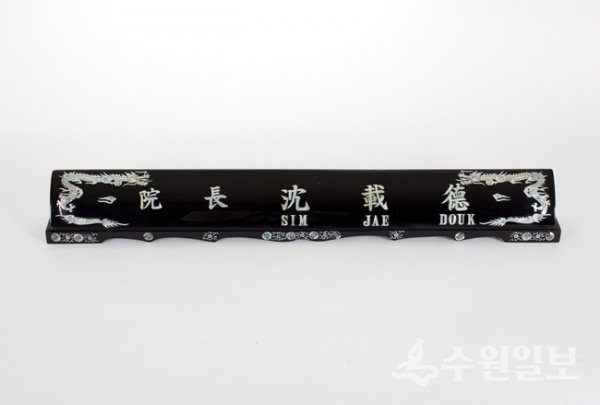
Among the candidates, Shim Jae-deok, representative of Dongseo Steel who was actively involved in the local community, was proposed. He declined several times, but unable to refuse as many people earnestly requested, he accepted. Thus, Shim Jae-deok assumed the position of Suwon Cultural Center director in September 1987.
Upon taking office, he stated that for the cultural development of Suwon, he would undertake the most demanding work from the humblest position. Director Shim set the operational goal of the Suwon Cultural Center as creating a "beloved gathering place close to citizens where many people would visit." To this end, he focused on making the cultural center's activities known to residents.
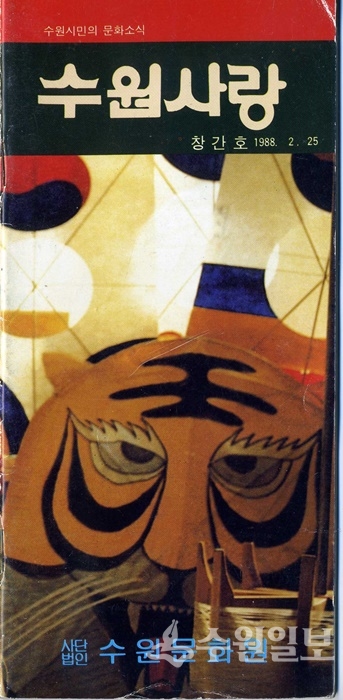
Thus, the cultural center decided to publish a newsletter. The newsletter was named "Love for Suwon." Director Shim instructed the editorial committee preparing the inaugural issue: "Please think of this as simply laying down one mat for Suwon's cultural circles." Editorial committee members including Lee Jae-young (essayist), the late Choi Beom-hun (Kyonggi University professor), Im Byung-ho (poet), Song Chul-ho (musician), Kim Sang-yong (musician), Nam Bu-hee (painter), and Kim Woo-young (poet and current editorial board member of Suwon Ilbo) worked diligently, and the inaugural issue was published in March 1988.
The format was a pocket-sized book no larger than a palm. Though small in size, the publication revitalized Suwon's cultural circles. "Love for Suwon" was published monthly. The launch of "Love for Suwon" became a signal for the revitalization of the Suwon Cultural Center. Director Shim instilled pride in those working at the cultural center. "Love for Suwon" became not just a magazine name but a book embodying love for Suwon.
Director Shim Jae-deok centered his activities around Suwon Hwaseong. "Suwon is a city with character. I will dedicate everything to preserving the old and cultivating it as a place of culture and arts." From 1988, Shim earnestly engaged in the "Suwon Hwaseong Construction Anniversary Project."
Since childhood, Suwon Fortress (Hwaseong) had been a precious historical site to him, yet also a source of deep regret. He resolved that someday the destroyed fortress must be properly restored. He was particularly sorry about the approximately 400-meter section on the south side that had not been restored during President Park Chung-hee's administration.
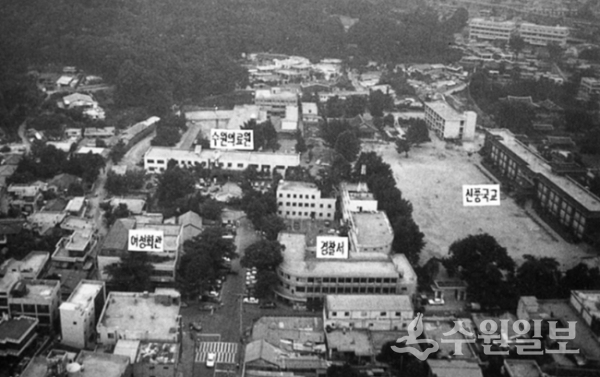
He also learned that Shinpung Elementary School, which he had attended, was the site of Hwaseong Palace, but lamented that restoration was impossible because a provincial hospital, police station, elementary school, and Gyeonggi Province Women's Hall were already located there. He believed this was because Suwon residents did not properly understand the value of Suwon Fortress. He felt that for Suwon citizens to be reborn, they needed to understand the value of Suwon Hwaseong.
To accomplish this, he thought a large-scale event should be held in 1996, marking the 200th anniversary of Hwaseong's construction. Although the fortress had been restored in the 1970s, the area surrounding the walls still had many shanties. Moreover, there were over ten places where the fortress walls were broken, making it impossible to even walk along the walls properly.
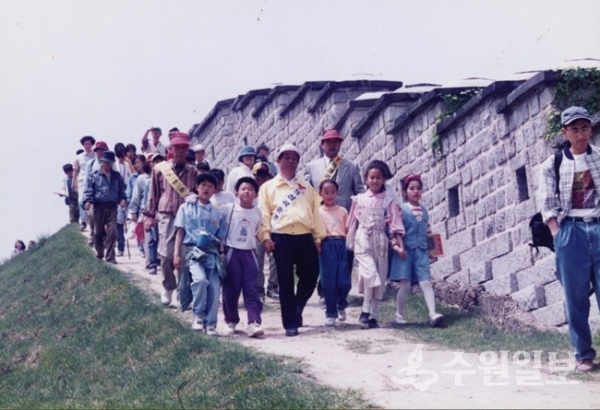
In these circumstances, he conceived the "Suwon Fortress 192nd Anniversary Celebration Citizen Wall-Walking Event." On May 5, 1988, Children's Day, the "First Suwon Fortress Wall Procession" was held around Suwon Fortress with the participation of elementary, middle, and high school students, university students, and residents. The event began after gathering at Maesan Elementary School's athletic field.
Throughout the procession route, performances by the Nanpa Boys and Girls Choir, congratulatory music by the Suwon Industrial High School Band, traditional Korean dance by Kyonggi University's Talchum group and the Korean Traditional Music Association's farmers' dance troupe, and performances by Shinpung Elementary School's wind band enhanced the excitement and atmosphere of the procession. The fortress wall procession, which began with Shim Jae-deok's idea, was sufficient to amaze participants.
The fortress wall procession showed increasingly developed forms as it continued. On May 5, 1991, the fortress wall procession was renamed "Filial Piety Fortress Wall Procession" in commemoration of the 195th anniversary of Hwaseong's construction. On that day, 15,000 people participated at Shinpung Elementary School's athletic field. Minister of Culture Lee Eo-ryeong sent a congratulatory message for the "Filial Piety Fortress Wall Procession." The "Filial Piety Fortress Wall Procession" developed into a nationally renowned event.
After the June Democratic Struggle in 1987, as democracy began to take root, people's desire to appreciate culture and arts grew abundantly. With the 1988 Olympics approaching, there emerged a general consensus that Korea's cultural standards must be elevated. Shim Jae-deok grasped this spirit of the times and planned what he called the "Midsummer Night's Music Festival."
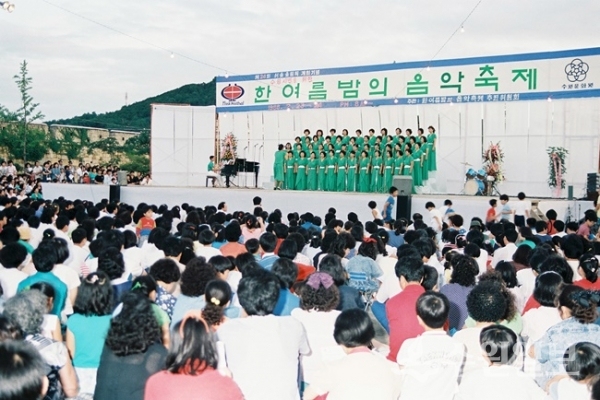
On July 23-24, 1988, a specially constructed stage was installed in Suwon's Jangan Park and performances were held. The first day's event drew approximately 15,000 participants, demonstrating that Suwon residents had been starved for cultural experiences. A regrettable aspect at the time was that the municipal symphony orchestra and choir did not participate, supposedly because the cultural center was the host organization.
So many people flocked to the area around Jangan Park that traffic congestion occurred. The Midsummer Night's Music Festival developed increasingly with each passing year. Subsequently, it diversified into Evening of Wind Instruments, Evening of Choruses, Evening of Korean Traditional Music and Farmers' Music, Evening of Symphony and Chorus, and Pop Festivals.
However, not everything proceeded smoothly. When preparing for the "1991 Midsummer Night's Music Festival," approval for use of the park was not granted due to concerns about damage to vegetation and facilities, as well as planned renovations at Jangan Park, leading to conflict with Suwon City. This was attributed to possible jealousy from Suwon City authorities as the cultural center's events gained popularity. Facing this situation, Shim Jae-deok personally intervened to resolve the matter.
He published an advertisement in the newspaper titled "Our Position Regarding the Denial of Approval for the Midsummer Night Festival Venue." Citizens who read the newspaper were outraged. Sensing this atmosphere, then-Suwon Mayor Lee Ho-seon convened a meeting and ultimately approved the performance. That year's performances were also a great success. At that time, Kim Woo-young, cultural section chief of Joongbu Ilbo, wrote the following in his article:
"Because the performance came to fruition after a tug-of-war between City Hall and the venue issue, the citizens' support for the event and their sense of order were deeply impressive. Jangan Park was so clean that not a single cigarette butt or piece of trash could be found. This was a small miracle achieved not only through meticulous preparation but also through the citizens' highly developed sense of order." This was the small seed planted by Shim Jae-deok bearing fruit as a productive harvest of Suwon's culture.
Director Shim Jae-deok devoted himself to stopping the covering of Suwon Stream, canceling the Paldal Mountain Tunnel project, and returning Seo Lake to the citizens. On July 1, 1995, he was elected Suwon mayor and designated these as priority projects for Suwon City, completing them successfully.
The Hwaseong Palace restoration project, conceived while conducting the "Suwon Fortress Wall Procession" event, gained momentum when Gyeonggi Province announced plans for the construction of a new Suwon Medical Center on the Hwaseong Palace site. Shim Jae-deok declared his commitment to Hwaseong Palace restoration.
Loading comments…