



Suwon Microscope (131) by Kim Chung-young Former Suwon Mayor Lee Sang-ryong Fastened the First Button of Building Suwon Yeonhwa Crematory
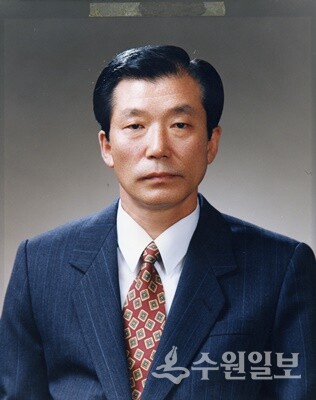
Lee Sang-ryong, the 20th appointed Suwon mayor, was the first to argue for the necessity of building Suwon Yeonhwa Crematory and select the site, while Shim Jae-deok, the first elected Suwon mayor, was the one who pushed forward this project in earnest.
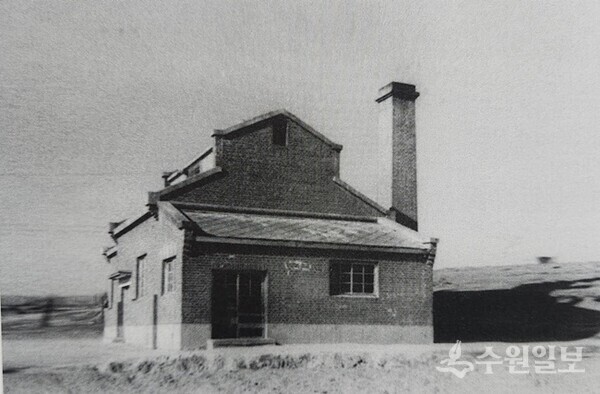
In the late 1910s, Suwon's first crematory was built at 825 Saeyu-dong and began operations. The Japanese colonial government recommended cremation to Koreans, but it did not become a common funeral practice. Cremations of those who died from infectious diseases and poor people gradually increased.
In 1920, an article about Suwon was published in the Dong-A Ilbo. 'It is difficult to endure the smell of burning people daily as the distance between the crematory and houses is too close.' Based on the article, it appears that the cremation technology of the time could not prevent smoke and odors.
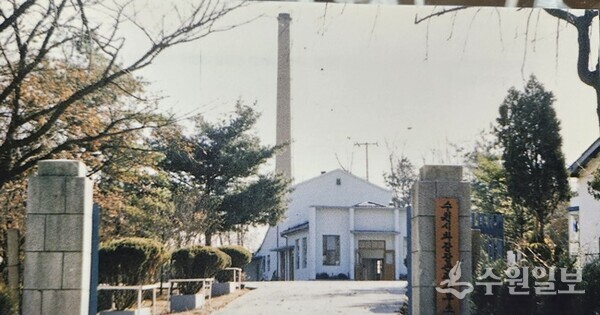
As cremations increased due to the Korean War in 1950, issues from smoke and odors became unavoidable, and sanitation problems could not be overlooked. Suwon City promoted the relocation project of the crematory and equipped the facility in Ingyeong-dong on August 11, 1962, with 3 cremation furnaces (processing 9 bodies per day).
At that time, the Suwon Crematory was the only one in Gyeonggi Province except for Seongnam Crematory, so it was used from across Gyeonggi Province as well as from Chungcheong and Gangwon regions.
In the 1980s, with the implementation of the Maetan residential development project, apartment complexes such as Maetan Apartments, Gwonseon Apartments, and Ingyeong Apartments were built, and demands for relocation of the crematory began.
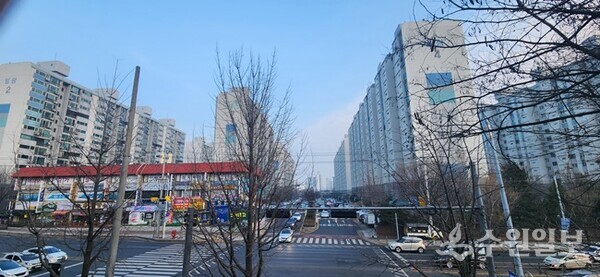
As Suwon City Hall relocated to East Suwon in 1987 and the Gyeonggi Province Culture and Arts Hall was built, demands for relocation of the crematory intensified.
The relocation of the crematory began in earnest from 1990 when 1,200 units of Imguang Apartments were built within the Maetan residential development area.
Residents of Imguang Apartments moved in with a vague expectation that the crematory would be relocated elsewhere once the apartments were built. However, after moving in and living there, they experienced serious problems from the Suwon Crematory located about 100 meters away.
Even on weekdays, several cremations took place, causing dust particles to fly into the apartments and settle on laundry, with soot accumulating on cars. On cloudy days, an acrid smell permeated the area, making life difficult. Residents of Imguang Apartments filed more than ten petitions demanding relocation of the crematory, but receiving no response, hundreds of residents went to City Hall and conducted collective actions multiple times. Being a resident of Imguang Apartments myself, I have vivid memories of that time.
Around this time, in 1987, Gwonseon-dong Catholic Church was established at 1015 Gwonseon-dong. Gwonseon-dong Church was a branch of Maeyo-dong Church, located on 950 pyong of land in a prefabricated temporary structure. At that time, Father Kim Jeong-won, a Franciscan pastor, was given the task of building a proper church. Father Kim was concerned that if the church were newly built in a commercial area in front of City Hall, the surrounding area would be densely packed with entertainment facilities, causing inconvenience to religious life and also causing inconvenience to nearby shops.
Father Kim thought that if a church were built at the site of Suwon Crematory, which the city could not solve, the church could have a proper appearance and the city's headache could be resolved. After consulting with Bishop Kim Nam-su, the bishop of the Roman Catholic Diocese of Suwon, he received a positive response.
To implement this, the Roman Catholic Diocese of Suwon met with Gyeonggi Province and Suwon City authorities, with Governor Lim Sa-bin, Mayor Yu Seok-bo, Bishop Kim Nam-su, and Father Kim Jeong-won present. At this meeting, the Roman Catholic Diocese of Suwon proposed relocating the Suwon Crematory to the Roman Catholic Diocese of Suwon Memorial Park Cemetery in Bogae-myeon, Anseong-gun, and exchanging 5,000 pyong of the Ingyeong-dong crematory site for Gwonseon-dong Church site, and obtained agreement. The diocese decided to take the lead in implementing this project.
The Roman Catholic Diocese of Suwon submitted a permit for relocation of Suwon Crematory to Anseong-gun. However, at that time, the Anseong County head felt burdened about attracting a hateful facility like Suwon Crematory to Anseong during his tenure and instigated residents to stage protests against the crematory relocation. As a result, the Suwon Crematory relocation project ultimately went back to square one after wasting five years. Subsequently, Gwonseon-dong Church secured a site of about 3,000 pyong in the vicinity of 3-2 Gwonseon-dong and built a new church, relocating there in 1998.
Taking office as Suwon mayor for the 20th time in January 1994, Lee Sang-ryong believed that the relocation of Suwon Crematory was the most urgent matter facing Suwon City and took active steps to relocate it.
At that time, Mayor Lee Sang-ryong thought that when the era of elected mayors began, elected mayors would find it difficult to push forward hateful facilities such as crematories, sewage treatment plants, and garbage incineration plants.
"If an appointed mayor does not take responsibility and finalize the relocation of Suwon Crematory that residents oppose, elected mayors may never be able to move it." Mayor Lee Sang-ryong established a plan to promote the relocation of Suwon Crematory in July 1994 and reported it to the Suwon City Council. He reported that he would secure funds for selection of candidate sites and select them by the end of 1995.
Subsequently, he formed a task force team to handle the practical work of crematory relocation. The TF team head was Kim Seok-man, director of the Health and Welfare Bureau, with Jo Pil-sang, head of the Social Affairs Division, serving as the head of the responsible team, and practical work handled by Kang Myeong-seok, chief of the Public Health Division, his successor Kim Jae-bok (former head of Youngtong Health Center), and Lee Hang-woo, an official. Urban planning was handled by Choi Ho-woon, an official (currently chairman of Hwaseong Research Association).
The practical task force team selected about 10 locations over seven months and narrowed them down to three after careful review. ▷The first candidate site was 48,700㎡ (14,731 pyong) in the Homaesil-dong area of Gwonseon-gu, ▷the second candidate site was 128,151㎡ (38,765 pyong) in the Imok-dong area of Jangan-gu, and ▷the third candidate site was 57,694㎡ (17,452 pyong) in the Ha-dong area of Paldal-gu.
Suwon City proceeded with a review of the three compressed candidate sites. Subsequently, the Special Committee for Petition Review of the interim session of the Suwon City Council selected the area around Lot 20, Ha-dong, Paldal-gu, as the Suwon Crematory site through voting.
On February 10, 1995, at the 132nd Suwon City Council plenary session, it received approval for acquisition of public property, thereby receiving final approval.
During his relatively short tenure (January 1994–April 1995), Mayor Lee Sang-ryong made every effort to promote the three hateful facilities—crematory, garbage incineration plant, and additional sewage treatment plant—as well as the construction of Suwon Outdoor Concert Hall.
As Suwon transitioned from the final period of appointed mayor rule to the era of elected mayors, through the efforts of conscientious administrators who cared for the people, the city was able to handle the three hateful facilities wisely without major conflict, becoming a city where citizens are happy.
I extend my gratitude to the late Mayor Lee Sang-ryong.
Loading comments…