



Column Burning France: When the Warmth of the Classroom Goes Out, Democracy Falters
[Now is the Age of Cultural Discourse (文話)]-13
Autumn 2026, the European continent trembles.
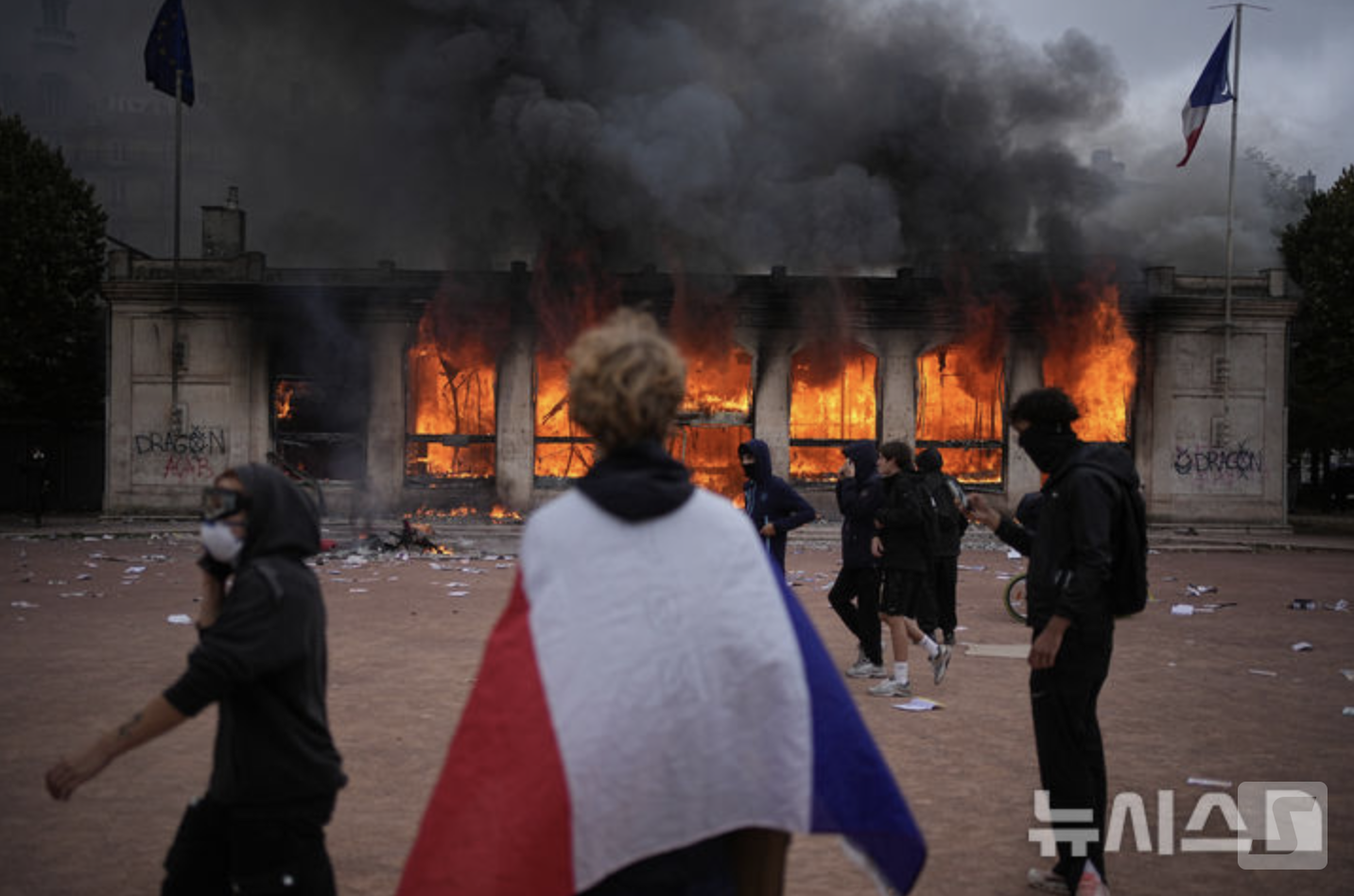
The starting point was a classroom in a high school in Créteil, on the outskirts of Paris, France. With teacher positions left vacant for months and heating shut off, teenage students locked the doors. The small and modest spark of anger spread to Paris city center in just a few weeks, then swept across Europe—to Belgium, Italy, Spain, Portugal, and beyond.
Perspectives on the situation are sharply divided. The government and security authorities point to incitement by some extremist forces and criminal looting, justifying the use of state force. Meanwhile, civil society and progressive groups counter that this is the rightful outpouring of public sentiment from youth pushed to the brink of survival. However, without examining the structural causes beneath the surface of violence, one cannot grasp the true nature of these cascading riots.
Cold Classrooms, Oil Price Surge Ignites the Fuse
The trigger for this incident was neither a major political scandal nor grand ideological confrontation. It was the starkly realistic despair of surging oil prices brought by geopolitical crisis and the "fracturing of everyday public services."
As oil and energy prices skyrocketed due to prolonged war aftereffects, logistics costs and food prices rose together, pushing ordinary citizens' livelihoods to the extreme. Worse, the French government's 61-billion-euro budget cut plan—aimed at controlling inflation and reducing national debt—poured fuel on the fire.
As high oil prices and soaring inflation eroded already struggling lives, and even minimal public safety nets were slashed, students' protests beginning with classroom closures rapidly spread to workers and ordinary citizens struggling with economic hardship.
The flames crossing borders were fueled further by combining with each country's inherent instabilities—Italy's low-wage structure, Spain's surging housing rents, and more. The medium uniting European youth and working classes is clear: no matter how hard they work, life does not improve, and the state cannot even provide a minimum social safety net. This deep sense of loss is the connecting thread.
Looting and Arson: The Shadow of Anger That Erodes Legitimacy
Yet arson and shop looting occurring throughout the city at night represent another facet of the situation. These cannot be dismissed as mere criminal deviance, but neither can they be romanticized as legitimate expressions of anger.
Indiscriminate violence within riots is a typical symptom of "social anomie (disorder)" that emerges when trust in institutions is lost. When helplessness reaches its peak—the feeling that one's voice goes unheard in national affairs amid high prices and high oil costs—protest transforms beyond orderly assembly into destructive forms.
The problem is that arson and looting undermine the protest's own legitimacy. By destroying the livelihoods of ordinary small business owners and neighborhood residents, public sympathy is lost, and the government is given justification to suppress anti-austerity voices while wielding stronger state force. The moment anger loses reason, the message meant to be conveyed vanishes into the city's smoke.
Reading the Absence of Integration Beyond Political Stigmatization
Insights from France's leading newspaper Le Monde offer important clues to reading the true nature of this situation. As tensions escalated, some political forces and foreign media attempted to stigmatize it as an "uncontrollable immigrant problem" or "racial conflict." However, Le Monde criticizes such framing as mere political tactics designed to obscure complex structural causes.
The core cause identified by Le Monde is "the accumulated failure of social integration systems." Over decades of fiscal austerity, housing insecurity, educational disparities, and youth unemployment in marginalized areas were neglected, and public services were withdrawn—resulting in the breakdown of bonds between state and citizens. The true nature of the crisis lies not in the identity of any particular group, but in the absence of policy that failed to preserve the universal value of public goods amid economic crisis.
What Is the State?: A Cautionary Lesson Korea's Society Must Heed
The tragedy in Paris is not a distant matter for us either. Korean society, with its high external dependence on energy and raw materials, must be mindful of the social costs to be borne when emphasizing only fiscal soundness and efficiency amid external economic crisis while shrinking essential safety nets such as education and welfare. The cost of social conflict arising when the state abandons its role as a bastion of basic livelihood far exceeds budget savings.
Moreover, social instability will inevitably deepen when the helplessness of the younger generation, exposed to high prices, housing crises, and employment insecurity, is not addressed by national policy. Political tactics that attempt to reduce complex structural conflicts to hatred toward specific groups or mere security issues must also be guarded against.
As social demands grow increasingly sophisticated and interests become more complex, the solution to overcome crisis is not far away. The true qualification of democracy lies entirely in the capacity to, based on deep communication with the people, coordinate different conflicts through dialogue and political compromise, not violence.
Beginning with "classrooms and shopping carts" and bearing the stains of arson and looting, this unrest is a grave warning from the younger generation questioning the state's reason for being. Only by moving beyond temporary measures such as stigmatization and state force deployment, and instead building solid social safety nets that respond to geopolitical uncertainty and engaging in genuine political dialogue, can we finally break the cycle of repeating tragedy.


Loading comments…