



Column It is Now the Culture Talk Era The Busan-Masan Democratic Uprising: A Mirror Reflecting Today's Democracy
[It is Now the Culture Talk Era]-12
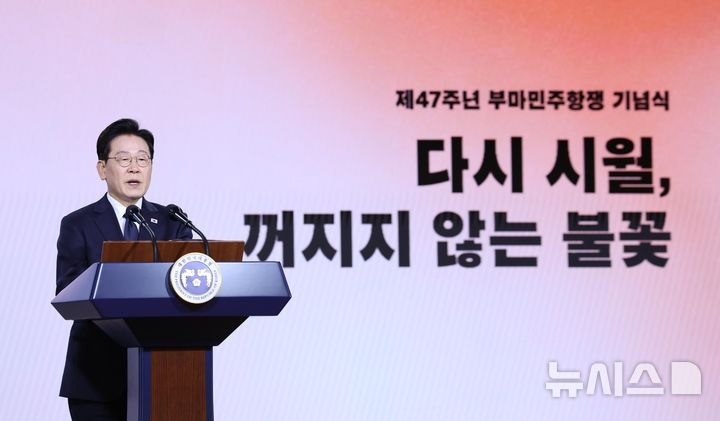
In October 1979, the streets of Busan and Masan echoed with the voices of citizens protesting against the Yushin dictatorship. As political oppression and economic discontent accumulated, combined with the expulsion of opposition party chairman Kim Young-sam from the National Assembly, citizens' anger exploded into street resistance. University students took the first step, and ordinary citizens including workers and merchants joined en masse, transforming the uprising into a democratic movement that shook the entire region.
The Busan-Masan Democratic Uprising was a decisive turning point in modern Korean history that accelerated the fracturing of the Yushin regime. It became the direct catalyst for the political changes that followed President Park Chung-hee's assassination on October 26 of that year, and served as the substantive backdrop for ending the Yushin regime. The government declared martial law in Busan and mobilized curfew orders in the Masan-Changwon area to crack down forcefully. However, while street protests could be suppressed, the social causes that generated those voices could not be erased.
Power always mistakenly believes it can suppress citizens' freedom, but the Busan-Masan uprising etched clearly into our history how far power can be exercised and how citizens' fundamental rights must be protected.
Today, 47 years later, the reason we look back on the Busan-Masan Democratic Uprising lies precisely here. We must go beyond mere historical commemoration and ask whether the demands that echoed through the streets 47 years ago are being fully realized within today's democracy.
Citizens' Resistance Moved History
The Busan-Masan Democratic Uprising cannot be explained as the achievement of only a particular political party or organized political force. It was an event in which citizens from different circumstances voluntarily broadened their resistance by sharing discontent with political oppression and yearning for freedom. It clearly demonstrated that the true subject of democracy is not those in power or politicians, but ordinary citizens who protect the front lines of life.
However, democracy is not completed merely by possessing the trappings of a system or legal framework. What is more crucial is whether power is exercised strictly according to law and procedure, and whether citizens' criticism and oversight function properly. If checks on power weaken, the foundation of democracy inevitably becomes unstable.
Furthermore, the maturation of democracy is directly linked to citizens' daily lives. Beneath the Busan-Masan Democratic Uprising lay not only a yearning for political freedom but also deep discontent over accumulated economic polarization and inequality in people's lives. The same is true today. If job insecurity, housing instability, and inequality intensify, citizens find it difficult to experience the fruits of democracy in their daily lives.
Political freedom and social fairness are never separate issues. When everyone has the opportunity to build their lives under fair rules and the voices of the socially disadvantaged are reflected in policy, democracy finally takes root deep in citizens' daily existence.
Inclusive Solidarity That Does Not Turn Differences into Enemies
Today, political conflict in our society rarely finds common ground, with antagonism between camps only becoming maximized. The pattern repeats of excluding those with different views rather than persuading them, being lenient toward one's own party's mistakes while applying harsh punitive standards to the other side's errors. Conflict is a natural phenomenon in a democratic society, but escalating it into irreparable antagonism and distrust destroys the very source of democracy.
The lesson of solidarity left by the Busan-Masan Democratic Uprising does not mean everyone must think alike. It lies in the wisdom of people with different circumstances and opinions joining hands to resolve community problems. The support of the majority cannot justify all decisions, nor can the opinions of minorities be excluded. Dialogue and compromise are not a retreat from principle but a democratic process of adjusting interests to find the best solutions a community can bear.
The responsibility of the political establishment is immense. Political leaders must abandon the convenience of stoking conflict to consolidate fandom and support bases, and instead demonstrate responsible politics that considers the interests of society as a whole. Citizens, too, must not be trapped in factional logic and should be able to apply identical democratic standards and accountability to everyone equally.
Transforming Memory into Today's Responsibility, and into the Constitution
Remembering history does not end with mourning the past but consists of carrying that memory forward as today's responsibility. The history of the Busan-Masan Democratic Uprising must not be monopolized by any single political force. The will of citizens who demanded freedom and rights against dictatorship transcends specific ideologies or factions. The standards applied when evaluating past power must be equally applied when looking at power today.
The time has come to establish the historical significance of the Busan-Masan Democratic Uprising firmly as a constitutional value. The current Constitution's Preamble specifies the succession of the March 1 Movement and the democratic ideals of April 19. Adding to this the citizens' resistance and sacrifice toward democracy in the Busan-Masan Democratic Uprising and May 18 Democratic Uprising is a crucial task in determining what history the Republic of Korea respects and what values it will pass on to the next generation.
The freedom, fairness, and democratic values that citizens demanded standing in the streets of Busan and Masan 47 years ago remain valid and unchanged today. The path to continuing the spirit of the uprising does not lie in repeating past slogans. It depends on today's practice: holding power accountable firmly, upholding law and principle, harmonizing differences through dialogue, and listening to the voices of the weak.

Loading comments…