



"No Honeymoon"…Choo Mi-ae Faces First Gyeonggi Province Audit with Storm Clouds Gathering
![[Uijeongbu=Newsis] Reporter Hong Hyo-sik = Choo Mi-ae, Governor of Gyeonggi Province, speaks at the Gyeonggi Supreme Executive Meeting held at the North Office of the Gyeonggi Provincial Government in Uijeongbu, Gyeonggi Province on the 21st. 2026.09.21. yesphoto@newsis.com](https://www.suwonilbo.kr/img/write/p85a2183c08d542217acef89831f5ac25f0abef20.jpg)
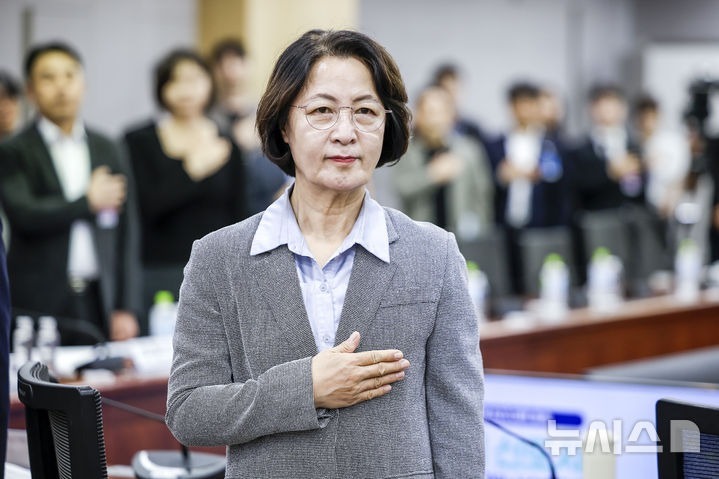
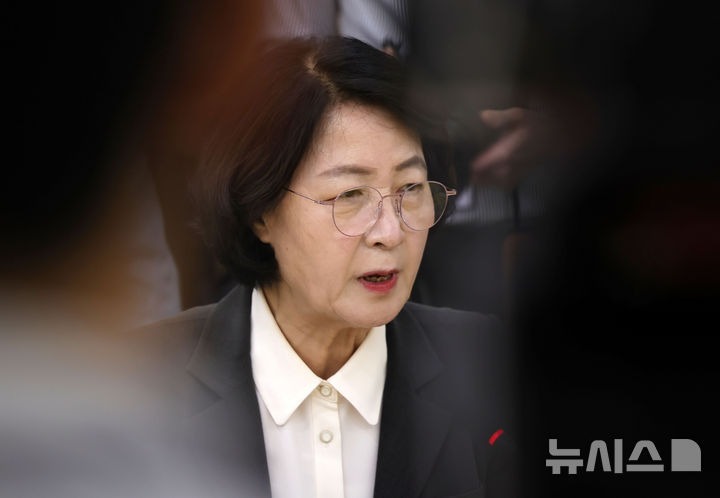
Governor Choo Mi-ae of Gyeonggi Province faces her first state audit just 100 days after taking office. Unlike the typical "honeymoon period" usually given to new local government leaders, she will be held accountable for various issues that have emerged since taking office, including the declaration of a financial crisis, cuts to livelihood budgets, and controversies over the governor's official residence.
According to the National Assembly and Gyeonggi Province on the 12th, the House Committee on Administration and Security will conduct a state audit of the province on the 13th. The House Committee on Land, Infrastructure and Transport also plans to review major policies and project implementation of Gyeonggi Province on the 19th. This is the first state audit Governor Choo has received since taking office in July.
The biggest issue is the declaration of financial emergency and the large-scale restructuring of expenditures implemented on that basis.
Governor Choo officially declared a financial emergency situation on August 5 and switched to austerity finances. Subsequently, she submitted a supplementary budget bill that reflected a loss of 300 billion won in local tax revenue and cut 546.5 billion won from 1,355 projects.
However, the entire supplementary budget grew by 562.1 billion won to 42.242 trillion won compared to the existing budget, amplifying controversy. Despite declaring a financial emergency and undertaking large-scale expenditure restructuring, the overall budget actually increased.
The province explained that this reflected increases in national treasury subsidies and non-tax revenue, with existing projects reduced and funds reallocated to essential livelihood projects. However, debate continued over the basis for the financial emergency declaration, the inevitability of individual project cuts, and the appropriateness of resource allocation.
Moreover, the province's fiscal situation was confirmed not to correspond to the statutory financial crisis stage.
When Democratic Party Rep. Chae Hyun-il (Seoul Yeongdeungpo-gap) questioned the province's fiscal situation during the state audit of the Interior Ministry at the House Committee on Administration and Security held on the 6th, Interior Minister Yoon Ho-jung answered, "It is neither a fiscal crisis nor a warning situation."
Minister Yoon estimated that the province declared a financial emergency citing exhaustion of local bond issuance limits, explaining that requesting an increase in the issuance limit was also a possible approach.
Of course, the fact that it does not correspond to the statutory financial crisis stage does not mean there is no decline in tax revenue or difficulty in fiscal management itself. However, since differences have been confirmed between the government's official financial risk standards and the province's declaration of financial emergency, the inevitability of large-scale budget cuts and whether sufficient review was conducted on alternative financing methods are expected to become issues in the state audit.
Resistance to the fiscal restructuring has already led to collective action by provincial residents.
On the 6th, a rally was held in front of the provincial government building attended by approximately 2,000 people, including directors of childcare centers affiliated with the Gyeonggi Province Childcare Center Association and childcare staff, calling for normalization of childcare budgets and prompt processing of the supplementary budget bill.
The association is demanding budget restoration, stating that 2.7 billion won necessary to maintain childcare facility operating costs and childcare staff treatment improvement expenses at existing levels for the remainder of this year was not reflected in the supplementary budget.
Particularly, they warned of the possibility of all childcare centers closing as early as November if the budget is not secured due to potentially lower support rates. Resistance is spreading, with over 60,000 people agreeing with citizen petitions raised by childcare teachers on related issues.
Merchants in traditional markets and small business owners are also demanding restoration of the "Gyeonggi Revitalization Big Sale" budget, while members of the Gyeonggi Provincial Council belonging to the Democratic Party are urging restoration of livelihood and welfare budgets. The conflict surrounding fiscal restructuring is expanding to not only the provincial council but also childcare facilities and local commercial areas.
Controversy over the suspension of postpartum care support also drew provincial residents' backlash.
The province decided to end postpartum care support, which had paid 500,000 won per newborn, by the end of September, but withdrew the policy as backlash grew. Concerns were raised that support for families planning childbirth could be suddenly discontinued, and the issue escalated to citizen petitions.
Over 30,000 people agreed with a separate petition demanding Governor Choo's resignation. While the province explained the resource shortage for essential livelihood projects and the inevitability of restructuring, debate continued over whether provincial residents' opinions were sufficiently gathered during the budget adjustment process.
The controversy over the governor's official residence, which emerged in tandem with the financial emergency declaration, escalated to a police referral.
The province contracted an apartment in Suwon's Gwanggyo New Town in June for a jeonse deposit of 1.22 billion won and purchased an official vehicle valued at 77.65 million won.
In response, the civic group "Citizens' Movement to Correct Judicial Justice" filed a complaint against Governor Choo with the Gyeonggi Southern Police Agency on the 15th of last month on charges of abuse of authority and breach of fiduciary duty.
The province maintains that the contracts for the official residence and vehicle were concluded before the financial emergency declaration and complied with relevant regulations. However, questions remain about the appropriateness of the budget allocated to the official residence and vehicle, given that Governor Choo has emphasized financial difficulties since the transition committee period.
Political conflict within the ruling party is also weighing on Governor Choo.
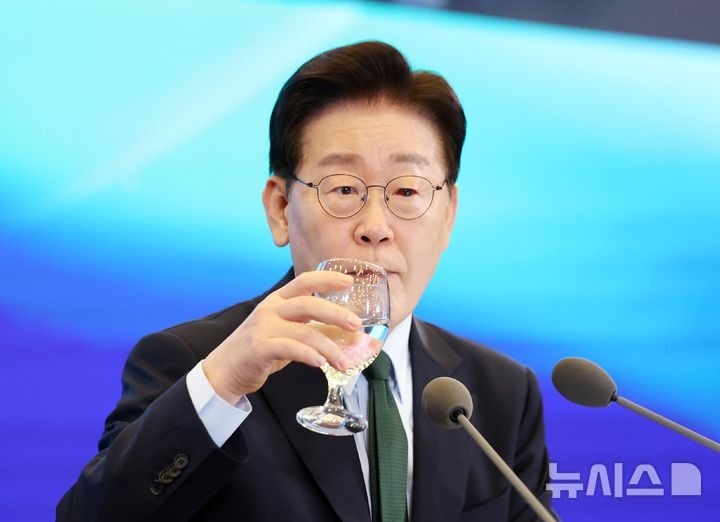
Governor Choo recently revealed disagreement with the presidential office and ruling party leadership on issues including the appointment of the Serious Crime Investigative Agency chief and prosecution reform. Public tension with Democratic Party Chairman Kim Min-seok has led to criticism not only from the opposition but also from within the ruling coalition.
Consequently, the state audit is drawing attention not only to attacks by opposition lawmakers but also to what position ruling party members will take on Governor Choo's fiscal management and provincial administration issues.
At the House Committee on Land, Infrastructure and Transport state audit on the 19th, major transportation and development projects, including third-phase New Town metropolitan transportation measures and the Metropolitan Express Rail (GTX), are also expected to be subject to review. The key question is how Gyeonggi Province, which declared insufficient fiscal capacity, will secure existing project timelines and funding.
The Gyeonggi International Airport project is also likely to be raised as an issue.
The province previously selected three preliminary candidate sites—reclaimed land at Hwaseong Lake in Hwaseong City, Seotap-myeon in Pyeongtaek City, and Moga-myeon in Icheon City—and pursued a research project to review the final candidate site. However, the project was suspended after the fairness of the project contractor selection was questioned during last year's state audit.
Subsequently, the provincial audit committee concluded in July that there were no illegal matters in the procurement and contracting process for the relevant project. However, the suspended project has not yet been resumed.
For the Gyeonggi International Airport, whether it is reflected in the Ministry of Land, Infrastructure and Transport's Seventh Comprehensive Airport Development Plan is seen as a key variable for future project implementation. The provincial government's suspension of the project, which requires selection of airport candidate sites and coordination with the central government, is also subject to verification for its impact on the project timeline.
Since the Gyeonggi International Airport is connected to the Suwon Army Airport relocation issue, there is also interest in what follow-up measures Gyeonggi Province has prepared for candidate site selection and government coordination.
Governor Choo, a senior politician who served as a six-term member of the National Assembly and Minister of Justice, is receiving a state audit as a metropolitan government leader for the first time. She has transitioned from questioning the government and public institutions in the National Assembly to now answering as a head of provincial government responsible for provincial administration.
At her first state audit 100 days after taking office, attention is focused on what explanation Governor Choo will provide regarding the basis for the financial emergency declaration, the inevitability of large-scale expenditure restructuring, backlash from cuts to livelihood budgets, and delayed implementation of major projects.
Hong Eun-gwang, a provincial government spokesperson, said, "In the state audit by the House Committee on Administration and Security, we expect local financial issues to be reviewed, and in the House Committee on Land, Infrastructure and Transport, issues related to transportation, housing, and real estate will be the focus. We hope it becomes a venue where ruling party members discuss policy alternatives together."
He added, "We are preparing answers to various points raised, and if National Assembly members provide sufficient opportunities for questioning and answers, we believe we can find solutions to the problems faced by Gyeonggi Province together."
Loading comments…