



"Why is Choo Appearing There?"...Choo Mi-ae Takes Center Stage in Political Arena
![[Uijeongbu=Newsis] Reporter Hong Hyo-sik = Gyeonggi Province Governor Choo Mi-ae speaks at the 2026 Democratic Party Gyeonggi Budget Policy Consultative Meeting held on the 21st at the Gyeonggi Provincial Government Office Northern Building in Uijeongbu, Gyeonggi Province. 2026.09.21. yesphoto@newsis.com](https://www.suwonilbo.kr/img/write/pb9df00926da30bc046b5ead1d38ee9c5c2134011.jpg)
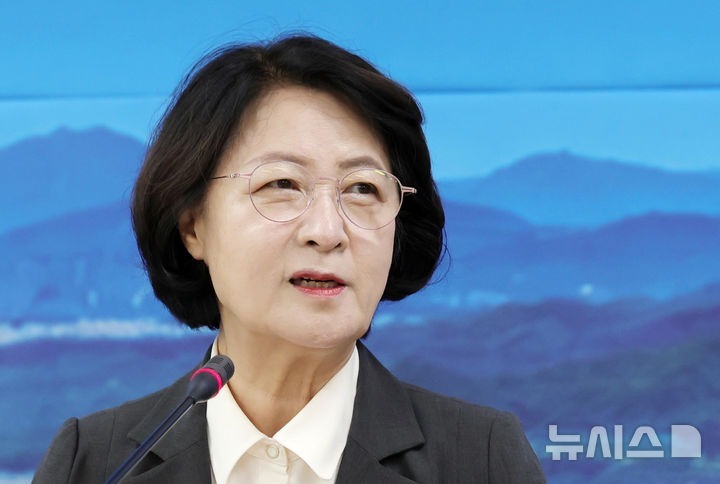
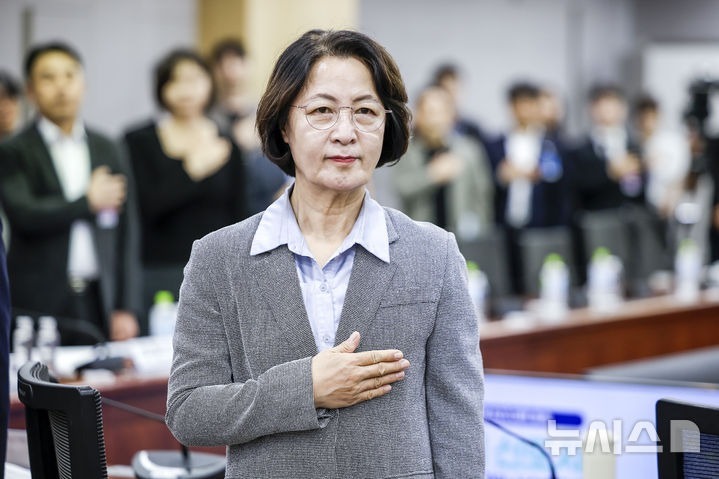
Gyeonggi Province Governor Choo Mi-ae is attracting the attention of the entire political community just 100 days after taking office. Every time Governor Choo speaks, political controversy grows, and the President and ruling party leader are responding publicly.
On the 9th, President Lee Jae-myung wrote on his social media platform, "It is more of a problem that those who lack capability demand large positions, attempt to have national policies follow their will, and when things do not work out, mount internal attacks under the pretext of radical reform," referring to what appears to be directed at hardline prosecution reform advocates including Governor Choo.
While not directly naming Governor Choo, the statement is interpreted as being directed at hardline prosecution reform advocates including Governor Choo, coinciding with internal ruling party conflict over the appointment of Kim Ji-yong as candidate for Chief of the Corruption Investigation Office.
Since publicly criticizing the appointment of Candidate Kim on the 10th of last month, Governor Choo has repeatedly raised objections to the President's personnel decision for nearly a month. On the 8th, she even argued that Candidate Kim, while serving as head of the Criminal Division at the Supreme Prosecutors' Office, failed to approve forensic costs for former Justice Minister Han Dong-hun's mobile phone, effectively concealing crucial evidence.
From when Governor Choo made her first public criticism last month through the 8th of this month, she has directly challenged the Kim appointment nine times. A situation has emerged in which a provincial governor from the same party repeatedly criticizes a presidential appointee, with the President responding publicly.
In this process, Governor Choo has become the center of political controversy beyond the appropriateness of the Kim appointment, now involving the President's personnel authority and the direction of prosecution reform.
The ruling Democratic Party's response is also difficult.
While the party must respect the President's personnel decision, it is not easy to control the public opposition of a provincial governor from the same party. Even if party-level disciplinary action is possible, it cannot directly limit the governor's administrative duties, and there is concern that disciplinary measures could actually expand internal party conflict.
The relationship between Democratic Party Leader Kim Min-seok and Governor Choo has also shown diverging paths even before this personnel controversy.
Governor Choo publicly supported Candidate Jung Cheong-rae, who competed against Leader Kim in the Democratic Party leadership election in August. Subsequently, differences of opinion between the two became apparent over prosecution reform and the appointment of the Corruption Investigation Office chief.
On the 8th, Leader Kim responded on the Democratic Party's official YouTube broadcast to a viewer's comment pointing out Governor Choo's actions as a challenge to the President's personnel authority, saying, "There are different positions and situations for each person," and urged, "Ruling party members and public officials should exercise restraint."
Rather than directly criticizing or raising disciplinary measures against Governor Choo, the response remained at the level of urging restraint.
However, the next day, Governor Choo publicly expressed displeasure toward Democratic Party members.
On the 9th, Governor Choo wrote on her social media that the National Assembly is requesting information about the provincial governor's private schedule ahead of the National Audit, stating, "Supposedly the ruling party, but beyond indifference, I'm quite taken aback by the request for the provincial governor's private schedule information."
She explained that most private schedules since taking office involved briefings and meetings to understand Gyeonggi Province's financial situation and prepare countermeasures. The point is that while absorbed in responding to a financial crisis, fellow party members are showing interest in private schedules rather than provincial administration difficulties.
Following the public criticism of the President's personnel decision leading to conflict with ruling party leadership, tensions are forming with fellow party members preparing for the National Audit.
While conflicts with the President and ruling party leadership continue in central politics, another controversy is unfolding in Gyeonggi Province around the administrative authority exercised by Governor Choo.
A representative example is fiscal austerity and civilian livelihood budget adjustment.
Shortly after taking office, Governor Choo declared a financial emergency in Gyeonggi Province and pursued structural reform of expenditures in the 500 billion won range. Subsequently, demands for budget restoration continued from the Provincial Assembly and related organizations, but Gyeonggi Province maintained its previous position citing financial constraints.
The conflict escalated into large-scale collective action.
The Gyeonggi Province Daycare Center Association held rallies in front of the Provincial Government Office for three days from the 6th to the 8th, urging the allocation of 2.7 billion won in childcare-related budgets not reflected in the Second Supplementary Budget. On the first day, approximately 2,000 childcare workers participated according to police estimates. On the same day, small business owners also demanded restoration of livelihood economy budgets in front of the Provincial Office.
The association stated it would consider additional rallies with parental participation and full daycare closures if demands are not met.
As the provincial governor's budget decision led to collective action by residents and thousands gathered in front of the Provincial Government Office, as reported in the media, provincial administration issues were also highlighted as political issues centered on Governor Choo.
Notable is that the provincial governor's authority becomes the starting point of conflict while the authority to adjust it also largely resides with the executive branch.
During budget formulation and adjustment, the executive branch's decisions provoke opposition, and subsequently during the process of reconsidering support methods and financial management directions, the governor's judgment attracts attention. While decision and opposition, response and adjustment continue, the provincial governor stands at the center of controversy.
However, there is no direct evidence that Governor Choo intentionally created conflict to raise her political profile. Gyeonggi Province maintains the position that the adjustment was inevitable due to existing budget shortfalls and financial crisis.
In this situation, the Provincial Assembly's check function has also emerged as a concern.
In the June local elections, the Democratic Party secured 144 of 167 total Provincial Assembly seats. This represents 86.2% of all seats. The People Power Party secured 22 seats, and Cho Kuk Innovation Party secured 1 seat.
An overwhelmingly ruling-party-dominant structure where both the provincial governor and assembly are led by the Democratic Party.
Initially, such seat distribution was evaluated as the political foundation enabling Governor Choo to stably operate provincial administration. However, more than 100 days into office, conflict over budgets continues between the provincial governor and assembly members of the same party.
The Provincial Assembly has prepared its own revised proposal demanding restoration of civilian livelihood budgets and signaled its intention to independently handle the matter at a plenary session on the 12th. The executive branch led by Governor Choo is expressing reluctance citing additional financial burden.
The Provincial Assembly does not lack legal means of check such as budget deliberation and decision-making authority and administrative audit rights. In fact, voices criticizing the executive branch's budget adjustments have emerged among Democratic Party members.
However, since the Democratic Party controls the Provincial Assembly, stopping the executive branch's policies essentially requires cooperation from party members. Whether the Provincial Assembly Democratic Party can exercise independent check power against the executive branch while the ruling party leadership feels burdened by open conflict with Governor Choo remains a key question.
As a result, Governor Choo simultaneously occupies the center of different political and administrative issues: the President's personnel decision and internal ruling party conflict, Gyeonggi Province's fiscal austerity and Provincial Assembly confrontation.
When opposing the President's personnel decisions, central politics responds. When clashing with ruling party leadership, internal party conflict becomes an issue. As provincial governor, her budget decisions are followed by residents' collective action and Provincial Assembly response. In this process, political attention on Governor Choo intensifies.
The Gyeonggi Province National Audit scheduled for the 13th is also expected to be a venue where political discussions on Governor Choo's actions and controversy surrounding provincial administration since taking office continue.

Loading comments…