



Exclusive "It Doesn't Appear to Be Official Party Discipline Under Party Bylaws"...Controversy Over Whether Chu Mi-ae and Boo Seung-chan Face Disciplinary Action
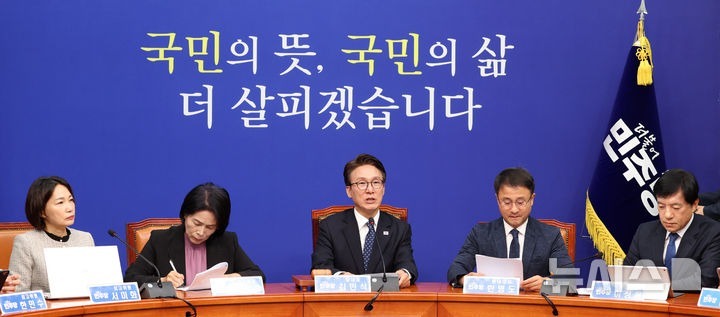
The Democratic Party of Korea has decided to issue a warning to Gyeonggi Province Governor Chu Mi-ae and Rep. Boo Seung-chan (Yongin, Gyeonggi) over controversial "straw" remarks, but it remains unclear whether this constitutes official disciplinary action under party bylaws.
According to the Democratic Party on the 21st, the party leadership held a closed-door top council meeting at the National Assembly on that day and agreed to issue a warning to Governor Chu and Rep. Boo.
Park Gye-won, spokesman for the Democratic Party, met with reporters after the meeting and stated, "This is in the sense of urging serious reflection on the part of those involved and preventing recurrence," adding, "The party would like to apologize once again to firefighting public officials and the people."
However, it remains unclear whether this warning constitutes official disciplinary action under party bylaws.
When asked whether the spokesman's warning qualifies as 'emergency discipline' under party rules, Cho replied "No," and when asked whether it was a simple warning rather than a disciplinary measure, he said, "That is also a type of disciplinary decision" and "the top council can also make such decisions."
However, regarding whether the top council actually voted on discipline, he explained, "To be precise, the top council agreed on a 'verbal warning,'" adding, "'verbal warning' is also a warning."
The issue is that the Democratic Party bylaws separately stipulate general disciplinary procedures and the top council's direct disciplinary authority.
Article 12 of the Ethics Adjudication Committee Regulations under Party Bylaw No. 7 of the Democratic Party grants disciplinary jurisdiction over lawmakers and heads of local government to the central party's Ethics Adjudication Committee. Article 13 stipulates that the Ethics Adjudication Committee review and vote on disciplinary cases.
On the other hand, Article 32 allows the party chairman to directly impose disciplinary measures by top council vote if there is grave and apparent disciplinary cause during elections or other extraordinary times, or if it is deemed necessary to urgently handle the matter to prevent serious problems for the party.
In other words, general discipline goes through the Ethics Adjudication Committee's review and vote, while the exceptional case where the top council can directly impose discipline is specified in the 'emergency discipline' clause.
However, spokesman Cho maintains that this measure does not constitute 'emergency discipline.' If the top council directly decided on discipline without going through the Ethics Adjudication Committee procedure, clarification is needed on what basis this was done.
Party staff members themselves appear unable to grasp how the disciplinary procedure was conducted.
A Democratic Party official stated, "It seems to have been discussed when staff had left, and it doesn't appear to be party bylaw discipline," adding, "In cases like 'emergency discipline,' a vote should normally be held, and staff should have entered to conduct the voting procedure, but the voting procedure was not conducted."
Regarding what procedure actually took place among top council members, the official said, "None of our staff were present, so nobody knows the details," adding, "Only those inside know how they voted and decided."
The method of warning also appears to differ from party bylaws.
Article 16, Paragraph 1, Clause 4 of the party bylaws defines 'warning' as a disciplinary measure that issues written admonition to the disciplinary subject.
In response, spokesman Cho explained the warning as 'verbal' rather than written while maintaining it is official discipline.
Governor Chu's side also stated regarding whether they received written notice related to discipline, "As far as we know, we did not receive separate written notice."
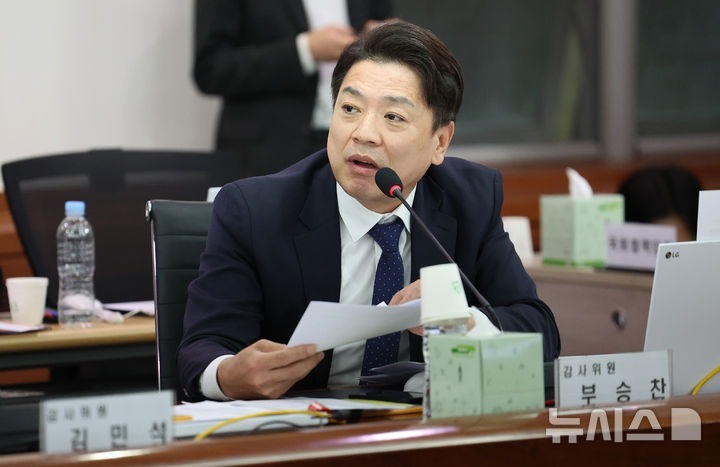
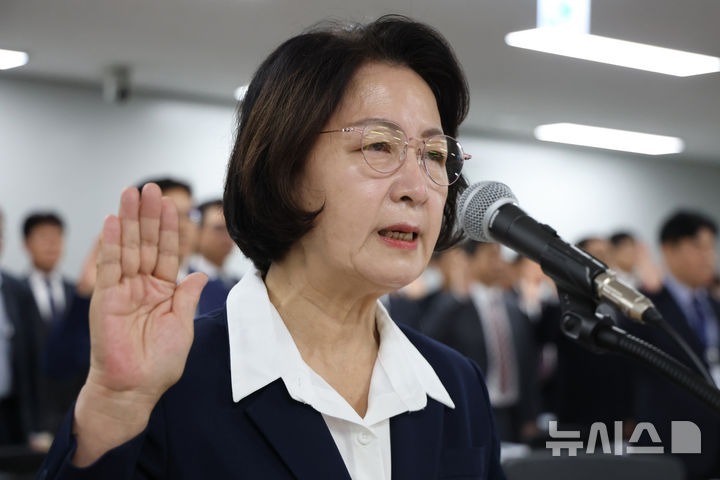
Earlier, Governor Chu stirred controversy on the 13th during the Gyeonggi Province state audit by comparing firefighting to a "financial straw," and questions about the sincerity of her apology arose during her visit to condole a deceased firefighter. Rep. Boo also amplified controversy on the 19th during the state audit by remarking, "Isn't this really sucking up finances continuously," causing further uproar.
In response, Democratic Party Chairman Lee Min-seok ordered an ethics investigation into Rep. Boo and announced follow-up party measures. Ultimately, the Democratic Party leadership agreed to issue warnings to both individuals and closed the matter.
While the party spokesman described this as discipline, party staff members handling subsequent administrative processing cannot confirm whether it qualifies as party bylaw discipline or verify the voting procedure, leaving the nature of this warning unclear.
For the Democratic Party to officially announce this warning as a disciplinary measure, it must explain which party charter and bylaw provisions were applied to the disciplinary process, the voting procedure, and whether a written measure was issued, observers note.
Loading comments…