



President Lee on Home Prices: "Surprisingly Declining" in Seoul…but "Surprisingly Rising" in Other Areas
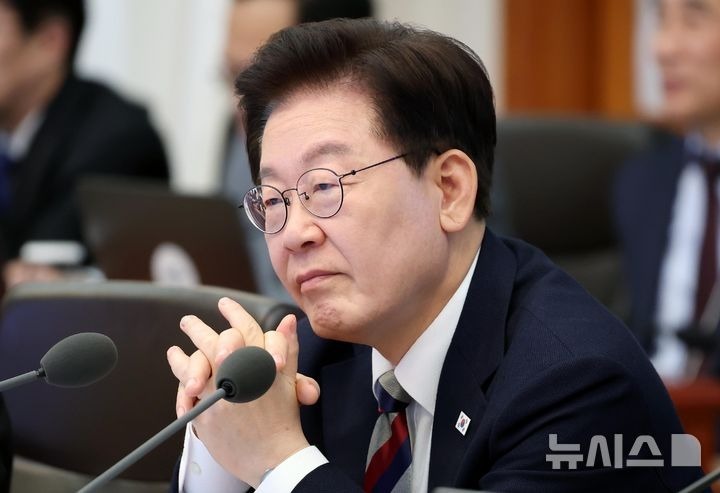
President Lee Jae-myung diagnosed that apartment transaction prices in major Seoul areas are "declining at a surprising rate," yet major regions in southern Gyeonggi Province designated as land transaction permit zones are instead showing high rates of price increases.
At a Cabinet meeting chaired at the Blue House on the 3rd, President Lee said, "The supply of apartments for sale in Seoul is increasing rapidly" and "transaction volumes are dropping sharply, and actual transaction prices in major areas are declining at a surprising rate."
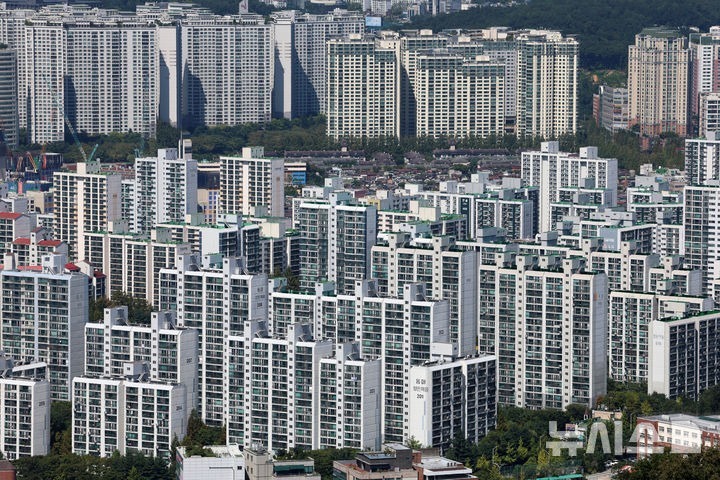
According to weekly apartment price trends for the fourth week of October (based on the 26th), announced on the 29th of last month, Gangnam-gu in Seoul declined 0.38% compared to the previous week, Seocho-gu by 0.35%, and Songpa-gu by 0.22%.
The three Gangnam districts have declined for eight consecutive weeks, with all three areas showing widened declines compared to the previous week, seemingly supporting President Lee's diagnosis.
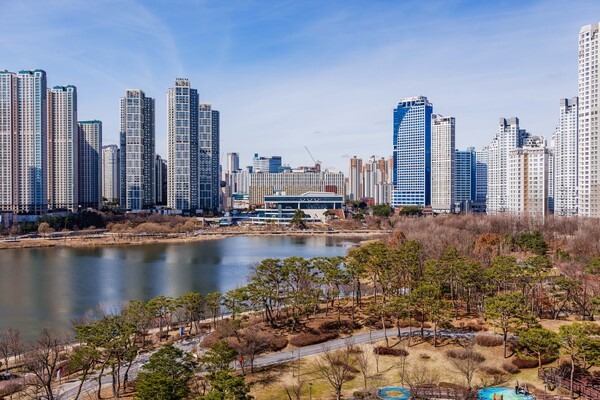
However, the opposite trend emerged in southern Gyeonggi Province.
Suwon's Youngtong-gu rose 0.58%, and Yongin's Giheung-gu climbed 0.54%. Uiwang City (0.47%) and Anyang's Dongan-gu (0.38%) also continued their upward trend.
Notably, all four of these areas are land transaction permit zones designated by the government.
The government designated Suwon's Youngtong-gu, Uiwang City, and Anyang's Dongan-gu as land transaction permit zones through the October 15 real estate measures last year. Yongin's Giheung-gu was additionally designated in July this year.
In land transaction permit zones, prior approval is required for certain housing transactions, and owner-occupancy obligations also apply to purchasers. The aim is to suppress speculative transactions and manage the housing market centered on actual demand.
However, with high rates of increase appearing—such as 0.58% and 0.54% respectively in a single week in the regulated areas of Suwon's Youngtong-gu and Yongin's Giheung-gu—questions are accumulating about whether regulations alone can sufficiently suppress price increases.
Price increases were also confirmed in non-regulated areas. Gunpo City rose 0.58%, and Suwon's Gwonseon-gu climbed 0.42%.
Upward trends appeared in both regulated and non-regulated areas. In particular, the continued high rates of increase in regulated areas is a point that should be considered when evaluating price stabilization effects.
Seoul also showed diverging trends between the Gangnam three districts and other areas.
Overall apartment transaction prices in Seoul rose 0.09%, continuing a 90-week upward streak. Seongbuk-gu rose 0.39%, Seodaemun-gu 0.36%, and all 22 other autonomous districts excluding the Gangnam three districts showed price increases.
Particularly noteworthy is that the designation period for the land transaction permit zones applied across all Seoul and 12 regions of Gyeonggi Province is set to expire on December 31st, drawing attention to the government's decision on redesignation. However, the expiration date for Yongin's Giheung-gu, which was additionally designated this year, is December 31st, 2027.
The government maintains that it will review market conditions through year-end to determine whether to redesignate land transaction permit zones.
Loading comments…