



War Can Begin Before Missiles Are Fired…Warning of 'Fire Sale' Directed at South Korea
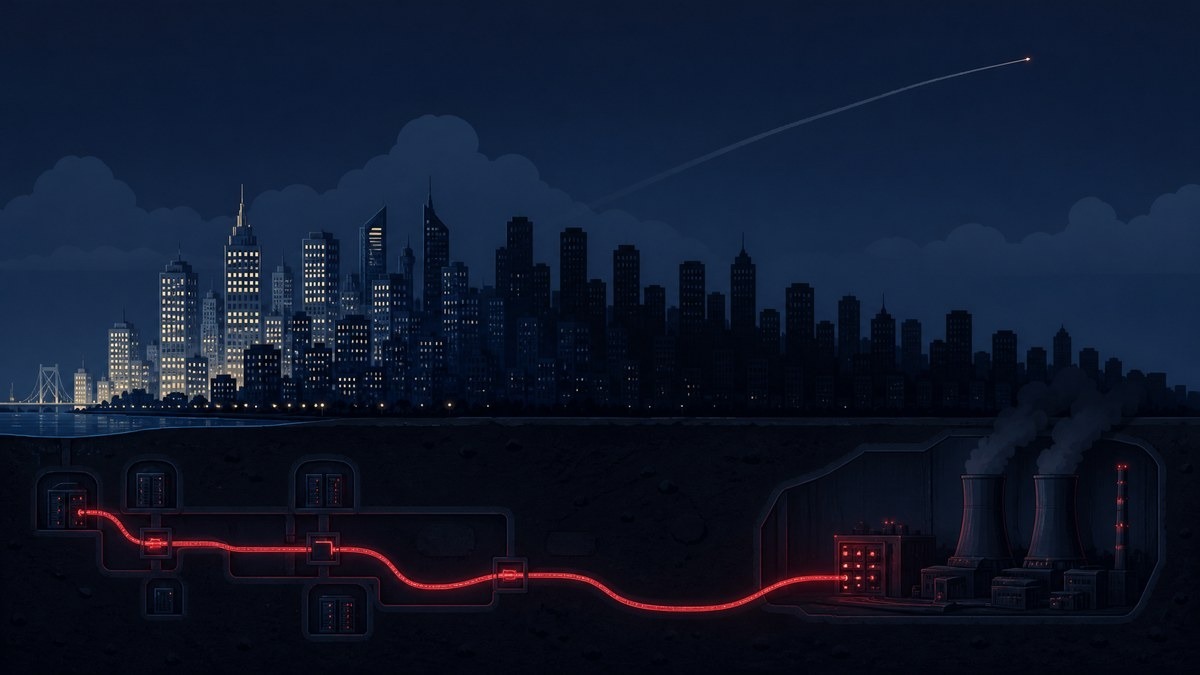
One morning, Seoul's traffic signal system stops. Bank networks become inaccessible and card payments are cut off. Mobile phone communications become unstable and power and water supply are disrupted. Initially, it seems like a simple computer malfunction, but confusion spreads as the failures nationwide are revealed to be connected. This is not something that actually happened. It is a hypothetical scenario applying a 2007 film's "Die Hard 4.0" depiction of critical infrastructure attacks—so-called "Fire Sale"—to South Korea in 2026.
Three Stages Depicted in the Film
The Fire Sale in the movie unfolds in three stages. First, paralysis of transportation systems; second, collapse of finance and communications; third, incapacitation of essential national infrastructure such as electricity, gas, and water. The objective is not information theft. It is to strike the systems that run a nation, causing chaos throughout society and undermining the nation's ability to respond normally. Nineteen years later, large-scale hacking incidents that have recently come to light in Korea and North Korea's military movements revive the question posed by this film. Is there any guarantee that war necessarily begins with missile launches?
16 Companies, 23.24 Million People, and 4.4 Million Attempts
Recent figures are troubling. According to data released by the Financial Services Commission on the 14th of last month, 16 financial companies were confirmed to have suffered data breaches, including major institutions such as Shinhan Bank, KB Kookmin Bank, Hana Bank, and Busan Bank, with approximately 100,000 pieces of information confirmed leaked at that time. Some attacks also showed signs of utilizing artificial intelligence (AI) technology. Telecommunications is no exception. In the SK Telecom hacking incident last year, personal information of approximately 23.24 million subscribers was leaked, and according to government investigation results, the initial infiltration traces dated back to 2021. This means attackers remained hidden in the system for nearly four years. Then, on the 21st of last month, financial authorities detected approximately 4.4 million access attempts targeting domestic financial systems from IP ranges allocated to North Korea. These were scans probing open ports and vulnerabilities. No actual breach damage was confirmed, and the IP address alone cannot definitively attribute the attack to North Korea. However, the question remains: if this reconnaissance is not merely information theft but rather a process of securing vulnerabilities to be used in times of crisis?
At the Same Time, Missiles Were Being Fired
While cyber threats accumulated, military tensions also escalated. On September 21st, three soldiers were wounded in a mine explosion in the Demilitarized Zone (DMZ), and based on an investigation with the UN Command, the military announced that North Korean-laid mines were the cause. North Korea denied this. Subsequently, North Korea fired more than 10 short-range ballistic missiles into the East Sea on the 29th of last month, and the Joint Chiefs of Staff announced that several more were fired from the Sondok area of South Hamgyong Province on the 4th. A show of force does not necessarily mean war preparation. Objectives such as weapon verification, external pressure, and securing negotiating leverage are certainly possible. However, if cyber threats against finance, communications, and public systems persist during periods of heightened military tension, these cannot be viewed as isolated incidents. This is because in modern warfare, physical attacks, cyber attacks, electronic warfare, and psychological warfare are combined.
The Most Dangerous Thing Is Invisible Infiltration
One of the core concepts in modern cyber warfare is "prepositioning." It involves entering target systems in peacetime, remaining hidden for a long time, and then activating those pathways when crisis arrives. The U.S. Cybersecurity and Infrastructure Security Agency (CISA) has warned that China-backed hacking group "Volt Typhoon" in 2024 had infiltrated U.S. critical infrastructure networks and was establishing prepositioning to conduct destructive attacks in the event of future conflict. There is no evidence that North Korea's recent activities follow the same method. However, it is a real example demonstrating that cyber attack conditions can be set up in advance before interstate conflicts. What is important is that attackers do not need to destroy all systems. Cascading chaos can occur from the malfunction of just a few critical functions. When false disaster information and manipulated military news are added on top, the chaos doubles.
Emergency Security Inspections of 2,100 Public Institutions
The government has begun to move. The National Intelligence Service requested emergency security inspections at approximately 2,100 public institutions, including central government ministries and local governments, and decided to conduct separate vulnerability inspections on major information and communication infrastructure in the public sector. On the same day, President Lee Jae-myung pointed out the limitations of the current security system focused on post-incident response in the National Assembly and ordered the establishment of a government-wide cyber security response system. The launch of large-scale inspections is not evidence of an imminent cyber war. However, it is clear that repeated security incidents are being recognized as a serious issue warranting national-level response.
Conclusion Is Premature, but Inspection Is Now
Based on currently available information, there is no basis to conclude that financial sector hacking, reconnaissance from North Korean IP ranges, and recent missile launches constitute one integrated operation. There have been no instances of national-scale transportation or power grid paralysis. What is needed now is not the conclusion that war is imminent, but an inspection of how long the nation would endure if each of these threats materialized simultaneously. Do banks function? Is electricity supplied? Are communications networks maintained? Do emergency medical care and disaster response systems operate? In peacetime, these questions are issues of service stability; in wartime, they become matters of national survival. The government must verify not only whether critical infrastructure has been infiltrated but also the capacity to maintain and restore services under attack, and both private and public institutions must establish emergency operating systems prepared for simultaneous, widespread failures.
Missiles can be observed the moment they are launched. However, cyber infiltration may go undetected for years. By the moment we realize war has begun, some systems may already be under attack. What we must prepare for is not just the ability to predict the start of war. It is the ability to ensure that the daily life of South Korea does not stop, regardless of the form in which war begins.



Loading comments…