



Poil Wetland in Uiwang to be Reborn as Urban Ecological Learning Center
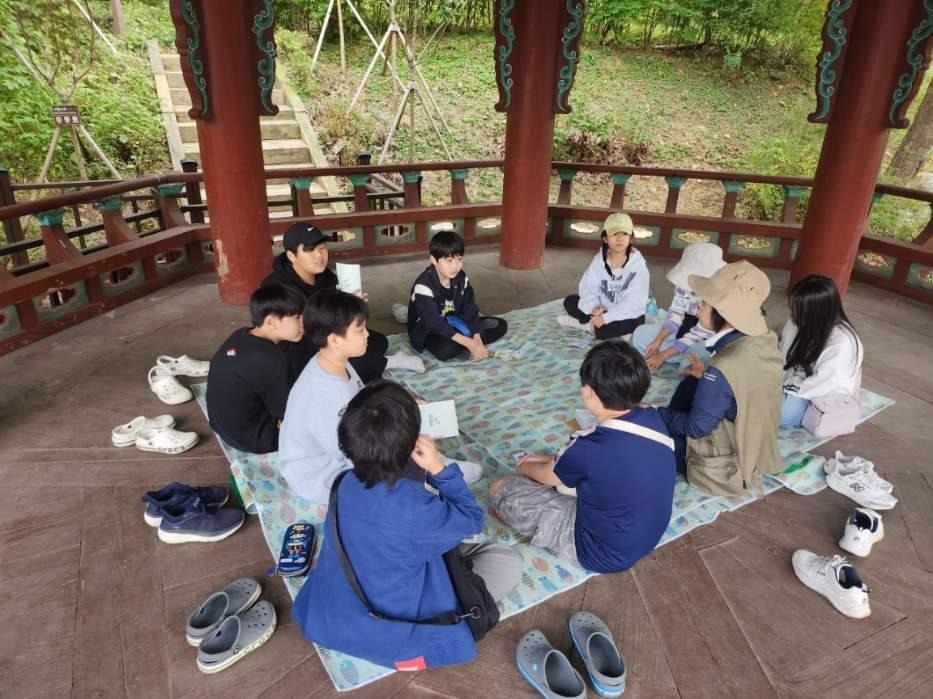
The Poil Wetland located in Poil-dong, Uiwang City is taking its place as an ecological learning center that restores habitats damaged by urbanization and promotes biodiversity.
This artificial wetland restores the habitats of flora and fauna facing extinction due to urban development and provides citizens with natural education spaces, reflecting the love of nature of Uiwang City residents.
To increase citizen participation, Uiwang City is gradually developing ecological education programs utilizing the restored wetland. The education program implemented this time is a representative citizen participation program that shares the achievements of ecological restoration with residents and raises awareness of the value of biodiversity conservation.
The education program was conducted over a total of eight sessions in June and October, targeting 136 students from eight fifth-grade classes at Poil Elementary School. Students participated in inquiry activities observing diverse organisms inhabiting the Poil Wetland and learning about the functions and roles of the wetland ecosystem.
In particular, Uiwang Eco-School instructors, who were trained through a private-public partnership environmental, social, and governance (ESG) project, participated in the program and conducted hands-on experiential education centered on the field, enhancing students' interest and understanding.
This education program was promoted as part of the "2026 Poil Wetland Ecological Education" initiative undertaken by Uiwang City as one of its private-public partnership environmental, social, and governance (ESG) natural environment restoration projects with Hyundai Rotem Co., Ltd.
The city signed a "Memorandum of Understanding on Natural Environment Restoration and Promotion of Biodiversity" with Hyundai Rotem Co., Ltd. and the Korea Environment Institute last July, and has been building an environmental foundation by restoring the Poil Wetland and improving the habitat environment for the Asian Spadefoot Toad (Bombina orientalis), a species on the endangered species list.
Mayor Kim Sung-je said, "I hope the restored Poil Wetland becomes a living classroom that conveys the preciousness of nature and the value of biodiversity to students," and "Going forward, we will continue to expand ecological environment education so that future generations can grow together with nature through private-public partnerships to preserve local ecological resources."
Starting next year, the city plans to expand the project to target more elementary schools within the city in cooperation with ecological environment education specialist organizations, providing more people with opportunities for ecological environment education.

Loading comments…