



Choi Hyung-guk's Brush Strokes (20) Chojeong Park Je-ga, Friends Bound by Hardship and Filled with Poverty
- Missing a Friend Like Spring Sunshine
Here is a poem in classical Chinese.
A scene of unrolling a precious painting in a room and letting one's gaze wander freely according to one's heart. Let us grasp a moment of leisure and, becoming that person, read it slowly.
"秋陽照室 (Autumn sunlight illuminates the room)
展卷遊神 (Unroll the scroll and the spirit wanders)
觀其花木之幽深 (Observing the flowers and trees, deep and serene)
烟水之縈紆 (The misty water winds around)
新林嘉石之窈窈 (The spring forest and beautiful stones, remote and tranquil)
與夫開樽拓窓之人焉 (And the person who opens a wine jar and opens a window)
噫 安得與斯人共享此樂也 (Alas! How could one share this joy with such a person?)"
Autumn sunlight shines in the room. Unrolling the painting, the spirit wanders. Looking at the painting, the flowers and trees are deep and serene. The misty river winds around and envelops. In the spring forest, beautiful rocks are remote and tranquil. In that painting, one sees a person placing a wine jar and opening a window. Alas! How could one share this joy with such a person?
This poem appears in a postscript to a painting album by Wen Heng-shan that Chojeong Park Je-ga (朴齊家, 1750~1805) wrote. The fierce summer sun retreats, and beyond the window, autumn sunlight wraps around gently. Though the room is not large, it is the kind of day when one can sleep late wrapped in that sunlight like a quilt.
In the middle of that room, a precious painting album is unrolled and one gathers one's thoughts. The gaze lands on the serene flowers and trees in the painting. Thick mist follows the river and winds around the flowers and trees. Beside it, a large rock with fresh sprouts sits quietly. Below it, in a small cottage, there is a person. One does not know whom they are waiting for, but a wine jar barely peeks out beyond the open window.
It need not be a cup of wine. One simply longs for a friend with whom to speak at ease. Is there a way to share joy with the one in that painting? One indulges in a brief imagination. On a sunny autumn day, a painting unfolds in the room and one yearns for a friend. A friend whose feelings are conveyed by just a glance.
This is one of Park Je-ga's poems from the 『Jeongyugak Collection (貞蕤閣集)』 that yearns for such a person. Park Je-ga was also of mixed parentage. He was so renowned as a "gifted boy" in Seoul that his abilities were exceptional. His calligraphy and paintings were outstanding, and his poems left a lasting impression on people. Yet the world did not esteem him highly. Resentment accumulated in his heart. But he had a friend. He was the military man Baek Dong-soo.
Park Je-ga was born in 1750, and Baek Dong-soo in 1743. Though Baek Dong-soo was seven years his senior, they were friends who shared the sorrow of mixed parentage and wished to learn together about Northern Learning, a new knowledge. When Baek Dong-soo passed the military examination but, lacking strong connections, departed to what seemed like exile to Girinbyeop in Gangwon Province, sadness overwhelmed Park Je-ga. Now the dear friend departs from his side. Poverty slowly suffocates a person thus.
That friend who accepted everything—even drunken antics and jealousy—if one was by his side. However talented one might be, the world gave no opportunity to start, asking what one's status was, what one's mixed parentage was. He must have grown to hate such a world.
- Pouring Heart into Letters, Meeting Again
To survive, to Baek Dong-soo who departed to the mountains of Inje in Gangwon Province, leaving the human world for only the sound of birds, Park Je-ga wrote a long letter filled with regret. The title was "Song of Baek Yong-suk to Girinbyeop (送白永叔基麟峽序)" - 'Sending off the talented Baek Dong-soo to Girinbyeop'. Though the letter is somewhat long, let us examine a few paragraphs.
"(Above omitted) My friend Baek Yong-suk (白永叔) prides himself on talent and has idled in this world for 30 years, yet has remained in hardship and received no consideration from the world. Now he shall take his two parents and go to a deep valley to make a living. Alas! Our friendship was bound by hardship, and our conversations were filled with poverty. I find that most sorrowful. Yet surely I am not merely a friend to Yong-suk during times of hardship? Though his household had not even two days' worth of firewood left, whenever we met, we would draw the swords at our waists, pawn them at a tavern, and drink wine. As the wine grew strong, we would sing loudly, scorn and tease and laugh away, and amidst heaven and earth's joys and sorrows, and the world's warmth and coldness, the sweetness and bitterness of kindred spirit were always present.
Alas! How could Yong-suk be merely a friend during hardship? If so, why did he so often come out and roam with me so unfailingly? Yong-suk had long been known by reputation at the time, and friends with whom we had formed bonds were spread throughout the land. From above, prime ministers and ministers of rank, provincial governors and regional inspectors, and below them, prominent figures and renowned scholars also occasionally approved and recommended him. His relatives and fellow villagers, and those who formed ties through marriage, were not few either. From those who prided themselves on horseback riding and archery, sword combat and fists, to the circles of calligraphy and painting, seals, Go, chess, zither and medicine, geography and technical arts, to the lowly men of streetside bridge chiefs, farmers, fishermen, butchers, and merchants—there was scarcely a day when he did not meet and share affection on the road.(Below omitted)"
After this, there appear many memories shared with Baek Dong-soo. Their friendship was, as the words say, "bound by hardship and filled with poverty (其交也以窮。其言也以貧)", a friendship tragically poor. Hungry friendships always thirst for wine. When one shares even a few bowls of cheap makgeolli with a good friend, the world's sorrows fade a little. What despair Park Je-ga must have felt when such a friend departed to the deep mountains of Inje in Gangwon Province.
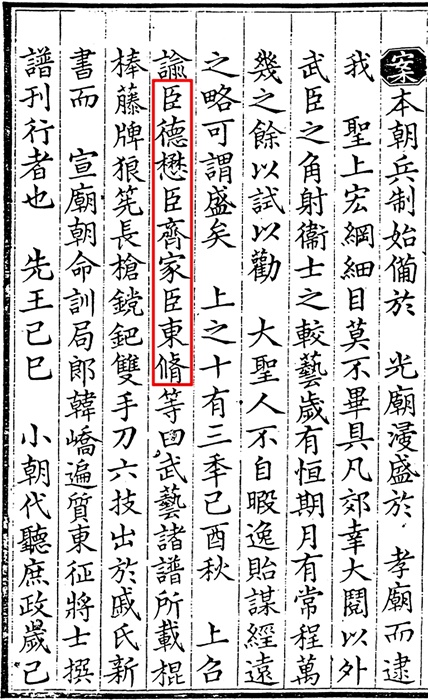
And several years later, the man who shouldered a calf and entered the deep mountains returned. The longed-for friend, Baek Dong-soo, had returned. Called by King Jeongjo, he became a junior officer of the Jangyong Yeong and, donning official robes with confidence, they met face to face again. Thus Park Je-ga wrote down with devoted care, character by character, all the calligraphy in the 『Muyedobutongji』. Baek Dong-soo directly demonstrated martial arts stance by stance, and Lee Deok-moo examined and organized all the historical references regarding these martial arts.
The affection of these dear friends is contained in this military treatise. Thus the season like spring sunshine passed. Sadly, two years later, on September 20, 1792, Chojeong's wife, Yi Si of Deoksu, passed away. Four months later, Lee Deok-moo died. And the friends who had been together at Baektap scattered here and there to various posts as local officials. Beneath Baektap lingered only desolation. Time makes life bitter.
Memories from carefree student days, sharing a bowl of makgeolli and swaying long sleeves while dancing in masks. Memories of drawing a sword powerfully amid torrential rain. Those memories of young days—poor yet passionate—are sorely missed now. Ah, distant fading memories... dear friends...


正在加载评论…