



Kim Man-gon's Education Forum Lining up Children Who Want to Go in Every Direction into a Single Row
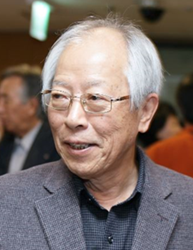
I sense the change. While newly established schools were proliferating, that became old news, and now there are close to 160 elementary schools nationwide with not a single enrolled student scheduled for this year. Now we welcome each student as an individual rather than dealing with enrollment numbers as mere figures. For those of us from the generation that "accommodated" 60 to 70 students per class and still overflowed—even implementing split-shift classes—it is difficult to express anything other than feelings of impermanence.
The sound of harmoniums played by teachers directly has disappeared, and AI digital textbooks have emerged. At some point, teachers stopped marking scores of 100, 90, 80... on test papers. Instead, they mark ○ or × for each item and explain where the answer went wrong.
There are many other changes. Enumerating them all seems pointless. However, it is difficult to deny that while educational methods and environments have become unrecognizable, the respect society shows toward schools and teachers has become embarrassingly low.
Within the waves of change, there is one system that remains steadfast: the College Scholastic Ability Test (Suneung). Multiple-choice questions changed from four options to five. There are many other changes to mention. However, we must first discuss the original explanation: that the old academic achievement test format would be abandoned and replaced with a test to assess whether students had the ability to study at university.
While giving that explanation, when students nationwide are lined up in a single row from top scorers to the lowest, the tendency has become increasingly sophisticated to submit applications appropriately (accurately) according to the views of "entrance exam specialists"—filing applications from top-tier universities to universities where admission is possible with lower scores. Yet the name remains unchanged as "Suneung (College Scholastic Ability) Test," which makes other changes seem unremarkable.
The chicks in kindergarten look endearing at first, but inevitably, as they progress through elementary, middle, and high school, they must take the College Scholastic Ability Test. Despite experiencing countless personal and national-social changes during those years, except in special cases, the thought of that "inescapable" test brings back the realization that those 12 years pass faster than expected. One cannot help but find those chicks pitiable.
I worry about how they will endure that ordeal. Would it be comforting to say that everyone goes through it? Should I say let's hope a better system emerges by then? I wonder if it's acceptable to keep mentioning that expectation, which has become fruitless over time.
Not only the children born but also the phenomenon of people refraining from having children altogether is concerning. Last year, newborns numbered around 230,000, and the total fertility rate slightly increased to 0.75. While the government provides financial support and implements various measures to help with childcare, their effects are minimal, and young people's response has not been groundbreaking. Why is this? The atmosphere of excessive competition in our society is causing people to refrain from marriage and childbirth. It is frightening.
Education must change with marriage and childbirth in mind. The Suneung should be converted to a much easier "real aptitude test," schools wanting to recruit students should be able to select them, and students should be able to find the schools they want to attend. The direction of private education will change naturally. If we stop the competition of lining students up in a single row and let students find their own path earlier, concerns about having and raising children will decrease, and it will become more enjoyable. The recovery of the birth rate will accelerate further.
Wouldn't it be wonderful if education that requires lining up students nationwide in a single row—education focused on memorization and knowledge injection geared toward solving five-option multiple-choice problems—were transformed into education suited to each student's individual goals and aptitudes?
Many countries around the world provide such education. In fact, our education was heading in that direction until not long ago. That process involved extensive research, contemplation, discussion, and effort by educators in the field, education scholars, and education administrators. As side effects emerged in that process, people who favor lining students up in a single row seized on criticisms and made a fuss. Education leaders concerned with reform then quickly reverted our college admissions system to a score-focused approach from a traditional perspective—or perhaps, reviving the educational experience they themselves received as "competent" individuals. At that very moment, educators who had been contemplating and striving endlessly fell silent.
All students want to move in the direction they wish to go. There is no need to say it. Blocking that and demanding they line up in a single row is unreasonable and frustrating.

Loading comments…