



Kim Man-gon's Education Forum A President Who Promised to Eliminate Homework

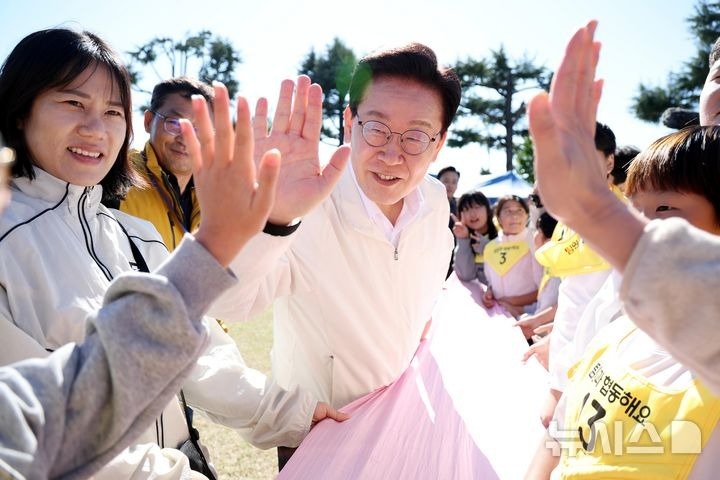
On Children's Day, when there is no particular reason to do otherwise, the president has traditionally held an event inviting children. While only a small number of children get invited and that might be disappointing, the sight of the event during news broadcasts was always heartwarming.
I once saw a conversation scene between children and the president. It was in a question-and-answer format where children asked questions and the president answered. They asked about favorite subjects to study, people they respected, what they usually do, books they enjoy reading—nothing particularly memorable from the questions or answers—but then suddenly one child asked the president not to assign homework, saying he couldn't play freely because homework was given every day.
For a moment, I wondered how such a question came about. They must have told the children to think beforehand about what to ask, and someone probably went through mock questions. Yet such a question emerged, and I couldn't help but feel anxious about how the president should answer in an educational and reasonable manner. Since homework is a common concern for children, including a scene of asking and answering about it seemed to fit well with Children's Day celebrations—or did it?
When the superintendent of education in Seoul took it upon himself to decide school start times for students, I happened to meet a Finnish teacher on a business trip to Korea. The teacher said he didn't understand why the superintendent would set it and found it strange, so I asked who should set it instead. He countered by asking if it shouldn't naturally be teachers and schools. Is such a difference due to different circumstances in each country? What are those circumstances, and what should they ideally be?
Eliminate homework? What should I answer? Whatever happens, one could say "Yes, I'll do that!" or "That's not my area of responsibility, so I'd have to ask the teachers," or "That's a really difficult issue. I honestly don't know what to say." While such types of answers came to mind, it seemed that a proper answer would require review and deliberation among educators, administrators, and teachers.
In any case, the president answered that child's request to eliminate homework as if it were a very simple matter. He said he would do it. The president didn't think about the issue for long. He didn't seek the views of high-ranking education officials or aides waiting nearby and simply answered on the spot. That he would eliminate homework.
Did he think homework encourages private education? Or did he believe that elementary school children basically learn enough just from school and should do so? Or had he always believed that homework is utterly useless and should be abolished?
Although this seemed like a simple issue, I couldn't help but anticipate it would become controversial. From the next day on, I watched with interest how the discussion on this issue would develop, what policies each regional education office would prepare, how related administrative measures would come down, what teachers would say in response, and whether homework would really be eliminated.
But then an absurd thing happened. Or rather, nothing happened at all. No follow-up measures ensued, and no one seemed to ask why the president's promise wasn't being kept. It was unclear whether the children forgot about the news or the president's promise, or forgot they hadn't followed up but got caught up in school life and had no time to quibble about a president's promise. And what about those who saw the news? Did they think that was enough since the children had finally met the president and had a pleasant and satisfying conversation?
Is this why Korean education doesn't change? Can't it change? Is there no reason for it to change at all? When it comes to education, are most discussions nothing more than empty talk, and shouldn't we just do what we've been doing, like last year, regardless of whether students are exhausted—since we all studied that way anyway?
It is said that children experience serious stress due to excessive private education aimed at college entrance. Was it covered as a news story just because it was Children's Day? I hope good presidents who worry about those children—our future—will emerge.
Loading comments…